Diagnosis
Ecthyma
An ulcerative infection of the skin caused by group A beta-hemolytic streptococci (Streptococcus pyogenes) or Staphylococcus aureus. Because ecthyma extends into the dermis, it is often referred to as a deeper form of impetigo.
Also known as: Ulcerative impetigo
Etiology
Cause [fxt]
Group A beta-hemolytic streptococci
Pathophysiology [fxt]
Untreated impetigo may progresses to ecthyma
Starts as a vesicle or pustule
Then deepens to ulcerate with an overlying crust
Risk factors [fxt]
Preexisting wounds (excoriations, insect bites, dermatitis)
Immunosuppression (diabetes, neutropenia, HIV infection)
Crowding
Poor hygiene
High temperature and humidity
Complications [fxt]
Cellulitis, erysipelas, gangrene, lymphangitis, suppurative lymphadenitis and bacteremia
Scarlet feverand acute post-streptococcal glomerulonephritis
Osteomyelitis
Endocarditis
Staphylococcal scalded skin syndrome and toxic shock syndrome
Epidemiology
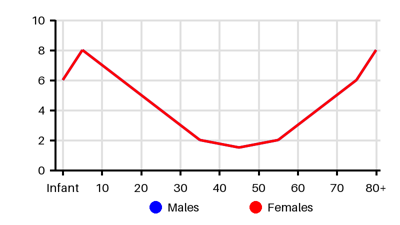
Incidence per 100.000
Symptoms & findings
Symptoms
Clinical findings
None listed.
Anamneses
Localized findings
Approach
Skin swab
Gram stain
Blood culture
Tissue culture
Biopsy
Treatment
Hygiene: [fxt]
Bactericidal soap
Frequently change bed linens, towels and clothing
Remove crusts and apply an antibiotic ointment daily
Antiseptics: Povidone-iodine and hydrogen peroxide
Topical:
Fusidic acid
Topical antibiotics are usually satisfactory if the infection is localised.
Oral antibiotics (extensive lesions):
Flucloxacillin is first line
Erythromycin or clarithromycin in cases of penicillin allergy or resistance
Parenteral antibiotics if there is widespread involvement
Surgical debridement of the crusts
Differential diagnoses
Cutaneous anthrax, Ecthyma contagiosum, Insect Bite, Leishmaniasis, Lymphomatoid papulosis, Papulonecrotic tuberculids, Pyoderma gangrenosum, Rickettsia, Sporotrichosis, Tularemia, Tungiasis
References
[1] http://emedicine.medscape.com/article/1052279; [Medscape]