Diagnosis
Imperforate anus
A congenital anorectal malformation where a normal anal opening is absent at birth.
Also known as: Anal atresia
Etiology
Cause [dk9]
The exact etiology of anorectal malformations is unknown
Positive family history in ~1.4% of cases
Specific syndromes: Currarino syndrome, Townes-Brock syndrome, and Pallister-Hall syndrome, trisomy 13, 18, and 21
Pathophysiology [fn5]
Cloacal membrane formation and subsequent breakdown into urogenital and anal openings should occur by 8 weeks' gestation
Defects in the formation or shape of the posterior urorectal septum account for many of the described abnormalities of imperforate anus
Associated anomalies: VACTERL (Vertebral, Anorectal, Cardiac, TracheoEsophageal malformations, Renal, Limb)
Cloacal exstrophy (1 per 100,000 live births) is the most severe cloacal anomaly and involves:
Anterior abdominal-wall defect in which two hemibladders are visible
Omphalocele
Imperforate anus
Complications [dk9]
Dehydration
Vomiting
Aspiration
Sepsis
Surgical site infection
Wound dehiscence
Urinary tract infection
Fistula
Anal stenosis
Rectal prolapse
Epidemiology
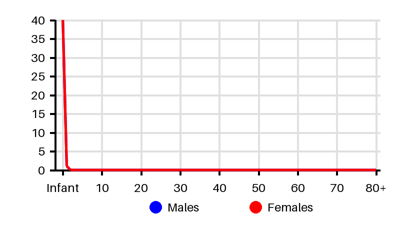
Incidence per 100.000 [n23][p2s][dk9]
Symptoms & findings
Symptoms
Absent feces, Absent flatus, Constipation
Clinical findings
Anamneses
None listed.
Localized findings
Approach
Prenatal ultrasonography [fn5]
Blood test: blood cell count, serum electrolyte levels
Urine: determine the presence of a rectourinary fistula
Rectal examination
Sacral radiography
Distal colostogram
Cystourethrography or cystoscopy
MRI
Echocardiography to rule out cardiac malformations
Treatment
Intravenous hydration [fn5]
Total parenteral nutrition
Broad-spectrum antibiotics if urinary fistula
Reconstructive surgery:
Initial colostomy if delayed definitive repair
Directly to definitive repair: Primary neonatal pull-through without colostomy
Posterior sagittal anorectoplasty (PSARP)
Differential diagnoses
References
[1] Singh M, Mehra K. Imperforate Anus: https://www.ncbi.nlm.nih.gov/books/NBK549784/
[2] https://emedicine.medscape.com/article/929904
[3] Lloyd JC, Wiener JS, Gargollo PC, Inman BA, Ross SS, Routh JC. Contemporary epidemiological trends in complex congenital genitourinary anomalies. J Urol. 2013 Oct;190(4 Suppl):1590-5.
[4] Brantberg A, Blaas HG, Haugen SE, Isaksen CV, Eik-Nes SH. Imperforate anus: A relatively common anomaly rarely diagnosed prenatally. Ultrasound Obstet Gynecol. 2006 Dec;28(7):904-10.