Diagnosis
Bullous pemphigoid
A chronic, inflammatory, subepidermal, blistering disease. It can persist for months or years, with periods of spontaneous remissions and exacerbations.
Also known as: Autoimmune subepidermal blistering disease
Etiology
Cause [s9d]
Autoimmune disease
Triggers: furosemide, spironolactone, NSAIDs, captopril, penicillin, PD-1/PD-L1 inhibitors, gliptins, TNF-alpha inhibitors, ultraviolet irradiation, x-ray therapy, and vaccination
Pathophysiology [3ia][s9d]
IgG autoantibodies against adhesion complexes in the skin basement membrane
Antibodies --> complement activation and inflammatory mediators
Inflammatory cells release of proteolytic enzymes that damage the dermal-epidermal junction (hemidesmosomal proteins) and lead to blister formation
Complication
Secondary infection due to multiple erosions and immunosuppressants
Epidemiology
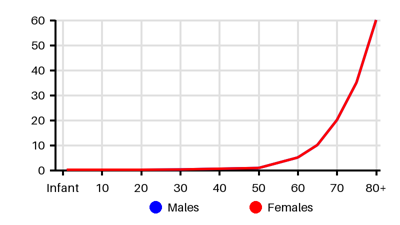
Incidence per 100.000 [siv][kmc][mma]
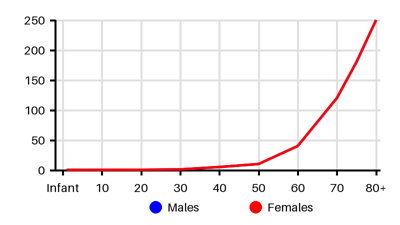
Prevalence per 100.000 [siv][kmc][mma]
Symptoms & findings
Symptoms
None listed.
Clinical findings
None listed.
Anamneses
None listed.
Localized findings
Approach
Dermatoscopy
Biopsy with immunofluorescence
ELISA testing to detect antibodies [s9d]
Treatment
The goal of therapy: [rbr]
Decrease blister formation
Promote healing of blisters and erosions
Determine the minimal dose of medication necessary to control the disease
Treatment depends on the severity of the disease: [s9d]
Topical super-potent steroids: <20% of body surface area in an elderly patient
Systemic immunosuppressive agents (corticosteroids + calcium/vitamin D/bisphosphonate)
Differential diagnoses
Acute intermittent porphyria, Dermatitis herpetiformis, Drug eruptions, Eczema, Epidermolysis bullosa, Erythema multiforme, Impetigo, Mastocytosis, Pemphigus vulgaris, Prurigo nodularis, Psoriasis, Scabies, Stevens-Johnson syndrome, Urticaria
References
[1] Baigrie D, Nookala V. Bullous Pemphigoid. [Updated 2023 Mar 2]. In: StatPearls [Internet]. Treasure Island (FL): StatPearls Publishing; 2025 Jan-. Available from: https://www.ncbi.nlm.nih.gov/books/NBK535374/
[2] [Clinical Dermatology 4.th Edition by Weller, Hunter, Savin and Dahl]
[3] Kridin K, Ludwig RJ. The Growing Incidence of Bullous Pemphigoid: Overview and Potential Explanations. Front Med (Lausanne). 2018 Aug 20;5:220.
[4] Persson et al. Incidence, prevalence and mortality of bullous pemphigoid in England 1998–2017: a population‐based cohort study, British Journal of Dermatology, Volume 184, Issue 1, 1 January 2021, Pages 68–77.
[5] Thorslund et al. Incidence of bullous pemphigoid in Sweden 2005–2012: a nationwide population-based cohort study of 3761 patients. Arch Dermatol Res 309, 721–727 (2017).
[6] http://emedicine.medscape.com/article/1062391; [Medscape]