Diagnosis
Urticaria
A common reaction pattern in which red, itchy or burning swellings/wheals occur anywhere on the body lasting less than 24 hours.
Etiology
Cause [cnj]
Physical: cold, solar, heat, pressure, cholinergic (anxiety, sexual excitement, exercise)
Hypersensitivity: Ingestion, Inhalation, Instillation, Injection, Insertion, Insect bites, Infestation, Infection, Infusion, Inunction
Autoimmune
Pharmacological: Aspirin, NSAIDs, ACE inhibitor, morphine
Contact: Latex
Endogenous causes:
Viral (Hepatitis, EBV, HIV)
Bacterial
Mycoplasma
Intestinal parasites
Connective tissue disorder
Hypereosinophilic syndrome
Hyperthyroidism
Cancer
Exogenous causes:
Drugs (topical and systemic)
Perservatives in lotion
Foods
Insect bites/venoms
Inhalants
Pollens
Pathophysiology [wnn]
Increase circulating levels of inflammatory cytokines and histamine-releasing factors:
Chronic infection
Allergens
Drugs
Mast/basophil cell degranulation --> histamine, cytokines, and chemokines
Immunologic trigger: IgE
Nonimmunologic triggers: Pressure, vibration, temperature changes, sunlight
Vasodilation and increased capillary permeability --> wheals and angioedema
Clinical presentation:
Pruritic pink-to-red papules or plaques
Resolve within 24 hours without residual discoloration
Complications
Anaphylaxis
Edema of the larynx -> asphyxiation
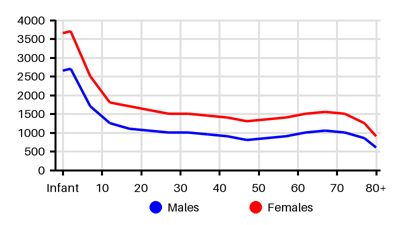
Epidemiology
Incidence per 100.000 [qq3][q4d][64m][4uq][wsv][ycu]
Symptoms & findings
Symptoms
Arthralgia, Arthritis, Fever, Lymphadenopathy, Pruritus
Clinical findings
None listed.
Anamneses
None listed.
Localized findings
Approach
Dermatoscopy: blanching, raised, palpable wheals often separated by normal skin, but may coalesce rapidly to form large areas of erythematous, raised lesions that blanch with pressure.
Blood test if recurrent urticaria: CBC, erythrocyte sedimentation rate, CRP, TSH, metabolic panel (liver, kidney), blood culture [tww]
Serelogy: total IgA levels, thyroid auto-antibodies, anti-nuclear antibody level (ANA), Anti–Sjögren-syndrome-related antibody, Anti-citrullinated peptide antibody, Anti-tissue transglutaminase antibody, Rheumatoid factor, complement levels (C3, C4), Hepatitis serology, H pylori stool antigen testing, Serum protein electrophoresis [wnn]
Allergy testing: radioallergosorbent, scratch, patch test, prick test, dimethylsulfoxide (DMSO) test
Stool studies for ova and parasites
Treatment
Prophylaxis: [mp4][tww]
Avoid any known medication, food, or other allergen
Protective gear: gloves, mask, creams or emollients
Antihistamine: [mp4][wnn]
1st line: cetirizine, loratadine, fexofenadine, desloratadine
2nd line: famotidine or cimetidine
Monoclonal antibody: Omalizumab has a high affinity for free IgE [wnn]
Immunosuppresion: Ultraviolet A and B light, Aspirin, NSAIDs, cyclosporine, methotrexate [tww]
Prednisone 40–60 mg/day for 5 days in adults or 1 mg/kg/day for 5 days in children
Subcutaneous epinephrine
Differential diagnoses
Anaphylaxis, Angioedema, Bullous pemphigoid, Contact dermatitis, Cryoglobulinemia, Dermatitis herpetiformis, Dermatographism, Drug eruptions, Eczema, Erysipelas, Erythema multiforme, Hypereosinophilic syndrome, Mastocytosis, Pemphigoid gestationis, Scabies, Still disease, Urticarial vasculitis, Wells' syndrome
References
[1] [Clinical Dermatology 4.th Edition by Weller, Hunter, Savin and Dahl]
[2] Mehta S, Goldin J, Danosos GN. Chronic Urticaria. [Updated 2025 Dec 13]. In: StatPearls [Internet]. Treasure Island (FL): StatPearls Publishing; 2025 Jan-. Available from: https://www.ncbi.nlm.nih.gov/books/NBK555910/
[3] Liu X, Cao Y, Wang W. Burden of and Trends in Urticaria Globally, Regionally, and Nationally from 1990 to 2019: Systematic Analysis. JMIR Public Health Surveill. 2023 Oct 26;9:e50114. Figure S1-F.
[4] Peck G, Hashim MJ, Shaughnessy C, Muddasani S, Elsayed NA, & Fleischer AB. (2021). Global Epidemiology of Urticaria: Increasing Burden among Children, Females and Low-income Regions. Acta Dermato-Venereologica, 101(4), adv00433.
[5] Tang X, Lin L, Yu F, Ma Y, Liu Z, Xu X. Allergic-related skin diseases: Global disease burden from 1990 to 2021 and future trends. World Allergy Organ J. 2025 Jun 3;18(7):101072.
[6] Zhao Z, Huang Y, Chen D, Wang Y. Global health implications of urticaria burden (1990–2021): a comprehensive analysis of trends across nations and regions. Archives of Medical Science. 2025.
[7] Eun SJ, Lee JY, Kim DY, Yoon HS. Natural course of new-onset urticaria: Results of a 10-year follow-up, nationwide, population-based study. Allergol Int. 2019 Jan;68(1):52-58.
[8] Seo JH, Kwon JW. Epidemiology of urticaria including physical urticaria and angioedema in Korea. Korean J Intern Med. 2019 Mar;34(2):418-425. doi: 10.3904/kjim.2017.203. Epub 2018 May 11.
[9] Vethachalam S, Persaud Y. Contact Urticaria. Updated 2023 Jul 31: https://www.ncbi.nlm.nih.gov/books/NBK549890/
[10] https://emedicine.medscape.com/article/762917