Diagnosis
Eczema
A non-infectious chronic inflammation of the skin characterized by initial vesicles, erythematous itching plaques, crusting and scaling in the chronic stage.
Also known as: Atopic dermatitis, Atopic eczema
Etiology
Cause
Exogenous/enviromental factors:
Allergic contact dermatitis (metals, cosmetics, medicaments, rubber, plants, resins)
Non-allergic irritant contact dermatitis (80% of all contact dermatitis)
Photodermatitis
Endogenous/genetic factors:
Atopic eczema (IgE-production as a response to common enviromental allergens assosiated with asthma, hay fever and food allergies)
Seborrhoeic eczema (assosiated with pityrosporum yeast causing greasy yellowish scales affecting hairy areas: scalp, face, presternum and intertriginous areas)
Discoid/Nummular eczema (suspected reaction to bacteria as the lesions often yield staphylococci on culture)
Pompholyx (unknown but provoked by heat and emotional upsets)
Venous stasis eczema (venous insufficiency and usually poor circulation cause eczematous rash on the lower legs)
Neurodermatitis/Lichen simplex (repetitive scratching)
Pathophysiology
Activated keratinocytes
Increased proliferation and increased cytokine secretion
Inflammation and scaling
Complications [us4]
Bacterial super infections: Furuncles, impetigo, or cellulitis (S. aureus)
Viral infections: Eczema herpeticum, keratoconjunctivitis, meningitis, encephalitis (herpes simplex)
Eczema cosackium
Epidemiology
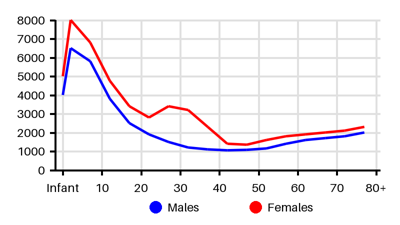
Prevalence per 100.000 [kbv][8av][upm][4pq]
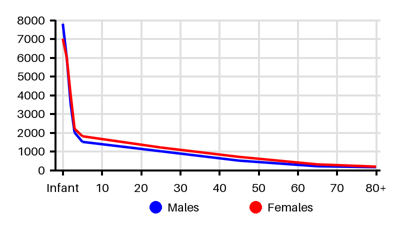
Incidence per 100.000 [kbv][8av][upm][4pq]
Symptoms & findings
Symptoms
Clinical findings
None listed.
Anamneses
None listed.
Localized findings
Approach
Biopsy
Patch testing
Treatment
Nonmedical measures that may be helpful: [awb]
Soft clothing (cotton), avoid wool
Mild temperatures, particularly at night
Air humidifier (cool mist)
Washing clothes in a mild detergent, avoid bleach or fabric softener
Avoiding specific foods if there is concomitant food allergy
Mild-tomoderate atopic dermatitis: [rp2]
Emollients/moisturizers
Topical steroids
Topical calcineurin inhibitors
Crisaborole (topical Phosphodiesterase‐4 Inhibitor)
Tofacitinib (JAK-STAT inhibitor)
Moderate-to-severe atopic dermatitis: [rp2]
Phototherapy
Systemic corticosteroids (side effects)
Systemic immunosuppressants: Cyclosporine, Azathioprine, Methotrexate, and Mycophenolate mofetil
Risks and side-effects: Malignancy, nephrotoxicity, lymphopenia, hepatotoxicity, and infection
Biologic agents:
JAK-STAT inhibitors: Baricitinib, Upadacitinib, PF-04965842, ASN002, Ruxolitinib, and Delgocitinib
Phosphodiesterase‐4 Inhibitors: Roflumilast (topical), Apremilast (oral)
CRTH2 Antagonists: Fevipiprant/Timapiprant
TSLP and OX40 Inhibitors: GBR‐830, Tezepelumab
Therapeutic Aryl Hydrocarbon Receptor Modulating Agent: Tapinarof (topical)
IL‐4/IL‐13Inhibitors: Dupilumab, Pitrakinra, Tralokinumab, Lebrikizumab
IL‐5Inhibitors: Mepolizumab
IL‐22 Inhibitors: Fezakinumab
IL‐31/IL‐31RαInhibitors: BMS‐981164, Nemolizumab
Neurokinin‐1 Receptor Antagonists: Serlopitant, Tradipitant
Κ‐Opioid Receptor Agonists: Asimadoline
Histamine‐4 Receptor Antagonists: ZPL‐389
Immunoglobulin‐E (IgE) Inhibitors: Omalizumab, Ligelizumab
Differential diagnoses
Angioedema, Candidiasis, Contact dermatitis, Cutaneous T-cell lymphoma, Dermatitis herpetiformis, Drug eruptions, Erysipelas, Erythroderma, Ichthyosis vulgaris, Impetigo, Lichen planus, Lichen simplex chronicus, Molluscum contagiosum, Mycosis fungoides, Palmo+C790antar pustolosis, Photosensitivity, Pityriasis rosea, Pityriasis rubra pilaris, Pityriasis versicolor, Psoriasis, Scabies, Seborrheic dermatitis, Tinea corporis
References
[1] Nemeth V, Syed HA, Evans J. Eczema. [Updated 2024 Mar 1]. In: StatPearls [Internet]. Treasure Island (FL): StatPearls Publishing; 2025 Jan-. Available from: https://www.ncbi.nlm.nih.gov/books/NBK538209/
[2] Mohn CH, Blix HS, Halvorsen JA, Nafstad P, Valberg M, Lagerløv P. Incidence Trends of Atopic Dermatitis in Infancy and Early Childhood in a Nationwide Prescription Registry Study in Norway. JAMA Netw Open. 2018 Nov 2;1(7):e184145.
[3] Urban K, Chu S, Giesey RL, Mehrmal S, Uppal P, Nedley N, Delost GR. The global, regional, and national burden of atopic dermatitis in 195 countries and territories: An ecological study from the Global Burden of Disease Study 2017. JAAD Int. 2020 Nov 30;2:12-18.
[4] Ilic I, Stojkovic A, Velickovic V, Zivanovic Macuzic I, Ilic M. Atopic Dermatitis in Children Under 5: Prevalence Trends in Central, Eastern, and Western Europe. Children. 2023; 10(8):1275.
[5] Augustin M, Herberger K, Hintzen S, Heigel H, Franzke N, Schäfer I. Prevalence of skin lesions and need for treatment in a cohort of 90 880 workers. Br J Dermatol. 2011 Oct;165(4):865-73.
[6] https://emedicine.medscape.com/article/1049085
[7] Nguyen HL, Anderson KR, Tollefson MM. New and Emerging Therapies for Pediatric Atopic Dermatitis. Paediatr Drugs. 2019 Aug;21(4):239-260.
[8] [Clinical Dermatology 4.th Edition by Weller, Hunter, Savin and Dahl]
[9] Xue Y, Bao W, Zhou J, Zhao QL, Hong SZ, Ren J, Yang BC, Wang P, Yin B, Chu CC, Liu G, Jia CY. Global Burden, Incidence and Disability-Adjusted Life-Years for Dermatitis: A Systematic Analysis Combined With Socioeconomic Development Status, 1990-2019. Front Cell Infect Microbiol. 2022 Apr 12;12:861053.
[10] Dong WL, An J, Yu M, Yin P, Xu TL, Liu B, Zuberbier T, Zhao ZT, Zhou MG. The prevalence and year lived with disability of atopic dermatitis in China: Findings from the global burden of disease study 2019. World Allergy Organ J. 2021 Nov 9;14(11):100604.
[11] Simpson CR, Newton J, Hippisley-Cox J, Sheikh A. Trends in the epidemiology and prescribing of medication for eczema in England. Journal of the Royal Society of Medicine. 2009;102(3):108-117.