Diagnosis
Hypoaldosteronism
Decreased aldosterone production or aldosterone resistance resulting in reduced mineralocorticoid action.
Etiology
Cause [zwp][dad]
Defective synthesis: Hyperreninemic hypoaldosteronism (rare)
Immaturity of aldosterone synthetic enzymes in infants
Primary adrenal insufficiency (enzyme defect: aldosterone synthase deficiency)
Critically ill patients (peritonitis, liver failure, septic shock, pneumonia, cholangitis): diminish aldosterone synthesis by diverting substrate to the production of cortisol
Delayed recovery of the suppressed gland after contralateral adrenalectomy
Drug-induced diminished synthesis
Discontinuation of drugs with mineralocorticoid activity after prolonged use
Defective release: Hyporeninemic hypoaldosteronism (most common)
Congenital (rare: 1 per 80,000)
Acquired (more frequent due to diabetes and RAAS-medications)
Diabetes
Various nephropathies
Autonomic neuropathy
Sickle cell disease
HIV disease
Medications: NSAIDs, COX-2 inhibitors, ACEI/ARBs, Heparin, β-blockers, Trimethoprim, MRBs, calcineurin inhibitors, potassium-sparing diuretics (spironolactone), pentamidine, ketoconazole, dopamine
Aldosterone resistance:
Genetic
Autosomal dominant pseudohypoaldosteronism
Autosomal recessive pseudohypoaldosteronism
Acquired
Urinary tract infection and obstructive uropathy
Medications
Downregulation of mineralocorticoid receptor in renal tubules (solid organ transplant)
Pathophysiology
Renin --> Angiotensin --> Aldosterone (RAA axis) regulates:
Sodium (Na)
Potassium (K)
Extravellular compartment fluid volume
Blood pressure
Hypoaldosteronism: Defective synthesis/release of renin, angiotensin, aldosterone
Complications [zwp]
Hyperkalemia --> arrhythmia
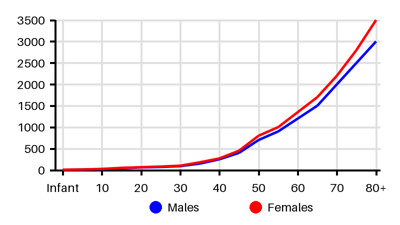
Epidemiology
Incidence per 100.000 [b9n][msy]
Symptoms & findings
Symptoms
Arrhythmia, Hyperpigmentation, Hypotension, Muscle weakness
Clinical findings
Decreased Aldosterone, Hyperkalemia, Hyponatremia, Hypovolemia, Metabolic acidosis
Anamneses
None listed.
Approach
Blood test: Na (hyponatremia), K (hyperkalemia), Aldosterone, 17 hydroxyprogesterone, 18 hydroxycorticosterone, plasma renin activity/concentration, Serum cortisol and plasma ACTH, creatinine
Urine: Elevated urine Na ≥ 30 mmol/L, diminished urinary potassium, urine aldosterone
Arterial bloodgas: pH (metabolic acidosis)
Treatment
Acute salt-wasting crisis: [zwp]
Volume and salt repletion with NaCl
Intravenous hydrocortisone in stress doses
Maintenance:
Mineralocorticoid replacement therapy: 9α-fluorocortisone 0.05-0.1 mg/day
Increased water and salt intake
Differential diagnoses
Adrenal insufficiency, Gordon syndrome, Liddle syndrome
References
[1] Rajkumar V, Waseem M. Hypoaldosteronism. [Updated 2023 Aug 7]. In: StatPearls [Internet]. Treasure Island (FL): StatPearls Publishing; 2025 Jan-. Available from: https://www.ncbi.nlm.nih.gov/books/NBK555992/
[2] https://www.uptodate.com/contents/etiology-diagnosis-and-treatment-of-hypoaldosteronism-type-4-rta
[3] Sousa AG, Cabral JV, El-Feghaly WB, de Sousa LS, Nunes AB. Hyporeninemic hypoaldosteronism and diabetes mellitus: Pathophysiology assumptions, clinical aspects and implications for management. World J Diabetes. 2016 Mar 10;7(5):101-11.
[4] Ruiz-Sánchez JG, Calle-Pascual AL, Rubio-Herrera MÁ, De Miguel Novoa MP, Gómez-Hoyos E, Runkle I. Clinical manifestations and associated factors in acquired hypoaldosteronism in endocrinological practice. Front Endocrinol (Lausanne). 2022 Oct 11;13:990148.
[5] Wilczynski C, Shah L, Emanuele MA, Emanuele N, Mazhari A. SELECTIVE HYPOALDOSTERONISM: A REVIEW. Endocr Pract. 2015 Aug;21(8):957-65.