Diagnosis
Myoma uteri
Benign monoclonal tumors originating from smooth muscle cells within the uterus in women of reproductive age.
Also known as: Fibroid, Leiomyoma uteri, Myoma, Uterine fibroids
Etiology
Cause [wtq]
Unknown cause
Theories:
Reproductive hormones (overexpression of estrogen and progesterone receptors when compared to normal surrounding myometrium)
Abnormalities of the myometrium
Predisposing genetic variations that affect cell signaling pathways
Pathophysiology [sb3][wtq]
Estrogen and progestogen sensitive uterine leiomyoma (usually asymptomatic)
Compression of nearby structures
Faster growth than its blood supply can support it --> hemorrhagic infarction
Clinical manifestation (25-30%)
Pelvic and low back pain/pressure
Abnormal uterine bleeding
Anemia
Bladder or bowel dysfunction
Risk factors [kzw]
High concentration of estrogen and progesterone receptors in the uterus
Obesity
Low number of pregnancies/infertility
Arterial hypertension
Genetic predisposition
African descent
Complications [wtq]
Nonobstetric Complications
Chronic pelvic pain
Heavy menstrual bleeding
Anemia
Infertility
Sexual dysfunction
Constipation
Urinary tract infections or urinary incontinence
Torsion of a pedunculated fibroid
Degeneration with or without infection
Obstetric complications:
Preterm labor and birth
Placental abruption
Placenta previa
Preterm prelabor rupture of membranes
Abnormal labor
Cesarean birth
Postpartum hemorrhage
Epidemiology
Prevalence per 100.000 [s9b][pou][sb3][kzw][hu9][pav][dcs]
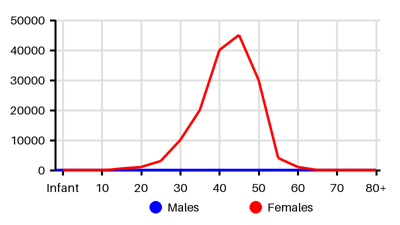
Incidence per 100.000 [s9b][pou][sb3][kzw][hu9][pav][dcs]
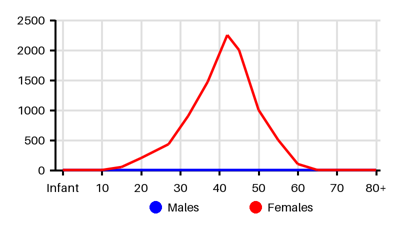
Symptoms & findings
Symptoms
Dyschezia, Dyspareunia, Infertility, Menorrhagia, Metrorrhagia, Polyuria, Vaginal bleeding
Clinical findings
Elevated Lactate, Urinary retention
Anamneses
None listed.
Localized findings
Approach
Blood test: complete blood count, TSH, prolactin
Blood gas
Abdominal x-ray
Transvaginal ultrasound
CT abdomen
MRI pelvis
Endometrial biopsy to rule out endometrial cancer if risk factors (obesity, chronic anovulation, and advanced age)
Treatment
Surveillance if asymptomatic myoma uteri [wtq]
Repeat imaging if change in clinical symptoms (bleeding, pain, anemia, or urinary or bowel dysfunction)
Pain: NSAIDs
Menorrhagia: Tranexamic acid
Medical therapy: suppress the hypothalamic-pituitary-ovarian axis
Oral contraceptives
Progestins
Levonorgestrel-releasing intrauterine system
GnRH-agonists
Aromatase inhibitors
Surgical intervention:
Myomectomy
Endometrial ablation
Hysterectomy
Uterine artery embolization
Radiofrequency ablation
Differential diagnoses
Adenomyosis, Braxton Hicks contraction, Endometrial cancer, Leiomyosarcoma, Lipoleiomyoma, Pregnancy
References
[1] Barjon K, Kahn J, Singh M. Uterine Leiomyomata. [Updated 2025 May 4]. In: StatPearls [Internet]. Treasure Island (FL): StatPearls Publishing; 2025 Jan-. Available from: https://www.ncbi.nlm.nih.gov/books/NBK546680/
[2] Zimmermann A, Bernuit D, Gerlinger C, Schaefers M, Geppert K. Prevalence, symptoms and management of uterine fibroids: an international internet-based survey of 21,746 women. BMC Womens Health. 2012 Mar 26;12:6
[3] Sidło-Stawowy, A., Nowak, K., Nowak, S., Drosdzol-Cop, A., Skrzypulec-Plinta, V., & Janik, A. (2015). Mięśniaki macicy - metody leczenia. Ginekologia i Położnictwo -medical project, R.10, Article 3.
[4] Victory R, Romano W, Bennett J, Diamond MP. Uterine leiomyomas: epidemiology, diagnosis, and management. In: Bieber EJ, Sanfilippo JS, Horowitz IR, Shafi MI, eds. Clinical Gynecology. Cambridge University Press; 2015:223-252
[5] Wegienka G, Havstad S, Coleman C, Cooper T, Wesselink A, Upson K, Marsh EE, Vines AI, Harmon Q, Baird D, Wise LA. Ultrasound-Confirmed, Age-Specific Uterine Leiomyoma Incidence in a Cohort of Black Individuals. Obstet Gynecol. 2022 Dec 1;140(6):1042-1048
[6] Baird DD, Dunson DB, Hill MC, Cousins D, Schectman JM. High cumulative incidence of uterine leiomyoma in black and white women: ultrasound evidence. Am J Obstet Gynecol. 2003 Jan;188(1):100-7
[7] Matasariu DR, Ursache A, Himiniuc L, Toma B, Boiculese VL, Grigore M, Dumitrascu I. Research on myoma in Northeastern Romania and socio-medical outcomes. Exp Ther Med. 2022 Jan;23(1):30
[8] Odokuma, E. I. 2014. “Age Prevalence of Leiomyoma Uteri; A Histopathologic Study”. Current Journal of Applied Science and Technology 4 (16):2395-99
[9] http://emedicine.medscape.com/article/1611373 (2014-01-02); [Medscape]