Diagnosis
Polymorphic light eruption
An acquired idiopathic photodermatosis characterized by recurrent, abnormal, delayed reactions to sunlight.
Also known as: Polymorphous light eruption
Etiology
Cause [dzu]
Unknown, and it is likely to be multifactorial
Pathophysiology [fsc][dzu]
An unknown photoantigen is rendered immunogenic on exposure to UV
The antigen induced by UV radiation leads to a delayed hypersensitivity reaction
Pruritic erythematous papular/vesicular/nodular/plaques rash on sunlight exposed sites within hours to days of exposure
Subsides over the next 1-7 days without scarring
Classification of Photodermatoses: Skin diseases caused or exacerbated by solar radiation [p9b][y6g]
Immunologically mediated disease:
Polymorphic light eruption, Juvenile spring eruption, Chronic actinic dermatitis, Actinic prurigo, Solar urticaria
Genophotodermatoses:
Ataxia-telangiectasia, Bloom syndrome, Cockayne syndrome, Hailey–Hailey disease, Hartnup disease, Kindler syndrome, Rothmund–Thomson syndrome, Trichothiodystrophy, Xeroderma pigmentosum
Metabolic disease: cutaneous porphyria
Photoaggravated skin disease:
Acne vulgaris, Atopic dermatitis, Bullous pemphigoid, Carcinoid syndrome, Cutaneous T-cell lymphoma, Darier’s disease, Dermatomyostitis, Disseminated superficial actinic porokeratosis, Erythema multiforme, Grover’s disease, Lichen planus, Lupus erythematosus, Pemphigus, Pityriasis rubra pilaris, Psoriasis, Reticular erythematous mucinosis, Rosacea, Seborrheic dermatitis, Viral infections
Drug- or chemical-induced photosensitivity:
Photoallergy, Phototoxicity, Cutaneous porphyrias, Pellagra
Epidemiology
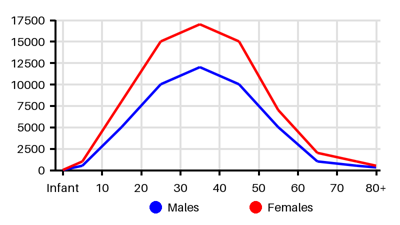
Prevalence per 100.000 [p9b][mza][y6g]
Symptoms & findings
Symptoms
Clinical findings
None listed.
Anamneses
None listed.
Localized findings
Approach
Urine porphyrin
Antibody levels: ANA, anti-SSA/Ro, anti-SSB/La
Photopatch
Phototesting with UV
Biopsy
Treatment
Self-limited disease: rash usually goes away on its own within 10 days [41h]
Symptomatic treatment:
Itch: antihistamine, corticosteroid cream, cold compresses
Pain medication
Prophylaxis: [dzu]
Avoid sun exposure
Phototherapy (low-dose narrowband UV-B)
Sunscreen
Differential diagnoses
Acute intermittent porphyria, Drug eruptions, Eczema, Photosensitivity, Systemic lupus erythematosus, Urticaria
References
[1] Oakley AM, Ramsey ML. Polymorphic Light Eruption. [Updated 2023 Aug 8]. In: StatPearls [Internet]. Treasure Island (FL): StatPearls Publishing; 2025 Jan-. Available from: https://www.ncbi.nlm.nih.gov/books/NBK430886/
[2] Norris PG, Morris J, McGibbon DM, Chu AC, Hawk JL. Polymorphic light eruption: an immunopathological study of evolving lesions. Br J Dermatol. 1989 Feb;120(2):173-83.
[3] Burfield L, Rutter KJ, Thompson B, Marjanovic EJ, Neale RE, Rhodes LE. Systematic review of the prevalence and incidence of the photodermatoses with meta-analysis of the prevalence of polymorphic light eruption. J Eur Acad Dermatol Venereol. 2023 Mar;37(3):511-520.
[4] Santoro FA, Lim HW. Update on photodermatoses. Semin Cutan Med Surg. 2011 Dec;30(4):229-38.
[5] Rhodes LE, Bock M, Soe Janssens A, Ling TC, Anastasopoulou L, Antoniou C, Aubin F, Bruckner T, Faivre B, Gibbs NK, Jansen C, Pavel S, Stratigos AJ, de Gruijl FR, Diepgen TL. Polymorphic light eruption occurs in 18% of Europeans and does not show higher prevalence with increasing latitude: Multicenter survey of 6,895 individuals residing from the Mediterranean to Scandinavia. Journal of Investigative Dermatology. 2010;130(2):626–628.
[6] http://emedicine.medscape.com/article/1119686; [Medscape]