Diagnosis
Trigeminal neuralgia
A chronic pain condition affecting the trigeminal nerve characterized by sudden episodes of intense brief pain similar to an electric shock on one side of the face.
Also known as: Fothergill disease, Suicide disease, Tic douloureux, Trifacial neuralgia
Etiology
Cause
Idiopathic: Unknown cause [woe]
Neurovascular conflict --> superior cerebellar artery compress the trigeminal nerve root [29y]
Secondary (15%): multiple sclerosis, tumor, or arteriovenous malformation
Pathophysiology [29y]
The trigeminal nerve is responsible for the sensory and motor supply of the face
Ophthalmic (V1): eye, upper eyelid, and forehead
Maxillary (V2): lower eyelid, cheek, nostril, upper lip, and upper gingivae
Mandibular (V3): lower lip, lower gingivae, jaw, and the muscles of mastication
Trigeminal nerve compression --> subsequent nerve demyelination
Hypothesis: ectopic impulse generation induced by the demyelinated lesion without using synapses or neurotransmitters
Light tactile stimulation --> Shock-like pains in the facial trigger zone
Complications [29y]
Psychology:
Depression
Social withdrawal
Isolation
Neurology:
Facial numbness
Corneal anesthesia
Jaw weakness
Intractable facial dysesthesia (anesthesia dolorosa)
Side effects from treatment: Anticonvulsant, surgery
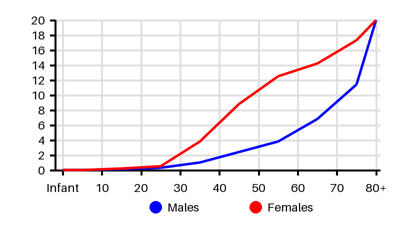
Epidemiology
Incidence per 100.000 [5t5][ieh][woe]
Symptoms & findings
Symptoms
None listed.
Clinical findings
None listed.
Anamneses
None listed.
Localized findings
Approach
Clinical diagnosis
Sudden, intense, shock-like or stabbing pain
Typically on one side of the face
Burning, throbbing, numbness, tingling, or dull aching sensation in between attacks
The diagnostic criteria established by the ICHD-3 [29y]
Recurrent paroxysms of unilateral facial pain in the distribution of the trigeminal nerve
Pain has all the following characteristics:
Pain lasting a fraction of a second to about 2 minutes
Pain with severe intensity
Electric shock-like, sharp, or shooting pain
Innocuous stimuli within the affected nerve distribution precipitate the pain
No alternative ICHD-3 diagnosis better explains the symptoms.
Treatment
Anticonvulsant medicines: assessments of therapy 2 weeks after initiation
1st line: Carbamazepine or oxcarbazepine [29y]
2nd line: Gabapentin, clonazepam, lamotrigine, phenytoin, and valproic acid
Other medications: Baclofen and Botulinum toxin A
Surgery:
Microvascular decompression
Rhizotomy (rhizolysis)
Peripheral neurectomy and nerve blockade
Deep brain stimulation
Radiosurgery
Differential diagnoses
Cerebral aneurysm, Cluster headache, Dental infection, Herpes zoster, Intracranial hemorrhage, Migraine, Multiple sclerosis, Subarachnoid hemorrhage, Temporomandibular syndrome
References
[1] J Islam, KC Elina, YS Park. Recent update on trigeminal neuralgia. Journal of the Korean Society of Stereotactic and Functional Neurosurgery. Volume 18. Issue 1. Pages 9-19. 2022.
[2] Shankar Kikkeri N, Nagalli S. Trigeminal Neuralgia. Updated 2024 Mar 3: https://www.ncbi.nlm.nih.gov/books/NBK554486/
[3] Svedung Wettervik T, Snel D, Kristiansson P, Ericson H, Abu Hamdeh S. Incidence of trigeminal neuralgia: A population-based study in Central Sweden. Eur J Pain. 2023 May;27(5):580-587.
[4] Katusic S, Beard CM, Bergstralh E, Kurland LT. Incidence and clinical features of trigeminal neuralgia, Rochester, Minnesota, 1945-1984. Ann Neurol. 1990 Jan;27(1):89-95.