Diagnosis
Cluster headache
A primary headache disorder associated with: [gfp]
Severe intensity
Rapid onset
Unilateral
Orbital/supraorbital/temporal region
May spread to forehead, teeth, nose, neck and shoulder of the affected side
Lasting 15-180 minutes and occur 1-8 times per day
Presence of autonomic symptoms on the affected side: Horner syndrome
Conjunctival injection and lacrimation
Nasal congestion or rhinorrhea
Eyelid edema
Forehead and facial sweating
Miosis
Ptosis
Also known as: Histamine headache
Etiology
Cause [hio]
The exact cause is unknown
Genetic: autosomal dominant in about 5% of cases
Triggers: Histamine, stress, allergens, seasonal changes, nitroglycerin, alcohol, tobacco, watching television, relaxation, extreme temperatures, glare, allergic rhinitis, and sexual activity
Pathophysiology [gfp]
Incompletely understood - several possible theories
Central disinhibition of the autonomic nociceptive trigeminal pathway
Vascular change is considered secondary to primary neuronal discharge
Histamine may precipitate cluster headache, but evidence is inconsistent
Risk factors [hio]
Male sex
Age > 30 years
Vasodilators (alcohol)
Previous head trauma or surgery
Complications [hio]
Psychiatric conditions: depression, anxiety, aggressive behavior, suicidal attempts
Systemic autonomic dysregulation: bradycardia, tachycardia, hypertension, arrhythmias (such as AV block and SA block)
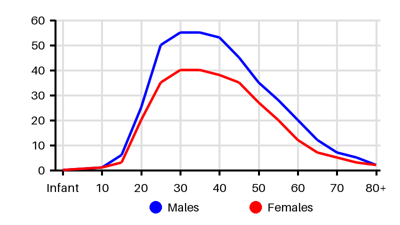
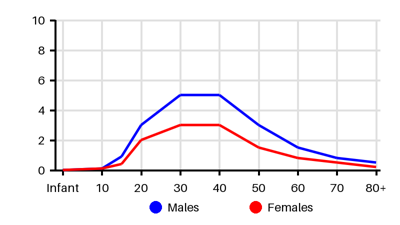
Epidemiology
Prevalence per 100.000 [ghc]
Incidence per 100.000 [ghc]
Symptoms & findings
Symptoms
Agitation, Headache, Nausea, Photophobia, Ptosis
Clinical findings
None listed.
Anamneses
None listed.
Localized findings
Approach
Clinical diagnosis: A history of characteristic attacks that occur with periodicity and rhythmicity
CT/MRI caput/neck to exclude other potential causes of headache
Treatment
Symptomatic: stop or reduce the severity of an acute attack
Oxygen: 8 L/min for 10 minutes or 100% by mask
Triptan: Sumatriptan 6 mg subcutaneous injection
Ergot alkaloid: Dihydroergotamin IV or IM
Metoclopramide
Lidocaine intranasal (1 mL of a 10% solution on a swab in each nostril)
Parenteral opiates (risk of abuse)
Preventive: to reduce the frequency and intensity of attack
Calcium channel blockers: Verapamil
Mood stabilizers: Lithium, tricyclic antidepressants
Anticonvulsants: Topiramate and divalproex
Corticosteroids
Invasive nerve blocks and ablative procedures: variable effect
Percutaneous RF ablation
Trigeminal gangliorhizolysis
Rhizotomy
Gamma-knife radiosurgery
Botulinum toxin
Deep brain stimulation
Differential diagnoses
Acute sinusitis, Allergic rhinosinusitis, Basilar artery thrombosis, Brain tumor, Carotid artery dissection, Cerebral aneurysm, Cerebral venous sinus thrombosis, Dental infection, Glaucoma, Herpes zoster, Horner syndrome, Ice pick headache, Intracranial hemorrhage, Medication-overuse headache, Meningioma, Migraine, Myofascial pain, Nasopharyngeal carcinoma, Optic neuritis, Pheochromocytoma, Pituitary adenoma, Preeclampsia, Prolactinoma, Subarachnoid hemorrhage, Systemic lupus erythematosus, Temporal arteritis, Tension headache, Trigeminal neuralgia
References
[1] https://emedicine.medscape.com/article/1142459
[2] Kandel SA, Mandiga P. Cluster Headache. [Updated 2023 Jul 4]. In: StatPearls [Internet]. Treasure Island (FL): StatPearls Publishing; 2025 Jan-. Available from: https://www.ncbi.nlm.nih.gov/books/NBK544241/
[3] Crespi J, Gulati S, Salvesen Ø, et al. Epidemiology of diagnosed cluster headache in Norway. Cephalalgia Reports. 2022;5.