Diagnosis
Biliary atresia
A progressive, idiopathic, fibro-obliterative disease of the extrahepatic biliary tree that presents with biliary obstruction exclusively in the neonatal period.
Also known as: Extrahepatic ductopenia, Progressive obliterative cholangiopathy
Etiology
Cause
The pathogenesis remains poorly understood.
Pathophysiology
Gradual obliteration or discontinuity of the extrahepatic biliary system
Obstruction to bile flow
Secondary biliary cirrhosis (if not surgically corrected)
Classification
BA without any other anomalies or malformations: perinatal biliary atresia
70-85 % [1be]
develops jaundice within the first two months of life
BA associated with laterality malformations: "embryonal" biliary atresia
10-15 % [1be]
Associated anomalies:
situs inversus
asplenia or polysplenia
malrotation
interrupted inferior vena cava
congenital heart defects
duodenal atresia
annular pancreas
BA associated with other congenital malformations:
remaining 5-10 % [1be]
congenital malformations:
intestinal atresia
imperforate anus
kidney anomalies
Epidemiology
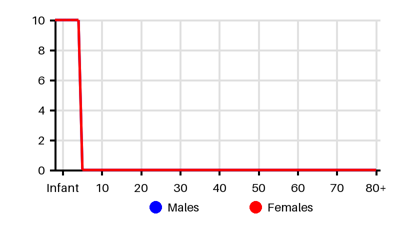
Incidence per 100.000 [qhu][dtv][cfc][aud][hot][5fu][ifz][pte][rbk]
Symptoms & findings
Symptoms
Hepatomegaly, Icterus, Splenomegaly
Clinical findings
Ascites, Cholestasis, Elevated ALP, Elevated Bilirubin, Elevated GGT, Jaundice
Anamneses
None listed.
Approach
Blood test: bilirubin (conjugated portion more elevated) [c7s]
Radioisotope scanning
Ultrasound abdomen: liver, spleen, ascites
CT abdomen
MRCP
Liver biopsy
Intraoperative cholangiogram
Treatment
Kasai procedure: hepatoportoenterostomy with Roux-en-Y
Postoperative medical treatment:
Choleretics/ursodeoxycholic acid
Nutritional supplementation
Fat-soluble vitamin supplementation
Prevention of cholangitis
Management of portal hypertension
Liver transplantation
Differential diagnoses
Alagille syndrome, Alpha1-antitrypsin deficiency, Caroli disease, Choledochal cysts, Cystic fibrosis, Cytomegalovirus, Galactose-1-phosphate uridyltransferase deficiency, Hemochromatosis, Herpes simplex, Lipid storage disorders, Neonatal hepatitis, Rubella, Syphilis, Toxoplasmosis
References
[1] https://www.uptodate.com/contents/biliary-atresia
[2] McKiernan et al. The frequency and outcome of biliary atresia in the UK and Ireland. Lancet. 2000 Jan 1;355(9197):25-9.
[3] Yoon et al. Epidemiology of biliary atresia: a population-based study. Pediatrics. 1997 Mar;99(3):376-82.
[4] Lin et al. Taiwan Infant Stool Color Card Study Group. Decreasing rate of biliary atresia in Taiwan: a survey, 2004-2009. Pediatrics. 2011 Sep;128(3):e530-6.
[5] Cavallo et al. The Epidemiology of Biliary Atresia: Exploring the Role of Developmental Factors on Birth Prevalence. J Pediatr. 2022 Jul;246:89-94.e2.
[6] Al-Hussaini et al. The Epidemiology and Outcome of Biliary Atresia: Saudi Arabian National Study (2000-2018). Front Pediatr. 2022 Jul 18;10:921948.
[7] Livesey et al. Epidemiology of biliary atresia in England and Wales (1999-2006). Arch Dis Child Fetal Neonatal Ed. 2009 Nov;94(6):F451-5.
[8] Chardot et al. Epidemiology of biliary atresia in France: a national study 1986–96. Journal of Hepatology, Volume 31, Issue 6, 1999. Pages 1006-1013. ISSN 0168-8278.
[9] Hopkins ET AL. Incidence of Biliary Atresia and Timing of Hepatoportoenterostomy in the United States. J Pediatr. 2017 Aug;187:253-257.
[10] Lupo et al and The National Birth Defects Prevention Network. Population-based birth defects data in the United States, 2010-2014: A focus on gastrointestinal defects. Birth Defects Res. 2017 Nov 1;109(18):1504-1514.
[11] Siddiqui AI, Ahmad T. Biliary Atresia. [Updated 2023 Jun 26]. In: StatPearls [Internet]. Treasure Island (FL): StatPearls Publishing; 2025 Jan-. Available from: https://www.ncbi.nlm.nih.gov/books/NBK537262/
[12] http://emedicine.medscape.com/article/927029 (2014-01-02); [Medscape]