Diagnosis → Ophthalmology
Cataract
Opacification of the crystalline lens that causes clinical significant reduction in visual function.
Also known as: Lens opacity
Etiology
Causes [vcm]
Senile cataract: The most common type
Congenital: Related to maternal nutrition, Rubella, Rubeola, placental hemorrhage
Subcapsular cataract: Fibrous metaplasia of the lens epithelium
Nuclear sclerotic cataract: Associated with myopia and aging
Cortical cataract: Cortical opacities
Christmas tree cataract: Polychromatic needle-like formation in the cortex/nucleus
Traumatic
Perforating trauma
Blunt trauma
Electric shock
Ultraviolet radiation
Ionizing radiation
Chemical injuries
Systemic diseases
Diabetes mellitus
Myotonic dystrophy
Atopic dermatitis
Neurofibromatosis type 2
Hypoparathyroidism or Cretinism
Secondary cataract: Result from other primary ocular pathology
Iridocyclitis (anterior uveitis)
Acute congestive angle closure glaucoma
High myopia
Hereditary fundus dystrophies
Drugs: Corticosteroids, Anticholinesterase inhibitors, and Chlorpromazine
Poor nutrition: Antioxidant and vitamin deficiency
Alcohol and Smoking
Pathophysiology [vcm]
The lens consists of two main parts:
Cortex (superficial part) - containing younger fibers
Nucleus (deeper part) - containing older fibers
Chronic lens stress/injury/inflammation --> degenerative processes
Lens protein/fiber/hydration changes --> loss of transparency and light scatter
Symptoms:
Blurry vision / blindness
Monocular diplopia or polyopia
Colored rainbow halos around the light
Sensitivity to glare / photophobia
Frequently changing refractive glasses
Disturbance in color vision (yellowing of objects)
Reduced contrast
Reduced night vision
Risk factors [oec]
Increasing age
Diabetes mellitus
Corticosteroid exposure
Smoking
UV-B exposure
Ocular trauma;
Uveitis/ocular inflammation
Genetic predisposition; retinitis pigmentosa; congenital rubella; Down syndrome
Complications [vcm]
Corneal ulcer
Corneal perforation (acquired anterior capsular cataract)
Blindness
Glaucoma
Iritis
Subluxation of the lens
Surgery-related complications: uveitis, posterior capsular thickening/rupture, aphakia, after cataract, growth-related refractive changes, glaucoma, retinal detachment, hyphaema, corneal burn, iris prolapse, endophthalmitis, cystoid macular edema, dysphotopsia, ptosis
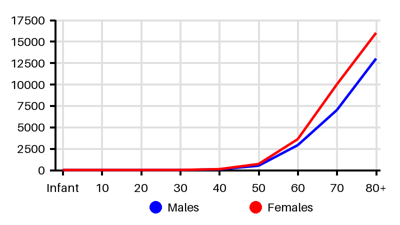
Epidemiology
Prevalence per 100.000 [vws]
Default
Symptoms & findings
Symptoms
Blindness, Blurred vision, Diplopia, Glare, Halo, Photophobia, Visual disturbances
Clinical findings
None listed.
Anamneses
None listed.
Approach
Ophthalmic examination: [vcm]
Decreased visual acuity
Defect in pupillary response
No fundal view due to dark opacity in the center
Slit lamp examination:
Opacity with clear areas of lens matter
Fundus evaluation to rule out age-related macular degeneration, macular scar
Ultrasound to rule out retinal detachment and posterior staphyloma
Diagnostic criteria
Lens opacity on slit lamp and
Visual function limitation consistent with cataract and
No better explanation (other ocular comorbidities)
Treatment
Management of contributing systemic conditions [vcm]
Diabetes mellitus
Hypertension
Stroke
Uveitis
Diabetic macular edema
Corticosteroid alternatives
Congenital Cataract [vcm]
Medical: If visual acuity is 6/24 or better
Refractive glasses
Pupillary dilatation with 2.5% phenylephrine, cyclopentolate and atropine
Surgery: If visual acuity is worse than 6/24
Irrigation and aspiration of the lens
+ Intraocular lens implantation
+ Anterior vitrectomy + primary posterior capsulotomy
Senile Cataract [vcm]
Medical: No medical treatment is effective
Surgery:
Extracapsular cataract extraction
Intracapsular cataract extraction: an old technique not used frequently due to complications
Phaco-emulsification: a modification of extracapsular cataract extraction
Laser phacolysis
Differential diagnoses
Age-related macular degeneration, Corneal ulcer, Glaucoma, Iridocyclitis, Keratoconjunctivitis sicca, Optic neuritis, Retinal artery occlusion, Retinal detachment, Retinitis, Retinopathy
References
[1] Nizami AA, Gurnani B, Gulani AC. Cataract. [Updated 2024 Feb 27]. In: StatPearls [Internet]. Treasure Island (FL): StatPearls Publishing; 2024 Jan-. Available from: https://www.ncbi.nlm.nih.gov/books/NBK539699/
[2] Chen SP, Woreta F, Chang DF. Cataracts: A Review. JAMA. 2025 Jun 17;333(23):2093-2103.
[3] Wan Z, Bai J, Wang W, Peng Q. Global, regional, and national burden of cataract among older adults from 1990 to 2021: a comprehensive analysis based on the global burden of disease study 2021. Front Med (Lausanne). 2025 Sep 4;12:1679828.
[4] Fang R, Yu YF, Li EJ, Lv NX, Liu ZC, Zhou HG, Song XD. Global, regional, national burden and gender disparity of cataract: findings from the global burden of disease study 2019. BMC Public Health. 2022 Nov 12;22(1):2068.