Diagnosis → Ophthalmology
Retinitis
Inflammation of the retina (often with adjacent choroidal involvement) causing focal or diffuse retinal lesions with risk of permanent vision loss.
Also known as: Chorioretinitis, Posterior uveitis, Retinochoroiditis
Etiology
Cause [ea3][gmn]
Virus:
Herpes simplex virus
Varicella zoster virus
Cytomegalovirus (immunocompromised individuals)
Epstein-Barr virus
West Nile virus
HIV
Rubella
Measles
Dengue virus
Lymphocytic choriomeningitis virus
Chikungunya virus
Bacteria:
Syphilis
Tuberculosis
Cat scratch disease (Bartonella henselae)
Rocky Mountain spotted fever (Rickettsia rickettsii)
Lyme disease (Borrelia burgdorferi)
Histoplasmosis (Histoplasma capsulatum)
Endophthalmitis (S. aureus and S. pneumoniae, Klebsiella pneumoniae)
Hematogenous dissemination: Endocarditis, gastroenteritis, UTI, IV drugs
Fungal disease:
Aspergillus
Candida
Parasite: Toxoplasma gondii
Helminthic disease: Toxocara canis
Inflammatory disease:
Post-fever retinitis
Behçet disease
Sarcoidosis
Systemic lupus erythematosus
Eosinophilic granulomatosis with polyangiitis
Psoriatic arthritis
Inflammatory bowel disease
Sjögren syndrome
Vogt-Koyanagi-Harada syndrome
Hypersensitivity reactions
Pathophysiology [ea3]
Intraocular inflammation due to:
Hematogenous dissemination of pathogens
Direct introduction
Autoimmunity (molecular mimicry due to cross-reactivity)
The extent of ocular involvement varies depending on the organism/etiology [gmn]
Inflammation --> visual changes:
Macular edema
Neovascularization of the retina or optic disc
Optic disc swelling
Epiretinal membrane detachment
Retinal detachment
Permanent changes:
Macular ischemia
Optic nerve atrophy
Retinal necrosis and scarring
Risk factors [ea3]
HLA-B27
Immunosuppression
Complication [ea3][gmn]
Blindness
Retinal breaks
Rhegmatogenous retinal detachment
Optic neuropathy
Optic atrophy
Macular scar
Epiretinal membrane/vitreomacular traction
Cystoid macular edema
Choroidal neovascularization
Cataract
Chronic vitritis
Macular ischemia
Retinal vascular occlusion
Glaucoma
Vitreous hemorrhage
Phthisis
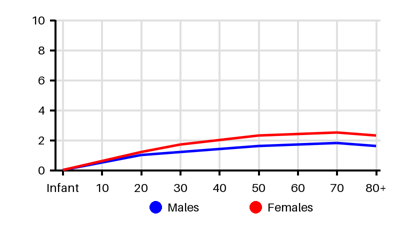
Epidemiology
Incidence per 100.000 [ydi][p7z]
Default
Symptoms & findings
Symptoms
Blurred vision, Intraocular hemorrhage, Photopsia, Red eye, Retinal detachment, Retinal hemorrhage, Scotoma, Visual disturbances, Vitreous opacities
Clinical findings
Anamneses
None listed.
Localized findings
Approach
Ophthalmologic examination: [ea3]
Visual field assessment
Slit-lamp examination
Funduscopic photos
Fluorescein fundus angiography
Optical coherence tomography
Ultrasound: To exclude retinal detachment
Aqueous or vitreous humor tests:
Microbial culture: Bacterial, fungal, and viral
Staining tests: KOH and gram staining of the aqueous or vitreous humor
PCR for bacteria, fungi, Toxoplasma, HSV, HZV, and CMV
IGRA
Serelogy (ELISA) for anti-Toxoplasma IgG antibodies
Biopsy of the retina
Treatment
Topical medications exhibit limited effectiveness against posterior uveitis [ea3]
Autoimmune retinitis:
Periocular or intraocular glucocorticoid injections
Systemic glucocorticoids if severe or bilateral disease
Injected or surgically implanted intraocular long-acting glucocorticoid
Immunosuppressive agents if glucocorticoid resistance
Methotrexate, azathioprine, mycophenolate mofetil, cyclosporine, tacrolimus, TNF-α inhibitors
CMV retinitis:
Ganciclovir (IV and intravitreal): 5 mg/kg every 12 hours for 14 to 21 days
Foscarnet
Cidofovir (IV)
Valganciclovir (oral): 900 mg twice daily
Herpes retinitis:
Acyclovir (IV) 10 to 15 mg/kg every 8 hours
Acyclovir (oral) 800 mg 5 times a day for 6 to 12 weeks
Toxoplasmosis:
Trimethoprim-sulfamethoxazole 160 mg/800 mg twice daily
Clindamycin (intravitreal)
Toxocariasis:
Systemic and topical steroids
Anthelmintic drugs: Albendazole 400 mg twice daily for 2 weeks
Pars plana vitrectomy
Syphilis: Penicillin G 4 million units every 4 hours
Lyme disease: Doxycycline, ceftriaxone, and amoxicillin
Cat Scratch Disease:
Age ≥8 years: Doxycycline and rifampin
Age <8 years: Rifampin + azithromycin or TMP-SMX
Sarcoidosis: Glucocorticoids 1-1.5 mg/kg/d
Options: Methotrexate, mycophenolate mofetil, azathioprine, cyclosporine, adalimumab
Rocky Mountain Spotted Fever: Doxycycline or chloramphenicol
Differential diagnoses
Age-related macular degeneration, Behcet's disease, Candidiasis, Crohn disease, Drug side effects, Endophthalmitis, Histoplasmosis, Iridocyclitis, Lymphoma, Malignant melanoma, Multiple sclerosis, Optic neuritis, Reactive arthritis, Retinal detachment, Retinoblastoma, Scleritis, Systemic lupus erythematosus, Toxoplasmosis, Tuberculosis, Ulcerative colitis, Vogt-Koyanagi-Harada syndrome
References
[1] Gupta N, Tripathy K. Retinitis. [Updated 2024 May 1]. In: StatPearls [Internet]. Treasure Island (FL): StatPearls Publishing; 2026 Jan-. Available from: https://www.ncbi.nlm.nih.gov/books/NBK560520/
[2] Geetha R, Tripathy K. Chorioretinitis. [Updated 2023 Aug 25]. In: StatPearls [Internet]. Treasure Island (FL): StatPearls Publishing; 2026 Jan-. Available from: https://www.ncbi.nlm.nih.gov/books/NBK551705/
[3] DARRELL RW, WAGENER HP, KURLAND LT. Epidemiology of uveitis. Incidence and prevalence in a small urban community. Arch Ophthalmol. 1962 Oct;68:502-14.
[4] Gritz DC, Wong IG. Incidence and prevalence of uveitis in Northern California; the Northern California Epidemiology of Uveitis Study. Ophthalmology. 2004 Mar;111(3):491-500.
[5] Reeves SW, Sloan FA, Lee PP, Jaffe GJ. Uveitis in the elderly: epidemiological data from the National Long-term Care Survey Medicare Cohort. Ophthalmology. 2006 Feb;113(2):307.e1.