Diagnosis
Cholesteatoma
Benign but invasive tumor of the middle ear caused by overgrowth of displaced keratinizing epithelium which can damage surrounding structures.
Also known as: Epidermoid cyst, Epidermoid tumor, Epithelial cyst
Etiology
Cause [iwz]
Congenital: squamous epithelium (epidermoid cyst arising from aberrant embryonic nests) trapped within the skull base
Primary-acquired cholesteatoma: Chronic otitis media --> Eustachian tube dysfunction --> Pressure changes in the middle ear --> Tympanic membrane retraction --> damage to the ossicles
Secondary-acquired cholesteatoma: direct injury to the tympanic membrane (infection or trauma)
Pathophysiology [iwz]
Expanding tumor of keratinizing squamous epithelium that may cause locoregional pressure, inflammation, infection, and destruction
May expand at the expense of the bone that surrounds and contains it (pressure effects and enzymatic increased osteoclastic activity)
Keratinizing squamous debris --> progressive hearing loss, otorrhea, damage to the tympanic membrane and ossicles, eustachian tube dysfunction, erode the tegmen mastoideum, cause dehiscence of the facial nerve, alter vestibular function
Complications
Facial muscle paralysis
Complete permanent sensorineural hearing loss
Balance disturbance
Perichondritis
Causes of conductive hearing loss (CHL)
cerumen, foreign body, neoplasm, swelling/stenosis of the canal, Perforated tympanic membrane, Ossicular discontinuity, Otosclerosis, Fluid, scarring.
Causes of sensorineural hearing loss (SNHL)
Neuronal damage by intense noise, barotrauma, viral infection, ototoxic drugs (aminoglycosides), Presbyacusis, Iatrogenic, Temporal bone fracture, Meningitis, Cochlear otosclerosis, Menieres disease, Acoustic neuroma.
Epidemiology
Incidence per 100.000 [iye][bsh][gzu]
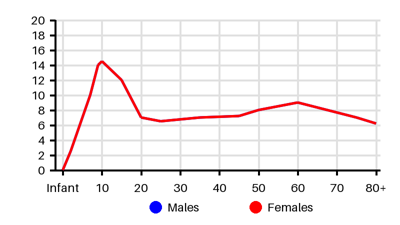
Symptoms & findings
Symptoms
Hearing loss, Otorrhea, Tinnitus, Vertigo
Clinical findings
None listed.
Anamneses
None listed.
Approach
Otoscopy
Weber test
Rinne test
Audiogram
CT caput
MR caput
Treatment
Surgical resection is the treatment of choice due to cholesteatoma is a greater risk to residual hearing than surgery [dfy]
Absolute contraindication: comorbidity
Relative contraindication: absence of hearing in the contralateral ear
Approximately 5-40% of operations are unsuccessful due to recurrence [dfy]
Differential diagnoses
Cerumen, Drug side effects, Exostose, Foreign body, Myringitis, Otitis externa, Otitis media, Otosclerosis, Presbyacusis, Tympanosclerosis, Wegener's granulomatosis
References
[1] Kennedy KL, Singh AK. Middle Ear Cholesteatoma. [Updated 2024 Aug 9]. In: StatPearls [Internet]. Treasure Island (FL): StatPearls Publishing; 2025 Jan-. Available from: https://www.ncbi.nlm.nih.gov/books/NBK448108/
[2] Li J, Jufas N, Forer M, Patel N. Incidence and trends of middle ear cholesteatoma surgery and mastoidectomy in Australia-A national hospital morbidity database analysis. Laryngoscope Investig Otolaryngol. 2021 Dec 8;7(1):210-218.
[3] Djurhuus et al. Cholesteatoma in Danish children - a national study of changes in the incidence rate over 34 years. Int J Pediatr Otorhinolaryngol. 2015 Feb;79(2):127-30.
[4] Kadowaki et al. Epidemiology of Congenital Cholesteatoma: Surveys of the Last 17 Years in Japan. J Clin Med. 2024 Feb 23;13(5):1276.
[5] http://emedicine.medscape.com/article/860080 (2014-01-02); [Medscape]
[6] http://www.uptodate.com/contents/cholesteatoma-in-children; [Uptodate]
[7] http://bestpractice.bmj.com/best-practice/monograph/1033.html; [Bestpractice]