Diagnosis
Otitis media
Infection or inflammation of the middle ear. Acute, recurrent or with effusion.
Etiology
Cause [nyt]
Bacteria: Streptococcus pneumoniae, Haemophilus influenzae, and Moraxella catarrhalis
Virus: Respiratory syncytial virus (RSV), coronaviruses, influenza virus, parainfluenza virus, rhinovirus, adenoviruses, human metapneumovirus, and picornaviruses
Allergic
Classification [nyt]
Acute purulent otitis media: Acute infection with edema, hyperemia, pus and fever
Serous otitis media: Postinfectious stasis/fluid accumulation without signs of infection
Chronic otitis media: Persistent inflammation with perforation or long-lasting fluid in the middle ear space and a retracted tympanic membrane
Otitis media with effusion: Fluid in the middle ear without signs of a new infection
Pathophysiology [nyt]
Preceding upper respiratory infection --> edema in the mucosa
Eustachian tube obstruction --> decrease in ventilation and increasing exudate from theinflamed mucosa --> risk of infection in the middle ear
Purulence in the middle ear space:
Bulging or erythematous tympanic membrane with decreased mobility
Hearing loss:
Conductive hearing loss
Cerumen, foreign body, neoplasm, swelling/stenosis of the canal, Perforated tympanic membrane, Ossicular discontinuity, Otosclerosis, Fluid, scarring
Sensorineural hearing loss:
Neuronal damage by intense noise, barotrauma, viral infection, ototoxic drugs (aminoglycosides), Presbyacusis, Iatrogenic, Temporal bone fracture, Meningitis, Cochlear otosclerosis, Menieres disease, Acoustic neuroma
Risk factors [nyt]
Immunodeficiency (HIV, diabetes)
Genetic predisposition
Anatomic abnormalities: adenoid hypertrophy
Pacifier use
Gastroesophageal reflux
Ciliary dysfunction
Cochlear implants
Vitamin A deficiency
Allergies
Lack of breastfeeding
Passive smoke exposure
Daycare attendance
Lower socioeconomic status
Family history of recurrent otitis media in parents or siblings
Complications [nyt]
Tympanic membrane perforation
Hearing loss
Chronic suppurative otitis media
Cholesteatoma
Tympanosclerosis
Mastoiditis
Petrositis
Labyrinthitis
Facial paralysis
Cholesterol granuloma
Infectious eczematoid dermatitis
Meningitis
Subdural empyema
Brain abscess
Lateral and cavernous sinus thrombosis
Otitic hydrocephalus
Epidemiology
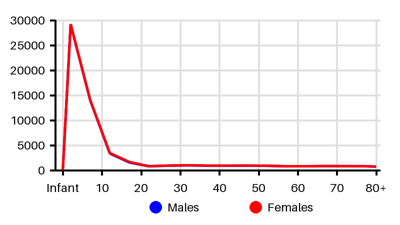
Incidence per 100.000 [top][3hn][is2][rfs]
Symptoms & findings
Symptoms
Anorexia, Fever, Hearing loss, Insomnia, Otalgia, Otorrhea
Clinical findings
Bulging tympanic membrane, Perforated tympanic membrane
Anamneses
None listed.
Localized findings
Approach
Otoscopy
Pneumatic otoscopy has a higher sensitivity and specificity [nyt]
Tympanometry
Acoustic reflectometry
CT
MRI: mastoiditis, epidural abscess, sigmoid sinus thrombophlebitis, meningitis, brain abscess, subdural abscess, ossicular disease, and cholesteatoma
Treatment
Prophylaxis: pneumococcal vaccine
Watchful waiting or antibiotic therapy: [nyt]
Amoxicillin or a 2nd gen cephalosporin
Tympanic Membrane perforation: topical antibiotics (ofloxacin)
Pain: NSAIDs or acetaminophen
Surgery:
Myringotomy
Tympanocentesis: tympanostomy tube placement
Differential diagnoses
Acute sinusitis, Allergic rhinosinusitis, Cerumen, Cholesteatoma, Gastroesophageal reflux disease, HIV, Influenza, Mastoiditis, Meningitis, Nasal polyps, Nasopharyngeal carcinoma, Otitis externa
References
[1] Danishyar A, Ashurst JV. Acute Otitis Media. Updated 2023 Apr 15: https://www.ncbi.nlm.nih.gov/books/NBK470332/
[2] Jin Y, Yang X, Sun H, Zhang J, Yang S, Jiang S, Song Q, Zhang G, Ma B, Yang K, Pan L, Huang L, Li Y. Global, Regional, and National Burdens of Otitis Media From 1990 to 2019: A Population Based Study. Ear Hear. 2024 May-Jun 01;45(3):658-665.
[3] Edmondson-Jones M, Dibbern T, Hultberg M, Anell B, Medin E, Feng Y, Talarico C. The effect of pneumococcal conjugate vaccines on otitis media from 2005 to 2013 in children aged ≤5 years: a retrospective cohort study in two Swedish regions. Hum Vaccin Immunother. 2021 Feb 1;17(2):517-526.
[4] Suaya JA, Gessner BD, Fung S, Vuocolo S, Scaife J, Swerdlow DL, Isturiz RE, Arguedas AG. Acute otitis media, antimicrobial prescriptions, and medical expenses among children in the United States during 2011-2016. Vaccine. 2018 Nov 26;36(49):7479-7486.
[5] Todberg T, Koch A, Andersson M, Olsen SF, Lous J, Homøe P. Incidence of otitis media in a contemporary Danish National Birth Cohort. PLoS One. 2014 Dec 29;9(12):e111732.
[6] Ben Debba L, Derreumaux D, Lonnet G, Taddei L, Scherbakov M. Clinical and economic burden of otitis media in children under 5 years of age in the United States: A retrospective study. Hum Vaccin Immunother. 2024 Dec 31;20(1):2409510.