Diagnosis → Ophthalmology
Episcleritis
A self-limited inflammation of the episclera (the thin and superficial connective tissue between conjunctiva and sclera).
Also known as: Episcleral inflammation
Etiology
Cause [7vf][9fk]
Unknown
Systemic conditions (26% to 36%)
Rheumatoid arthritis
Systemic lupus erythematosus
Polyarteritis nodosa
Crohn disease
Ulcerative colitis
Wegener granulomatosis (granulomatosis with polyangiitis)
Juvenile idiopathic arthritis
Behcet disease
Cogan syndrome
Seronegative spondyloarthropathies:
Ankylosing spondylitis
Reactive arthritis
Psoriatic arthritis
Infections
Bacteria: Tuberculosis, Lyme disease, syphilis, cat-scratch disease
Viruses: herpes simplex, herpes zoster, Covid-19
Fungi
Parasites
Pathophysiology [9fk]
An inflammatory response localized to the superficial episcleral vascular network
Release inflammatory mediators --> vasodilation + increased vascular permeability
Infiltration of lymphocytes, plasma cells, and macrophages along with edema
Clinical presentation:
Eye redness
Mild ocular discomfort or pain
Discharge (rare)
Photophobia (rare)
No intraocular inflammation
Diffuse episcleritis: 84% of cases
Intermittent bouts of inflammation
Last 7 to 10 days
Recur at 1-3-month intervals
Nodular/focal episcleritis: 16% of cases
Prolonged attacks of inflammation
Typically more painful than diffuse episcleritis
Associated with systemic disease
Complications
Iridocyclitis
Glaucoma
Cataract
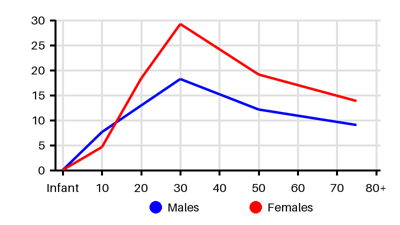
Epidemiology
Incidence per 100.000 [c1a][vfy][t4o][ivb]
Default
Symptoms & findings
Symptoms
Blurred vision, Lacrimation, Photophobia, Red eye
Clinical findings
None listed.
Anamneses
None listed.
Localized findings
Approach
Clinical diagnosis based on slit-lamp examination:
Edema of the episcleral tissue
Injection of superficial episcleral vessels
Dilated episcleral vessels are easily blanched with phenylephrine
Blood test: CBC, ESR, ANA, Rheumatoid factor, uric acid
Lyme serelogy
Chest x-ray
Venereal disease test
Treatment
Episcleritis is self-limited and will resolve without intervention within 2 to 21 days
Treat the underlying condition
Infection --> appropriate antibiotic therapy
Symptomatic treatment:
Artificial tears
Sunglasses
Mild topical corticosteroids if severe or prolonged symptoms
Systemic NSAIDs (Ibuprofen 200-600mg x 3/day)
Systemic corticosteroids
Differential diagnoses
Conjunctivitis, Foreign body, Glaucoma, Iridocyclitis, Keratitis, Keratoconjunctivitis sicca, Lymphoma, Scleritis, Subconjunctival hemorrhage
References
[1] https://www.ncbi.nlm.nih.gov/books/NBK534796/ (7th September 2026)
[2] https://emedicine.medscape.com/article/1228246 (7th September 2026)
[3] Xu TT, Reynolds MM, Hodge DO, Smith WM. Epidemiology and Clinical Characteristics of Episcleritis and Scleritis in Olmsted County, Minnesota. Am J Ophthalmol. 2020 Sep;217:317-324.
[4] Homayounfar G, Nardone N, Borkar DS, Tham VM, Porco TC, Enanoria WT, Parker JV, Vinoya AC, Uchida A, Acharya NR. Incidence of scleritis and episcleritis: results from the Pacific Ocular Inflammation Study. Am J Ophthalmol. 2013 Oct;156(4):752-8.
[5] Honik G, Wong IG, Gritz DC. Incidence and prevalence of episcleritis and scleritis in Northern California. Cornea. 2013 Dec;32(12):1562-6.
[6] Thong LP, Rogers SL, Hart CT, Hall AJ, Lim LL. Epidemiology of episcleritis and scleritis in urban Australia. Clin Exp Ophthalmol. 2020 Aug;48(6):757-766.