Diagnosis
Hepatic cyst
Cysts within the liver parenchyma.
Etiology
Cystic hepatic lesions range from benign lesions to malignant and potentially lethal conditions [dtf]. Less than 4% of hepatic cysts are symptomatic, but larger cysts, especially those greater than 5 cm, have a higher association with symptomatic manifestation [nzq].
Clinical classification [ka6]
Infectious:
Parasitic: Hydatid/echinococcal cysts, Amoebic abscess
Non-parasitic: Pyogenic abscess, Fungal microabscess
Non-infectious:
Benign:
Simple liver cysts (most common) are congenital originating from biliary ducts that do not connect to the biliary system
Polycystic liver disease
Bile duct hamartoma
Caroli disease
Cavernous hemangioma
Intrahepatic pseudocyst
Premalignant:
Biliary cystadenoma: female:male-ratio: 9:1
Intraductal papillary neoplasm of bile duct
Caroli disease
Bile duct hamaartomas
Malignant:
Biliary cystadenoma / cystadenocarcinoma
Cystic HCC
Cystic liver metastasis
Undifferentiated embryonal sarcoma / carcinoma
Traumatic:
Biloma
Seroma
Hematoma
Complications [4y8]
Hemorrhage
Rupture
Bile duct torsion
Infection,
Compression of the biliary tree
Malignant transformation
Anaphylactic shock (hydatid cyst)
Budd-Chiari syndrome
Inferior vena cava thrombus
Liver failure
Epidemiology
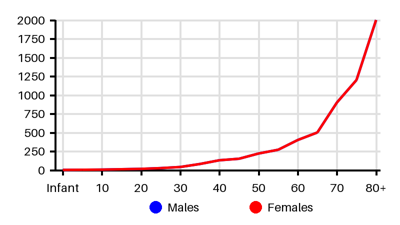
Incidence per 100.000 [rss][ka6]
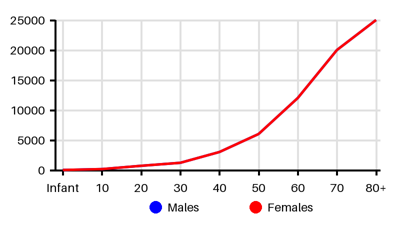
Prevalence per 100.000 [rss][ka6]
Symptoms & findings
Symptoms
Hepatomegaly, Nausea, Vomiting
Clinical findings
Eosinophilia, Jaundice, Portal hypertension
Anamneses
None listed.
Localized findings
Approach
Blood test: GGT, CEA, CA 19-9
Abdominal x-ray
Altrasound abdomen
CT abdomen
MRI abdomen
Biopsy
FNA
Serelogy
Treatment
Asymptomatic simple cyst do not require intervention other than regular follow up [4y8]
Symptomatic benign cyst (hemorrhage, rupture, infection, bile obstruction): [ka6]
Fenestration
Aspiration sclerotherapy: tetracycline, ethanol, or ethanolamine
Surgical resection:
Cyst excision
Liver resection
Liver transplantation
Echinococcal cyst: Liver resection
Biliary cystadenoma: Cyst enucleation, liver resection, ablation
Biliary cystadenocarcinoma: Radical resection with a wide (> 2 cm) surgical margin
Polycystic liver disease:
Pharmacotherapy: Somatostatin receptor antagonist, mTOR inhibitor, estrogen receptor antagonists, vasopressin receptor antagonists
Surgery: Cyst aspiration with sclerosis, open or laparoscopic cyst fenestration, combined hepatic resection and fenestration, transarterial embolization and liver transplantation
Differential diagnoses
Benign liver tumor, Caroli disease, Cholangiocarcinoma, Hamartoma, Hemangioma, Hematoma, Hepatocellular carcinoma, Liver abscess, Polycystic kidney disease, Sarcoma
References
[1] Borhani AA, Wiant A, Heller MT. Cystic hepatic lesions: a review and an algorithmic approach. AJR Am J Roentgenol. 2014 Dec;203(6):1192-204.
[2] Shaked O, Siegelman ES, Olthoff K, Reddy KR. Biologic and clinical features of benign solid and cystic lesions of the liver. Clin Gastroenterol Hepatol. 2011 Jul;9(7):547-62.e1-4.
[3] Rawla P, Sunkara T, Muralidharan P, Raj JP. An updated review of cystic hepatic lesions. Clin Exp Hepatol. 2019 Mar;5(1):22-29.
[4] Alshaikhli A, Al-Hillan A. Liver Cystic Disease. [Updated 2023 Apr 24]. In: StatPearls [Internet]. Treasure Island (FL): StatPearls Publishing; 2025 Jan-. Available from: https://www.ncbi.nlm.nih.gov/books/NBK567739/
[5] Chenin, M., Paisant, A., Lebigot, J. et al. Cystic liver lesions: a pictorial review. Insights Imaging 13, 116 (2022).
[6] Marrero JA, Ahn J, Rajender Reddy K; Americal College of Gastroenterology. ACG clinical guideline: the diagnosis and management of focal liver lesions. Am J Gastroenterol. 2014 Sep;109(9):1328-47; quiz 1348.