Diagnosis
Erysipelas
A bacterial skin infection involving the upper dermis that characteristically extends into the superficial cutaneous lymphatics.
Also known as: St. Anthony’s Fire
Etiology
Cause [id6]
Streptococcus pyogenes (group A streptococci, most common)
Non–group A Streptococcus
Staphylococcus
Gram-negative species.
Pathophysiology [id6]
Skin trauma (insect bites, surgical incision, venous stasis ulcerations, IV drugs)
Breach of protective skin
Bacterial inoculation
Inflammation
Risk factors [id6]
Immunosuppression: diabetes, alcohol abuse, HIV infection, nephrotic syndrome
Lymphatic edema
Lymphatic obstruction
Excising the saphenous vein for bypass
Arteriovenous fistula
Status post-surgery
Nephrotic syndrome
Complications [id6]
Abscess
Blisters
Skin necrosis
Scarlet fever
Pneumonia
Meningitis
Hemorrhagic purpura
Thrombophlebitis
Toxic shock syndrome
Necrotizing fasciitis
Joint involvement
Pyomyositis
Clostridial myonecrosis (gas gangrene)
Deep venous thrombosis
Compartment syndrome
Epidemiology
Incidence per 100.000 [2rn]
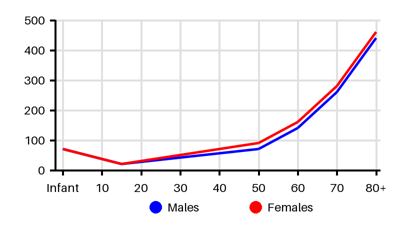
Symptoms & findings
Symptoms
Chills, Fever, Lymphadenopathy, Malaise
Clinical findings
Elevated CRP, Elevated Sedimentation Rate, Leukocytosis
Anamneses
None listed.
Localized findings
Approach
Blood test
Culture
Biopsy
Treatment
Symptomatic care: [w5w][szf]
Fever
Hydration
Cold compresses
Elevation to reduce local swelling, inflammation, and pain
Oral antibiotic treatment in the outpatient setting:
Penicillin V 500 mg x 4
Amoxicillin 875 mg x 2
Cephalexin 500 mg x 4
Cefadroxil 500 mg x 2
Parenteral antibiotics:
Systemic signs of toxicity: fever >38°C, hypotension, or tachycardia
Rapid progression of erythema (eg, doubling of the affected area within 24 hours)
Extensive erythema
High-risk neutropenia
Lymphangitis
Immunocompromised patients
Inability to tolerate or absorb oral therapy
Surgery: Debridement if necrosis or gangrene
Differential diagnoses
Angioedema, Cellulitis, Compartment syndrome, Contact dermatitis, Deep venous thrombosis, Eczema, Erysipeloid, Erythema induratum, Erythema nodosum, Familial mediterranean fever, Gout, Granuloma faciale, Herpes zoster, Impetigo, Lyme disease, Necrotizing fasciitis, Scarlet fever, Septic arthritis, Septic bursitis, Staphylococcal scalded skin syndrome, Systemic lupus erythematosus, Tenosynovitis, Toxic shock syndrome
References
[1] Michael Y, Shaukat NM. Erysipelas. [Updated 2023 Aug 7]. In: StatPearls [Internet]. Treasure Island (FL): StatPearls Publishing; 2025 Jan-. Available from: https://www.ncbi.nlm.nih.gov/books/NBK532247/
[2] Sočan K, Sočan M. Trends in the epidemiology of erysipelas in Slovenia. Acta Dermatovenerol Alp Pannonica Adriat. 2018 Mar;27(1):1-4.
[3] https://www.uptodate.com/contents/acute-cellulitis-and-erysipelas-in-adults-treatment
[4] http://emedicine.medscape.com/article/1052445; [Medscape]