Diagnosis
Deep venous thrombosis
Clot formation originating in the deep venous system.
Also known as: DVT, Venous thromboembolism
Etiology
Cause - Virchows triad [ycs]
Stasis: Immobility, venous pressure/mechanical compression: neoplasm, pregnancy, stenosis
Hypercoagulable blood:
Genetic deficiencies: Anticoagulation proteins C and S, antithrombin III deficiency, factor V Leiden mutation, Polycythaemia rubra vera
Acquired: Cancer, sepsis, myocardial infarction, heart failure, vasculitis, systemic lupus erythematosus and lupus anticoagulant, inflammatory bowel disease, nephrotic syndrome, burns, oral estrogens, smoking, hypertension, diabetes, dehydration
Vessel injury: Trauma, surgery, venous catheters, previous DVT, IV drug abuse
Pathophysiology [ycs]
Virchow triad --> cytokine production --> leukocyte adhesion to the endothelium --> promoting venous thrombosis
Thrombosis is a protective mechanism that prevents the loss of blood
Fibrinolysis counteracts thrombosis
Obstruction of the venous reflux --> erythema, swelling, cyanosis, pain, fever, prominent superficial veins, pain with passive dorsiflexion of the foot (Homan’s sign), venous gangrene, Phlegmasia cerulea dolens (massive swelling, cyanosis, and pain)
Remodeling process --> Fibrosis
Anatomic distribution [ycs]
Leg (the most common area)
Arms
Mesenteric veins
Cerebral veins
Risk factors allowing thrombosis to occur - Virchows triad [ycs]
Age > 60
Recent surgery
Critical care admission
Fracture/trauma
Obesity
Pregnancy
Dehydration
Sepsis
Cancer
Heart failure
Myocardial infarction
Hormone replacement therapy
Complications [ycs]
Heart attack
Stroke
Pulmonary emboli
Post-thrombotic syndrome
Death
Epidemiology
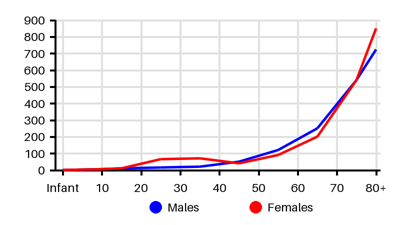
Incidence per 100.000 [1q2][vuf][ssg][acp]
Symptoms & findings
Symptoms
Clinical findings
Elevated D-dimer, Elevated Sedimentation Rate
Anamneses
Localized findings
Approach
Blood test:
PT-INR
Acquired partial thromboplastin time (APTT)
Hematocrit
Homocysteine
Antiphospholipid antibodies
Proteins C
Protein S
Antithrombin III
Activated protein C resistance
Platelet aggregation
Mutant factor V Leiden
PT-INR gene mutation
Ultrasound:
Deep venous system
Abdomen (evaluate iliac veins and cancer screening if no obvious cause)
Venography
CT thorax and abdomen (Pulmonary embolism and cancer screening)
Wells clinical prediction guide
Pretest probability of deep venous thrombosis: high-risk <0p (5%), moderate-risk 1-2p (17%), or low-risk >3p (53%):
Active cancer +1
Immobilization of lower extremities +1
Bedridden >3 days or major surgery <4 weeks prior +1
Tenderness along the deep venous system +1
Entire leg swelling +1
Calf swelling >3 cm compared with asymptomatic leg +1
Pitting edema +1
Previous history of DVT +1
Collateral superficial nonvaricose veins +1
Alternative diagnosis more likely than DVT -2
Treatment
Anticoagulation: first episode --> 3-6 months. Recurrent episodes --> >1 year [2z7]
1st line --> direct oral anticoagulants: dabigatran, rivaroxaban, apixaban
2nd line --> vitamin K antagonist (Warfarin)
3rd line --> Low molecular weight heparin (LMWH)
Endovascular mechanical thrombolysis: immediate passage to prevent pulmonary embolism and postthrombotic syndrome
Indication:
Iliofemoral or IVC thrombosis --> phlegmasia
Anticoagulation is contraindicated (intracranial bleeding, recent major surgery (brain/eye/spinal cord), pregnancy, malignant hypertension, severe thrombocytopenia)
Pulmonary embolism and systemic shock
Inferior vena cava filter is not recommended in patients on anticoagulant therapy
Catheter-directed thrombolysis
Mechanical thrombectomy
Angioplasty
Stenting of venous obstructions
Surgery:
Surgical Thrombectomy: phlegmasia cerulea dolens (massive swelling)
Valvuloplasty of chronic venous insufficiency
Differential diagnoses
Acute extremity ischemia, Arthritis, Bakers cyst, Cellulitis, Chronic venous insufficiency, Erysipelas, Heart failure, Lymphedema, Muscle tear, Necrotizing fasciitis, Nephrotic syndrome, Peripheral neuropathy, Postphlebitic syndrome, Pulmonary embolism, Superficial venous thrombosis, Thrombophlebitis, Varices
References
[1] Waheed SM, Kudaravalli P, Hotwagner DT. Deep Venous Thrombosis. [Updated 2023 Jan 19]. In: StatPearls [Internet]. Treasure Island (FL): StatPearls Publishing; 2025 Jan-. Available from: https://www.ncbi.nlm.nih.gov/books/NBK507708/
[2] Spencer FA, Emery C, Joffe SW, Pacifico L, Lessard D, Reed G, Gore JM, Goldberg RJ. Incidence rates, clinical profile, and outcomes of patients with venous thromboembolism. The Worcester VTE study. J Thromb Thrombolysis. 2009 Nov;28(4):401-9.
[3] Fowkes FJ, Price JF, Fowkes FG. Incidence of diagnosed deep vein thrombosis in the general population: systematic review. Eur J Vasc Endovasc Surg. 2003 Jan;25(1):1-5.
[4] Arshad N, Isaksen T, Hansen JB, Brækkan SK. Time trends in incidence rates of venous thromboembolism in a large cohort recruited from the general population. Eur J Epidemiol. 2017 Apr;32(4):299-305.
[5] Heit JA, Spencer FA, White RH. The epidemiology of venous thromboembolism. J Thromb Thrombolysis. 2016 Jan;41(1):3-14.
[6] http://emedicine.medscape.com/article/1911303 (2014-01-02); [Medscape]
[7] White RH. The epidemiology of venous thromboembolism. Circulation. 2003 Jun 17;107(23 Suppl 1):I4-8.