Diagnosis
Folliculitis
Folliculitis: Infection of hair follicles
Furunculosis: Deep bacterial folliculitis with formation of abscess
Carbuncle: A confluence of several furuncles
Etiology
Cause [qm6]
Usually caused by Staphylococcus aureus.
Other causes:
Gram-negative: Enterobacter, Klebsiella, Escherichia, Serratia, Proteus, Pseudomonas
Virus: Varicella-zoster
Fungus: Tinea, Pityrosporum (Malassezia furfur)
Noninfectious: Trauma, occlusion
Pathophysiology [qm6]
Infection of the hair follicle
Result of inflammation secondary to ingrown hairs
Caused by certain drugs such as lithium and cyclosporine
Risk factors [qm6]
Immune deficiency
Anemia
Diabetes
Iron deficiency
Poor hygiene
Long-term antibiotic therapy (gram-negative)
Complications [qm6]
Cellulitis
Abscess
Epidemiology
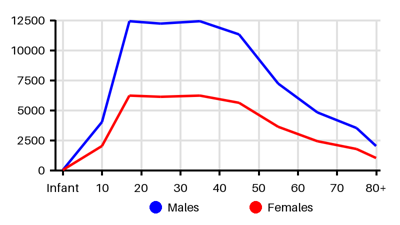
Incidence per 100.000 [yrt][yap]
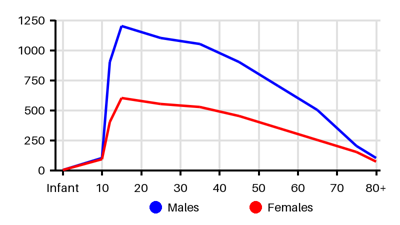
Prevalence per 100.000 [yrt][yap]
Symptoms & findings
Symptoms
None listed.
Clinical findings
None listed.
Anamneses
None listed.
Localized findings
Approach
Inspection (clinical diagnosis)
Gram stain
Culture
Biopsi
Treatment
Superficial bacterial folliculitis: [yap][qm6]
Usually self-limited and will resolve spontaneously
Skin hygiene: Antibacterial ointment (Mupirocin) three times daily for 10 days
In recurrent, treatment-resistant, or deep bacterial folliculitis [yap][qm6]
First generation cephalosporins, penicillinase-resistant penicillin, macrolides and oral clindamycin may be used based on the results of the culture
If the culture does not reveal any organisms, tetracycline or doxycycline is preferred for their anti-inflammatory properties
If not self-limiting nature or manifests with constitutional symptoms, an oral third generation cephalosporin or fluoroquinolone may be beneficial
Pityrosporum Folliculitis: oral antifungal agents (Itraconazole and fluconazole)
Viral folliculitis: oral acyclovir, valacyclovir, and famciclovir
Demodex Folliculitis: anti-parasitic agents (topical permethrin 5% cream or oral ivermectin and oral metronidazole)
Eosinophilic folliculitis:
Antiretroviral therapy to treat the patient’s underlying HIV.
Optional therapies: topical corticosteroids, antihistamines, phototherapy, and even itraconazole or isotretinoin
Differential diagnoses
Acne, Acneiform eruptions, Acne keloidalis nuchae, Candidiasis, Coccidioidomycosis, Drug eruptions, Eczema, Erythema toxicum neonatorum, Fox-Fordyce disease, Furunculosis, Graham-Little-Piccardi-Lasseur syndrome, Hidradenitis suppurativa, HIV, Impetigo, Insect Bite, Keratosis pilaris, Milia, Miliaria, Molluscum contagiosum, Perioral dermatitis, Rosacea, Scabies, Seabathers eruption, Subcorneal pustular dermatosis, Urticaria
References
[1] Winters RD, Mitchell M. Folliculitis. https://www.ncbi.nlm.nih.gov/books/NBK547754/
[2] Augustin M, Herberger K, Hintzen S, Heigel H, Franzke N, Schäfer I. Prevalence of skin lesions and need for treatment in a cohort of 90 880 workers. Br J Dermatol. 2011 Oct;165(4):865-73.
[3] Miró EM, Sánchez NP. Cutaneous Manifestations of Infectious Diseases. Atlas of Dermatology in Internal Medicine. 2011 Sep 28:77–119.
[4] http://emedicine.medscape.com/article/1070456; [Medscape]
[5] Tracy LA, Furuno JP, Harris AD, Singer M, Langenberg P, Roghmann MC. Staphylococcus aureus infections in US veterans, Maryland, USA, 1999-2008. Emerg Infect Dis. 2011 Mar;17(3):441-8.