Diagnosis
Ice pick headache
A primary headache disorder associated with: [seu]
Ultra-brief stabs of pain lasting only a few seconds
Most commonly in the frontal, temporal, parietal, or occipital area
No cranial autonomic symptoms
Also known as: Idiopathic stabbing headache, Ophthalmodynia periodica, Primary stabbing headache
Etiology
Etiology [seu]
Primary: unknown cause
Secondary: herpes zoster meningoencephalitis, meningioma, stroke, and multiple sclerosis
Pathophysiology
Unknown, several unconfirmed theories
Trigeminal nerve disorder: Due to superficial and sharp pain
Dysfunction in central pain control mechanisms producing neuronal activity that could be perceived as stabbing or jabbing pain
Primary headaches: Idiopathic and not caused by any underlying disease
Tension-type headache
Migraine
Trigeminal autonomic cephalalgias (TACs)
Cluster headache
Paroxysmal hemicrania
Short-lasting unilateral neuralgiform headache attacks with conjunctival injection and tearing (SUNCT)
Short-lasting unilateral neuralgiform headache attacks with cranial autonomic symptoms (SUNA)
Hemicrania continua
Trigeminal neuralgia
Other primary headache disorders
Primary cough headache
Primary exercise headache
Primary headache associated with sexual activity
Primary thunderclap headache
Cold-stimulus headache
External-pressure headache
Ice pick headache (Primary stabbing headache)
Nummular headache
Hypnic headache
New daily persistent headache
Secondary headaches: secondary to an underlying disease
Substance headache
Medication-overuse headache:
NSAIDs, caffeine, ergots, opioids, paracetamol, codeine, triptans
Headache caused by acute substance use
Alcohol, Cocaine, Cannabis, Carbon monoxide, Histamine, Calcitonin gene–related peptide, Phosphodiesterases, Acetaldehyde
Certain food additives (phenylethylamine, tyramine, aspartame, and monosodium glutamate)
NO donors (amyl nitrate, erythrityl tetranitrate, glyceryl trinitrate, isosorbide mononitrate or dinitrate, sodium nitroprusside, mannitol hexanitrate, pentaerythrityl tetranitrate)
Substances containing lead (batteries, certain paints, fuel)
Substances containing benzene (turpentine, spray adhesives, inks, rubber cement, and chemical solvents)
Headache medication (atropine, digitalis, disulfiram, hydralazine, imipramine, nicotine, nifedipine, nimodipine, sildenafil), as a common side effect occurring after occasional use
Headache medication (combined oral contraception, hormone replacement therapy, anabolic steroids, amiodarone, lithium carbonate, nalidixic acid, thyroid hormone replacement therapy, tetracycline, and minocycline), as a direct or indirect pharmacological effect occurring after long-term use
Headaches attributed to substance withdrawal
Caffeine, Opioids, Estrogens, Corticosteroids, Tricyclic antidepressants, SSRIs, NSAIDs
Headaches Attributed to Head or Neck Injuries
Headaches Attributed to Cranial and/or Cervical Vascular Disorder
Cerebral ischemic event
Nontraumatic intracerebral hemorrhage
Unruptured vascular malformation
Arteritis
Cervical carotid or vertebral artery disorder
Cerebral venous thrombosis
Other acute intracranial vascular disorder
Other Secondary Headaches
Infection/inflammation: herpes zoster meningoencephalitis, postherpetic neuralgia, multiple sclerosis
Psychiatric disorder
Temporomandibular disorder
Disorder of the teeth
Disorder of the eyes, nose, or ears
Arterial hypertension
Hypoxia and/or hypercapnia
Intracranial neoplasia: meningioma
Fasting
Epileptic seizure
Complications [p7k]
Medication overuse headache
Epidemiology
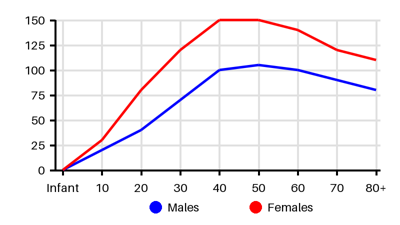
Incidence per 100.000 [seu][ehh][3ss][mkp]
Symptoms & findings
Symptoms
Dizziness, Headache, Nausea, Phonophobia, Photophobia, Vomiting
Clinical findings
None listed.
Anamneses
None listed.
Localized findings
Approach
Clinical diagnosis: [seu]
Pattern: paroxysmal, multiple times a day
Duration: ultra-short stab of pain lasting seconds
Location: usually frontal, temporal, or occipital region
Symmetry: either unilaterally or bilaterally
Other: absence of any underlying disease
No biological markers or radiologic findings specific to the disease
Diagnostic criteria: 2 of 3 required [seu]
Stabs lasts only a few seconds
Occur with irregular frequency
No cranial autonomic symptom
Treatment
Indomethacin 50-150mg/day (NSAIDs): 35% of patients fail to show significant benefit [seu]
Other treatment: Gabapentin, cyclooxygenase-2 inhibitors, melatonin, and external hand warming
Differential diagnoses
Cluster headache, Herpes zoster, Nummular headache, Otitis media, Paroxysmal hemicrania, Temporomandibular syndrome, Thunderclap headache, Trigeminal neuralgia
References
[1] Chua AL, Nahas S. Ice Pick Headache. Curr Pain Headache Rep. 2016 May;20(5):30.
[2] Baraness L, Baker AM. Acute Headache. [Updated 2023 Jul 26]. In: StatPearls [Internet]. Treasure Island (FL): StatPearls Publishing; 2025 Jan-. Available from: https://www.ncbi.nlm.nih.gov/books/NBK554510/
[3] Sjaastad O, Pettersen H, Bakketeig LS. The Vågå study of headache epidemiology II. Jabs: clinical manifestations. Acta Neurol Scand. 2002;105(1):25–31.
[4] Ahmed M, Canlas J, Mahenthiran M, Al-Ani S. Primary stabbing headache in children and adolescents. Dev Med Child Neurol. 2020 Jan;62(1):69-74.
[5] Fuh J-L, Kuo K-H, Wang S-J. Primary Stabbing Headache in A Headache Clinic. Cephalalgia. 2007;27(9):1005-1009.