Diagnosis
Insulinoma
Beta cell neoplasm with overproduction of insulin.
Etiology
Cause [b9s]
Most cases are sporadic (30% of these with mutations in the YY1 and Kras genes)
Some are linked to multiple endocrine neoplasia type 1 (MEN1) syndrome
Pathophysiology [b9s]
Normal physiology: Declining blood glucose suppress insulin secretion to prevent hypoglycemia
An insulin-secreting neuroendocrine tumor, deriving mainly from pancreatic islet cells
Some insulinomas also secrete other hormones: gastrin, 5-hydroxyindolic acid, adrenocorticotropic hormone, glucagon, human chorionic gonadotropin, and somatostatin
Genetic mutations/dysregulations in signaling pathways that govern cell proliferation and hormone secretion
Pathophysiology: Loss of feedback inhibition --> Autonomous and unregulated secretion of insulin --> hyperinsulinemia --> hypoglycemia --> catecholamine release
Epidemiology
Incidence per 100.000 [1ad][tru][b9s]
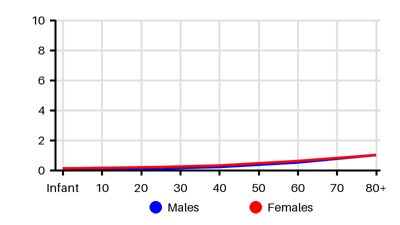
Symptoms & findings
Symptoms
Amnesia, Anxiety, Blurred vision, Confusion, Diaphoresis, Diplopia, Dizziness, Hunger, Palpitations, Seizure, Syncope, Tachycardia, Unconsciousness, Weakness, Weight gain
Clinical findings
Elevated C-peptide, Elevated Insulin, Hypoglycemia
Anamneses
None listed.
Approach
Blood test: [1ad][b9s]
Fasting plasma glucose level < 3 mmol/L
Insulin level > 18 pmol/L
C-peptide > 0.2 nmol/L (>1.7ng/mL)
Proinsulin > 5 pmol/L (>25%)
CT pancreas
MRI pancreas
Ga-DOTATATE PET-CT [tru]
Endoscopic ultrasound
Explorative laparoscopy/laparotomy
Treatment
Dietary modifications [1ad]
Medication to avoid hypoglycemia: Diazoxide, octreotide, pasireotide
Surgical resection with intraoperative ultrasound [b9s]
Enucleation: small (<2 cm) benign tumors
Distal pancreatectomy
Central pancreatectomy
Pancreaticoduodenectomy
Malignant insulinoma:
Surgery: complete oncological resection and regional lymph nodes dissection
80% of the patients have liver metastasis:
Hepatic resection
Hepatic artery embolization combined with doxorubicin or streptozotocin
Liver transplantation [hqr]
Unresectable/metastatic:
Everolimus/sunitinib (antiproliferative effect)
Chemotherapy (streptozotocin, doxorubicin, 5-FU, cisplatin, etoposide)
Somatostatin positive tumor: radionuclide therapy (yttrium/lutetium)
Differential diagnoses
Adrenal insufficiency, Glucagonoma, Munchausen syndrome, Wermer syndrome
References
[1] Zhuo F, Menon G, Anastasopoulou C. Insulinoma. [Updated 2025 Jan 22]. In: StatPearls [Internet]. Treasure Island (FL): StatPearls Publishing; 2025 Jan-. Available from: https://www.ncbi.nlm.nih.gov/books/NBK544299/
[2] Cigrovski Berkovic M, Ulamec M, Marinovic S, Balen I, Mrzljak A. Malignant insulinoma: Can we predict the long-term outcomes? World J Clin Cases. 2022 Jun 6;10(16):5124-5132.
[3] Hofland J, Refardt JC, Feelders RA, Christ E, de Herder WW. Approach to the Patient: Insulinoma. J Clin Endocrinol Metab. 2024 Mar 15;109(4):1109-1118.
[4] https://www.uptodate.com/contents/insulinoma
[5] http://emedicine.medscape.com/article/283039 (2014-01-02); [Medscape]
[6] https://highervasc.co.uk/wp-content/uploads/2022/03/PDF22.pdf
[7] Zhao Y, Yu J, Liu Y, Lyu L, Ping F, Xu L, Li W, Wang O, Xu Q, Wu W, Zhang H, Li Y. Analysis of 55 patients with multiple endocrine neoplasia type 1-associated insulinoma from a single center in China. Orphanet J Rare Dis. 2022 Jun 13;17(1):219.