Diagnosis
Glucagonoma
A rare pancreatic neuroendocrine tumor originating from the alpha cells of the islets of Langerhans, which produce glucagon.
Also known as: Glucagonoma syndrome, Islet cell tumor
Etiology
Cause [imc]
Usually sporadic (80%)
Multiple endocrine neoplasia type 1 (20%)
Pathophysiology [imc]
Glucagonoma --> levated glucagon --> hyperglycemia
Associated with necrolytic migratory erythema:
Location: perioral, perigenital, and the extremities
Lesion type: Pruritic and painful erythematic papules or plaques which gradually enlarge and coalesce to form bullous lesions
Associated symptoms:
Mucosal involvement --> angular cheilitis, glossitis, stomatitis, and blepharitis
Hair loss
Nail dystrophy
Complications [imc]
Insulin-resistant diabetes mellitus
Ketoacidosis
Mucositis: glossitis, cheilitis
Alopecia
Necrolytic migratory erythema
Hypercoagulability: deep vein thrombosis and pulmonary embolism
Malabsorption: Diarrhea, electrolyte imbalances
Metastatic liver involvement
Neuropsychiatric effects: depression, cognitive impairment
Epidemiology
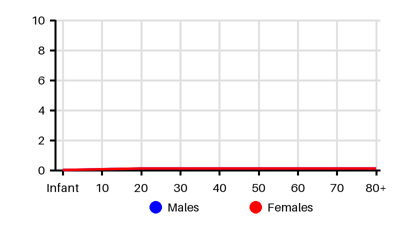
Incidence per 100.000 [rf8][7qi]
Symptoms & findings
Symptoms
Cheilitis, Depression, Diarrhea, Glossitis, Mucositis, Necrolytic migratory erythema, Pallor, Polydipsia, Polyphagia, Polyuria, Weight loss
Clinical findings
Anemia, Decreased zinc, Elevated Chromogranin A, Elevated Glucagon, Elevated NSE, Hyperglycemia, Stomatitis
Anamneses
None listed.
Localized findings
Approach
Blood test: elevated fasting plasma glucagon levels > 500 pg/mL
MEN1-syndrome: parathyroid hormone, gastrin, insulin, pancreatic polypeptide, serotonin, vasoactive intestinal polypeptide, prolactin and ACTH levels
Skin biopsy: necrolytic migratory erythema
CT abdomen
MR abdomen
PET-CT
Treatment
Nutritional support [imc][9gg][ehy]
Somatostatin analogs (octreotide) to inhibit secretion of glucagon
Treat necrolytic migratory erythema: Antibiotics, zinc replacement, and steroids
Prophylactic anticoagulant therapy to prevent deep venous thrombosis
Surgery:
Pancreatic resection if the tumor is localized at the time of diagnosis
Liver metastasis:
Hepatic resection in patients without widespread liver involvement, diffuse extrahepatic metastases, and decreased liver function
Hepatic arterial embolization
Radiofrequency ablation
Chemotherapy: palliative patients
Molecular targeted agents: tyrosine kinase inhibitor and mTOR inhibitor
Radioisotope therapy
Differential diagnoses
Acute renal failure, Candidiasis, Chronic pancreatitis, Cirrhosis, Cushing syndrome, Diabetes mellitus, Eczema, Pemphigus erythematosus, Psoriasis, Seborrheic dermatitis, Sepsis
References
[1] Menon G, Jialal I. Glucagonoma. [Updated 2025 May 3]. In: StatPearls [Internet]. Treasure Island (FL): StatPearls Publishing; 2025 Jan-. Available from: https://www.ncbi.nlm.nih.gov/books/NBK519500/
[2] Jensen RT, Cadiot G, Brandi ML, de Herder WW, Kaltsas G, Komminoth P, Scoazec JY, Salazar R, Sauvanet A, Kianmanesh R; Barcelona Consensus Conference participants. ENETS Consensus Guidelines for the management of patients with digestive neuroendocrine neoplasms: functional pancreatic endocrine tumor syndromes. Neuroendocrinology. 2012;95(2):98-119.
[3] Song X, Zheng S, Yang G, Xiong G, Cao Z, Feng M, Zhang T, Zhao Y. Glucagonoma and the glucagonoma syndrome. Oncol Lett. 2018 Mar;15(3):2749-2755.
[4] John AM, Schwartz RA. Glucagonoma syndrome: a review and update on treatment. J Eur Acad Dermatol Venereol. 2016 Dec;30(12):2016-2022.
[5] www.uptodate.com/contents/glucagonoma-and-the-glucagonoma-syndrome