Diagnosis
Vitiligo
An autoimmune disease characterized by destruction of melanocytes that is characterized by hypopigmentation.
Etiology
Cause [mh9][ub2]
Autoimmune disorder of unknown cause - possibly an error of immune surveillance
Genetic factors
Environmental factors
Pathophysiology [ub2]
Melanocytes are selectively destroyed --> absence of melanocytes --> depigmentation
Theories of melanocyte destruction: cytotoxic mechanisms, intrinsic melanocyte defects, neural mechanisms, and oxidant-antioxidant mechanisms
Associated with thyroid abnormalities
Clinical presentation:
Trichrome
Marginal inflammatory
Quadrichrome
Koebner phenomenon
Localization:
Hands
Forearms
Feet
Face: periocular or perioral distribution
Classification:
Generalized
Segmental
Localized
Complications [mh9]
Autoimmune thyroid disease
Rheumatoid arthritis
Diabetes mellitus
Alopecia areata
Addison disease
Atopic dermatitis
Urticaria
Hypoparathyroidism
Ichthyosis
Pernicious anemia
Psoriasis
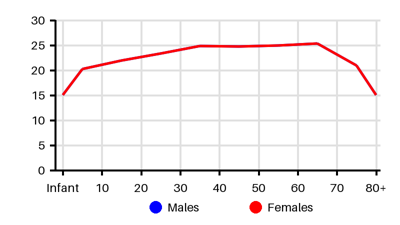
Epidemiology
Incidence per 100.000 [ovs][ydy][mh9]
Symptoms & findings
Symptoms
Koebner phenomenon, Leukotrichia
Clinical findings
None listed.
Anamneses
None listed.
Localized findings
Approach
Dermatoscopy
Wood´s lamp: a hanheld UV irradiation device [mh9]
Confocal microscopy
Biopsy
Blood test: thyroid function
Treatment
Spontaneous repigmentation may occur but is uncommon [mh9]
Topical: corticosteroids, calcineurin inhibitors, and vitamin D analogs [ub2]
Phototherapy: UV-B 2-3/week induces repigmentation in early disease
Laser therapy: Excimer Laser to treat limited, stable patches of vitiligo
Systemic: if resistant disease, tacrolimus and systemic corticosteroids
Surgical repigmentation: if segmental/localized disease [ub2]
Non cultured epidermal suspensions
Thin dermo-epidermal grafts
Suction epidermal grafts
Punch grafting
Cultured epidermis with melanocytes
Differential diagnoses
Adrenal insufficiency, Alezzandrini Syndrome, Cutaneous T-cell lymphoma, Drug eruptions, Eczema, Idiopathic guttate hypomelanosis, Leishmaniasis, Leporsy, Leprosy, Leukoderma, Lichen sclerosus, Lichen striatus, Malignant melanoma, Mycosis fungoides, Nevus, Nevus anemicus, Onchocerciasis, Piebaldism, Pityriasis alba, Pityriasis versicolor, Psoriasis, Systemic lupus erythematosus, Systemic sclerosis, Treponematosis, Tuberous sclerosis, Vogt-Koyanagi-Harada syndrome, Waardenburg syndrome
References
[1] Alikhan A, Felsten LM, Daly M, Petronic-Rosic V. Vitiligo: a comprehensive overview Part I. Introduction, epidemiology, quality of life, diagnosis, differential diagnosis, associations, histopathology, etiology, and work-up. J Am Acad Dermatol. 2011 Sep;65(3):473-491.
[2] Ahmed jan N, Masood S. Vitiligo. Updated 2023 Aug 7: https://www.ncbi.nlm.nih.gov/books/NBK559149/
[3] Mastacouris N, Strunk A, Garg A. Incidence and Prevalence of Diagnosed Vitiligo According to Race and Ethnicity, Age, and Sex in the US. JAMA Dermatol. 2023 Sep 1;159(9):986-990.
[4] Rueda PA, Orozco S, Castro JR, Londoño AM, Vásquez EM, Arango A, et al. Epidemiology of vitiligo: incidence and prevalence by gender and age in Colombian population. Biomédica. 2025;45 (4).
[5] http://emedicine.medscape.com/article/1068962; [Medscape]