Diagnosis
Lactose intolerance
A non-immune process where low levels of lactase enzyme result in the inability to digest lactose into its constituents, glucose and galactose.
Etiology
Cause [aas][jue][4mk]
Primary lactase deficiency: production declines over time (the most common type)
Secondary lactase deficiency: due to injury to the small intestine (infection, disease)
Infections: Gastroenteritis, Giardiasis, Ascariasis
Inflammation: Crohn disease, Celiac sprue, Tropical sprue
Other: Gastrinoma, Radiation enteritis, Diabetic gastropathy, Carcinoid syndrome, Whipple syndrome, HIV enteropathy, Kwashiorkor, Chemotherapy, Antibiotics
Developmental lactase deficiency: prematurely born infants
Congenital lactase deficiency: an extremely rare genetic disorder in which the small intestine produces little or no lactase enzyme from birth [aas]
Pathophysiology
Lactose (a disaccharide found in milk) is hydrolyzed into glucose and galactose by the enzyme lactase, located in the small intestinal border.
The lactase enzyme levels are the highest shortly after birth and decline with aging
Asian, South American, and African populations commonly have lactose intolerance while people from the northern Europe or the northwestern Indian subcontinent are likely to retain the ability to absorb lactose into adulthood [jue]
The osmotic load of the unabsorbed lactose causes:
Secretion of fluid and electrolytes
Acceleration of small intestinal transit
Maldigestion and fermentation of free lactose by colonic bacteria to yield short-chain fatty acids and hydrogen gas.
This causes loose stools, abdominal bloating and pain, flatulence, nausea, borborygmi, and diarrhea [jue][grq]
Complications [4mk]
Osteopenia
Osteoporosis
Malnutrition
Weight loss
Rickets
Growth failure
Epidemiology
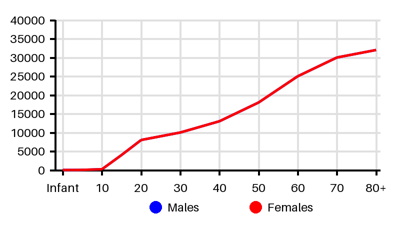
Incidence per 100.000 [4mk][grq][aas]
Symptoms & findings
Symptoms
Bloating, Borborygmus, Diarrhea, Flatulence, Meteorism, Nausea, Vomiting
Clinical findings
None listed.
Anamneses
None listed.
Localized findings
Approach
Milk tolerance test: [4mk]
Administer 500 mL of milk and measure the blood glucose level
An increase of less than 9 mg/dL indicates lactose malabsorption
Hydrogen breath test: post-lactose hydrogen value rises >20 ppm
Stool acidity test: Unabsorbed lactose is fermented by colonic bacteria into lactic acid
Dietary elimination
Lactose tolerance test: Blood glucose levels after giving an oral lactose load
Small bowel biopsy
Genotyping
Treatment
Primary lactase deficiency/Lactose intolerance is not lethal: [jue]
Dietary adjustment:
Soy-based milk, yogurt and fermented products (cheeses) are better tolerated
Probiotics
Lactase enzyme pills
Differential diagnoses
Celiac disease, Crohn disease, Cystic fibrosis, Diverticulitis, Gastrinoma, Gastroenteritis, Giardiasis, Irritable bowel syndrome, Tropical sprue, Ulcerative colitis
References
[1] Silanikove, N.; Leitner, G.; Merin, U. The Interrelationships between Lactose Intolerance and the Modern Dairy Industry: Global Perspectives in Evolutional and Historical Backgrounds. Nutrients 2015, 7, 7312-7331.
[2] http://emedicine.medscape.com/article/187249 (2014-02-15); [Medscape]
[3] Goosenberg E, Afzal M. Lactose Intolerance. [Updated 2025 Aug 6]. In: StatPearls [Internet]. Treasure Island (FL): StatPearls Publishing; 2025 Jan-. Available from: https://www.ncbi.nlm.nih.gov/books/NBK532285/
[4] Scrimshaw NS, Murray EB. The acceptability of milk and milk products in populations with a high prevalence of lactose intolerance. Am J Clin Nutr. 1988 Oct;48(4 Suppl):1079-159.