Diagnosis
Medication-overuse headache
A chronic daily headache (≥15 days per month) due to regular overuse of headache medications (10/15 per month) for >3 months.
Also known as: Analgesic rebound headache, Drug-induced headache, Medication-misuse headache, MOH
Etiology
Cause [hwk]
Repeated anti-pain medication use for pre-existing disorders, such as migraines or tension-type headaches
Pathophysiology remains uncertain [cgs]
Possible theory: central sensitization following chronic analgesic use
Expansion of the receptive nociceptive field
Decreased nociceptive threshold
Decreased noxious inhibitory control
Risk factors [hwk]
Pre-existing disorders: Migraine, tension-type headache, cluster headache, anxiety, depression, OCD, chronic musculoskeletal complaints, gastrointestinal complaints
Demographic: Age > 50 years, female, low educational level
Lifestyle: Smoking, physical inactivity, metabolic syndrome, caffeine intake
Medication: Acetaminophen, Aspirin, NSAIDs, Opioids, Triptan, Ergotamine
Epidemiology
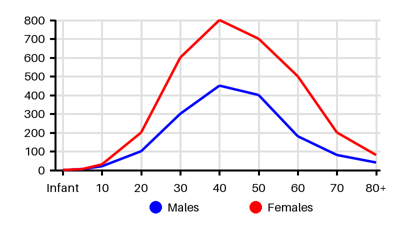
Incidence per 100.000 [cgs][m45][iew][otu][15b][ind]
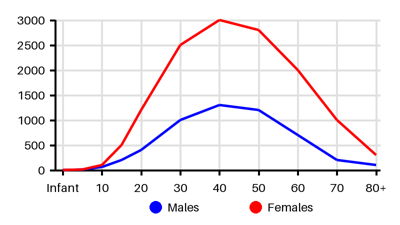
Prevalence per 100.000 [cgs][m45][iew][otu][15b][ind]
Symptoms & findings
Symptoms
Clinical findings
None listed.
Anamneses
Localized findings
Approach
Diagnostic criteria following The International Classification of Headache Disorders: [cgs][m45]
Headache ≥15 days per month in a patient who already has a headache disorder
Overuse of one or more drugs that can be used to treat headaches for >3 months:
≥10 days per month for more than 3 months: Ergotamines, triptans, opioids, or combination of simple analgesics and NSAIDs
≥15 days per month for more than 3 months: Simple analgesics (acetaminophen, aspirin, or NSAIDs)
Not better explained by another ICHD-3 diagnosis
Treatment
Medication withdrawal: [cgs]
Tapered withdrawal for opioids, barbiturates, and benzodiazepines
Throughout the withdrawal period: increased headache, vomiting, restlessness, and anxiety can last from 2 days to a month
Patient education about withdrawal symptoms during the detoxification period
Cognitive behavioral therapy and relaxation approaches
Use of rescue drugs: NSAIDs, steroids, triptans, antiemetics, tranquilizers, and neuroleptics
Bridging medications
Differential diagnoses
Brain tumor, Cerebral venous sinus thrombosis, Cluster headache, Elevated intracranial pressure, Hydrocephalus, Hypercarbia, Migraine, Nummular headache, Paroxysmal hemicrania, Subdural hematoma, Tension headache
References
[1] Fischer MA, Jan A. Medication-Overuse Headache. [Updated 2023 Aug 22]. In: StatPearls [Internet]. Treasure Island (FL): StatPearls Publishing; 2025 Jan-. Available from: https://www.ncbi.nlm.nih.gov/books/NBK538150/
[2] Kebede YT, Mohammed BD, Tamene BA, Abebe AT, Dhugasa RW. Medication overuse headache: a review of current evidence and management strategies. Front Pain Res (Lausanne). 2023 Aug 8;4:1194134.
[3] Kristoffersen ES, Lundqvist C. Medication-overuse headache: epidemiology, diagnosis and treatment. Ther Adv Drug Saf. 2014 Apr;5(2):87-99.
[4] Vandenbussche, N., Laterza, D., Lisicki, M. et al. Medication-overuse headache: a widely recognized entity amidst ongoing debate. J Headache Pain 19, 50 (2018).
[5] Jonsson P, Hedenrud T, Linde M. Epidemiology of medication overuse headache in the general Swedish population. Cephalalgia. 2011 Jul;31(9):1015-22.
[6] Hagen, K., Linde, M., Steiner, T. J., Stovner, L. J. & Zwart, J. A. Risk factors for medication-overuse headache: an 11-year follow-up study. The Nord-Trøndelag health studies. Pain 153, 56–61 (2012).
[7] Ashina S, Terwindt GM, Steiner TJ, Lee MJ, Porreca F, Tassorelli C, Schwedt TJ, Jensen RH, Diener HC, Lipton RB. Medication overuse headache. Nat Rev Dis Primers. 2023 Feb 2;9(1):5.
[8] Baykan B, Ertas M, Karlı N, Uluduz D, Uygunoglu U, Ekizoglu E, Kocasoy Orhan E, Saip S, Zarifoglu M, Siva A. Migraine incidence in 5 years: a population-based prospective longitudinal study in Turkey. J Headache Pain. 2015;16:103.