Diagnosis
Hydrocephalus
Accumulation of cerebrospinal fluid (CSF) inside the cerebral ventricles
Etiology
Cause [abz]
Obstruction in the CSF-flow (non-communicating): brain tumor
Reduced absorption into the venous system:
Post hemorrhagic: Subarachnoid hemorrhage, trauma
Post-inflammatory: Meningitis
Hypersecretory: excessive production of CSF (plexus papilloma or rarely a carcinoma)
Normal-pressure hydrocephalus (NPH): increased incidence in older age, not fully understood pathogenesis
Clinical classification
Congenital: Aqueduct stenosis, Dandy-Walker syndrome, Chiari malformation
Acquired: Subarachnoid hemorrhage (meningeal adhesions), infectious/inflammatory (meningeal adhesions), obstructing masses, postoperative neurosurgery
Communicating (normal-pressure): Flow remains between all the ventricles (defective absorption by arachnoid granulations)
Noncommunicating (obstructive): Increased pressure within the ventricular system due to disruption of CSF flow between the ventricles (aqueductal stenosis, tumor, cyst)
Ex vacuo: Atrophic parenchymal tissue loss resulting in dilated ventricles (Huntingtons disease)
Pathophysiology [abz]
CSF is produced by the choroid plexus (located in the third and fourth ventricles)
Travels through the ventricular system (CSF volume 150ml)
CSF absorption takes place in arachnoid granulations
CSF is absorbed into the venous sinuses and enters systemic circulation
The total volume of the brain, CSF, and blood within the skull is constant
An increase in one compartment must accompany a decrease in volume in another compartment; otherwise, the pressure within the head will be increased
Hydrocephalus --> Increased ICP --> brain damage and pressure-induced atrophy
Congenital hydrocephalus: present at birth
An unusually large head
Tense and bulge fontanelle
“The setting sun” pupils
Failure to thrive
Macewen sign
Acute hydrocephalus is a life-threatening (risk of brain herniation:
Dilated and nonreactive ipsilateral pupil
Autonomic dysfunction
Loss of brain stem reflexes
Coma
Acquired hydrocephalus can occur at any age
Headache, neck pain, nausea, explosive vomiting, drowsiness, lethargy, irritability, seizures, confusion, disorientation, blurred vision, diplopia, urinary and bowel incontinence, gait instability, balance problems, lack of appetite, personality changes, and memory problems
Epidemiology
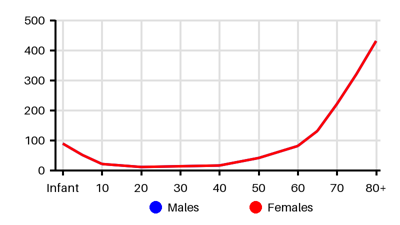
Prevalence per 100.000 [ikr][abz]
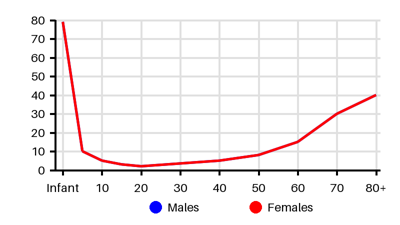
Incidence per 100.000 [ikr][abz]
Symptoms & findings
Symptoms
Abducens nerve palsy, Amnesia, Apraxia, Ataxia, Atonia, Blurred vision, Bradycardia, Cheyne-Stokes respiration, Confusion, Cushing's triad, Dementia, Diplopia, Drowsiness, Esotropia, Failure to thrive, Fecal incontinence, Fever, Headache, Hypersomnia, Irregular respiration, Irritability, Lethargy, Loss of appetite, Nausea, Nystagmus, Paralysis, Paresis, Seizure, Strabismus, Sunset eye sign, Tense fontanelle, Urinary incontinence, Vomiting, Wide pulse pressure
Clinical findings
Elevated Intracranial Pressure, Papilledema, Urinary retention
Anamneses
Localized findings
Approach
Ophtalmoscopy
CT caput
MR caput
Lumbar puncture
Xanthochromia
Treatment
Treat underlying cause: [abz][7vd]
Surgical evacuation of intraparenchymal hemorrhage or tumors
Ventricular shunt placement
Emergency situation in infants: anterior fontanelle ventricular tap
Lumbar puncture in posthemorrhagic and postmeningitic hydrocephalus
Endoscopic third ventriculostomy (ETV)
Choroid plexus cauterization
Differential diagnoses
Arteriovenous malformation, Brain tumor, Cerebral aneurysm, Dementia, Elevated intracranial pressure, Epidural hematoma, Epilepsy, HIV, Intracerebral hemorrhage, Lymphoma, Migraine, Multiple sclerosis, Pituitary adenoma, Stroke, Subarachnoid hemorrhage, Subdural empyema, Subdural hematoma, Temporal arteritis, Toxoplasmosis
References
[1] Koleva M, De Jesus O. Hydrocephalus. [Updated 2023 Aug 23]: https://www.ncbi.nlm.nih.gov/books/NBK560875
[2] Isaacs AM, Riva-Cambrin J, Yavin D, Hockley A, Pringsheim TM, Jette N, Lethebe BC, Lowerison M, Dronyk J, Hamilton MG. Age-specific global epidemiology of hydrocephalus: Systematic review, metanalysis and global birth surveillance. PLoS One. 2018 Oct 1;13(10):e0204926.
[3] Enslin JMN, Thango NS, Figaji A, Fieggen GA. Hydrocephalus in Low and Middle-Income Countries - Progress and Challenges. Neurol India. 2021 Nov-Dec;69(Supplement):S292-S297.
[4] http://emedicine.medscape.com/article/1135286 (2014-01-02); [Medscape]
[5] Dewan MC, Rattani A, Mekary R, Glancz LJ, Yunusa I, Baticulon RE, Fieggen G, Wellons JC, Park KB, Warf BC. Global hydrocephalus epidemiology and incidence: systematic review and meta-analysis. J Neurosurg. 2018 Apr 27;130(4):1065-1079.