Diagnosis
Pelvic inflammatory disease
An inflammation of the upper genital tract in females tha can affect:
Uterus
Fallopian tubes (salpingitis)
Ovaries
Also known as: Acute salpingitis
Etiology
Cause [ypn]
Chlamydia trachomatis, Neisseria gonorrhea, Mycoplasma genitalium, Gardnerella vaginalis, bacterial vaginosis (Peptostreptococcus species, Bacteroides species), respiratory pathogens (Haemophilus influenza, Streptococcus pneumonia, Staphylococcus aureus), and enteric pathogens (Escherichia coli, Bacteroides fragilis, group B Streptococci)
Pathophysiology [7m5][ypn]
Primary salpingitis: Disruption of the cervical barrier --> Ascending spread from the non-sterile lower genital tract (vagina) to sterile organs (uterus, tubes, ovaries)
Veneral (85%): Sexually transmitted microorganisms
Iatrogenic: Diagnostic or therapeutic procedures or by IUD insertions
Endogenous agents: Spread from the endogenous vaginal or perianal flora
Secondary salpingitis: Infection of the Fallopian tubes caused by direct spread from nearby pelvic organs, most often the appendix
Infection of the upper female genital tract --> inflammatory damage:
Scarring, adhesions, stricture in the fallopian tubes --> risk of infertility, ectopic pregnancy and chronic pelvic pain
Risk factors
Menstruating woman
Age < 25 years
Multiple sex partners
No contraception
Sexually transmitted disease
Instrumentation during intrauterine device
Endometrial biopsy
Hormonal changes causing loss of the mechanical barrier
Retrograde menstruation
Complications [cir][ypn]
Chronic pelvic pain
Infertility
Ectopic pregnancy
Pyosalpinx
Ovarian abscess
Intraabdominal infection
Perihepatitis (Fitz-Hugh-Curtis syndrome)
Epidemiology
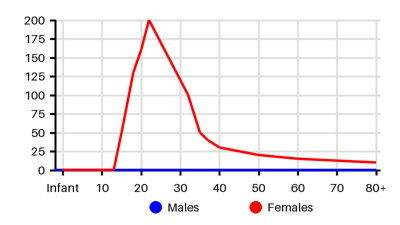
Incidence per 100.000 [iu2][msk][tfg][o6t][7m5][nr6][gbo]
Symptoms & findings
Symptoms
Amenorrhea, Cervical motion tenderness, Dysuria, Fever, Menorrhagia, Metrorrhagia, Nausea, Vaginal discharge, Vomiting
Clinical findings
Elevated CRP, Elevated Sedimentation Rate, Leukocytosis
Anamneses
None listed.
Localized findings
Approach
Blood test
Urine stix, urine culture
Vaginal culture
Endometrial biopsy
Transvaginal ultrasound
Laparoscopy
CT pelvis
MRI
Suspicion of tubal infection: [7m5]
Signs of genital infection
Low abdominal pain
Pelvic tenderness
In addition; one or more of:
Erythrocyte sedimentation rate > 15 mm/hr
Rectal temperature >38.0” C
Palpable adnexal mass
Treatment
Antibiotics: [ypn][cbr][w1v]
Cefotetan 2 g x 2 IV + doxycycline 100 mg x 2 or
Cefoxitin 2 g x 4 IV + doxycycline 100 mg x 2 or
Clindamycin 900 mg x 3 IV + gentamicin 3 to 5 mg/kg IV x 1
Metronidazole 500 mg x 2 for 14 days should be added if trichomonas or recent vaginal instrumentation
Supportive care:
Fluid management
Antiemetics
Analgesics
Surgery: Drainage of tubo-ovarian abscess
Differential diagnoses
Appendicitis, Cervicitis, Diverticulitis, Endometriosis, Interstitial cystitis, Irritable bowel syndrome, Ovarian abscess, Ovarian cancer, Ovarian torsion, Pyelonephritis, Ruptured ectopic pregnancy, Ruptured ovarian cyst, Urinary tract infection
References
[1] Jenkins SM, Vadakekut ES. Pelvic Inflammatory Disease. [Updated 2025 Jun 2]. In: StatPearls [Internet]. Treasure Island (FL): StatPearls Publishing; 2025 Jan-. Available from: https://www.ncbi.nlm.nih.gov/books/NBK499959/
[2] Weström L. Incidence, prevalence, and trends of acute pelvic inflammatory disease and its consequences in industrialized countries. Am J Obstet Gynecol. 1980 Dec 1;138(7 Pt 2):880-92.
[3] Weström L, Joesoef R, Reynolds G, Hagdu A, Thompson SE. Pelvic inflammatory disease and fertility. A cohort study of 1,844 women with laparoscopically verified disease and 657 control women with normal laparoscopic results. Sex Transm Dis. 1992 Jul-Aug;19(4):185-92.
[4] Davis GS, Horner PJ, Price MJ, Mitchell HD, Soldan K. What Do Diagnoses of Pelvic Inflammatory Disease in Specialist Sexual Health Services in England Tell Us About Chlamydia Control? J Infect Dis. 2021 Aug 16;224(12 Suppl 2):S113-S120.
[5] Public Health England. Rates of Pelvic Inflammatory Disease (PID) in England (2000-2013). Health Protection Report. Volume 9 Number 22. Advanced Access report published on: 23 June 2015.
[6] Oakeshott P, Kerry S, Aghaizu A, Atherton H, Hay S, Taylor-Robinson D et al. Randomised controlled trial of screening for Chlamydia trachomatis to prevent pelvic inflammatory disease: the POPI (prevention of pelvic infection) trial BMJ 2010; 340 :c1642.
[7] Fenton KA, Korovessis C, Johnson AM, McCadden A, McManus S, Wellings K, Mercer CH, Carder C, Copas AJ, Nanchahal K, Macdowall W, Ridgway G, Field J, Erens B. Sexual behaviour in Britain: reported sexually transmitted infections and prevalent genital Chlamydia trachomatis infection. Lancet. 2001 Dec 1;358(9296):1851-4.
[8] Kreisel K, Torrone E, Bernstein K, Hong J, Gorwitz R. Prevalence of Pelvic Inflammatory Disease in Sexually Experienced Women of Reproductive Age - United States, 2013-2014. MMWR Morb Mortal Wkly Rep. 2017 Jan 27;66(3):80-83.
[9] Kreisel KM, Llata E, Haderxhanaj L, Pearson WS, Tao G, Wiesenfeld HC, Torrone EA. The Burden of and Trends in Pelvic Inflammatory Disease in the United States, 2006-2016. J Infect Dis. 2021 Aug 16;224(12 Suppl 2):S103-S112.
[10] Ness RB, Trautmann G, Richter HE, Randall H, Peipert JF, Nelson DB, Schubeck D, McNeeley SG, Trout W, Bass DC, Soper DE. Effectiveness of treatment strategies of some women with pelvic inflammatory disease: a randomized trial. Obstet Gynecol. 2005 Sep;106(3):573-80.
[11] http://emedicine.medscape.com/article/256448 (2014-01-02); [Medscape]