Diagnosis
Ruptured ectopic pregnancy
The implantation of a fertilized egg in a location outside of the uterine cavity (fallopian tube, ovary, intraperitoneal cavity and cervix).
Etiology
Cause
Tubal scarring/stricture --> Blockage of the movement:
Past ectopic pregnancy
Pelvic Inflammatory DIsease
LSCS and tubal surgery
Birth defects
Tubal sterilization
Intrauterine device (contraception failure)
Ashermans syndrome
In vitro fertilization
Pathophysiology [sci][ai7]
Smooth muscle contraction assist the oocyte or embryo to the uterine cavity
Blockage of the movement --> Retention of an oocyte or embryo within the tube
Embryo implantation, invasion, and angiogenesis within the fallopian tube
Fallopian tube distension --> Pain
Fallopian tube rupture --> Intraperitoneal bleeding (81%)
Distribution: 95% of ectopic pregnancies develop in the ampulla, infundibular, and isthmic portions of the fallopian tubes.
Risk factors [sci][bda][bjw][ai7]
Prior ectopic pregnancy
Age ≥35
History of Sexually Transmitted Disease: Gonorrhea, chlamydia
History of pelvic inflammatory disease
History of pelvic or tubal surgery (cesarean deliver)
Endometriosis
Intrauterine contraceptive device
Infertility
Oral contraceptives
Endometriosis
Smoking
Complications [ai7]
Severe hemorrhage
Hemodynamic shock leading to multiorgan failure
Fertility impairment
Recurrent ectopic pregnancy
Adhesion formation
Emotional and psychological distress
Epidemiology
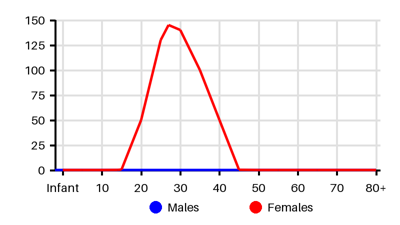
Incidence per 100.000 [bda][4u6][sci][ai7]
Symptoms & findings
Symptoms
Amenorrhea, Cervical motion tenderness, Cullen's sign, Dizziness, Dyschezia, Dysuria, Fever, Hypotension, Kehr's sign, Malaise, Nausea, Syncope, Tachycardia, Vaginal bleeding, Vomiting, Weakness
Clinical findings
Decreased hematocrit, Elevated hCG, Elevated Progesterone, Hemoperitoneum, Shock
Anamneses
Localized findings
Approach
Blood test: β-hCG >2000 mIU/mL, progesterone
Urine stix
Transvaginal ultrasonography (the gold standard)
Transabdominal ultrasonography
Diagnostic laparoscopy
Histopathological confirmation
Treatment
Resucitation: Fluid and blood transfusion [sci]
Surgery: Laparoscopy (laparotomy if hemodynamically unstable)
Partial or total salpingectomy
Securing hemostasis
Removing blood and products of conception
In hemodynamic stable situation without rupture: [bjw][ai7]
Methotrexate (Contraindications: anemia, leukopenia, thrombocytopenia, Immunodeficiency, renal/hepatic/pulmonary/peptic ulcer disease, breastfeeding)
Laparoscopic linear salpingostomy: milking the pregnancy out of the distal ampulla to preserve tubal function
Laparoscopic salpingectomy
Differential diagnoses
Abortion, Appendicitis, Cervical cancer, Dysmenorrhea, Ovarian abscess, Ovarian cancer, Ovarian torsion, Pelvic inflammatory disease, Ruptured ovarian cyst, Urinary tract infection, Urolithiasis
References
[1] Godria PP, Darda MG, Modi DA, Rami BD. A retrospective study on ectopic pregnancy: incidence, clinical presentation, risk factors, treatment and morbidity and mortality associated with ectopic pregnancy- one year study. Int J Reprod Contracept Obstet Gynecol 2023;12:1023-7.
[2] Vadakekut ES, Gnugnoli DM. Ectopic Pregnancy. [Updated 2025 Mar 27]. In: StatPearls [Internet]. Treasure Island (FL): StatPearls Publishing; 2025 Jan-. Available from: https://www.ncbi.nlm.nih.gov/books/NBK539860/
[3] Lisonkova S, Tan J, Wen Q, Abdellatif L, Richter LL, Alfaraj S, Yong PJ, Bedaiwy MA. Temporal trends in severe morbidity and mortality associated with ectopic pregnancy requiring hospitalisation in Washington State, USA: a population-based study. BMJ Open. 2019 Feb 19;9(2):e024353.
[4] http://emedicine.medscape.com/article/2041923 (2014-01-02); [Medscape]
[5] Coste J, Bouyer J, Ughetto S, Gerbaud L, Fernandez H, Pouly JL, Job-Spira N. Ectopic pregnancy is again on the increase. Recent trends in the incidence of ectopic pregnancies in France (1992-2002). Hum Reprod. 2004 Sep;19(9):2014-8.