Diagnosis
Anorectal fistula
A connection between the anorectal canal and perianal area: [bg1]
Intersphincteric – The fistula begins at the dentate line and ends at the anal verge, tracking along the intersphincteric plane between the internal and external anal sphincters, and terminates in the perianal skin (Parks type 1).
Transsphincteric – The fistula tracks through the external sphincter into the ischiorectal fossa, encompasses a portion of the internal and external sphincter, and terminates in the skin overlying the buttock (Parks type 2).
Suprasphincteric – The fistula originates at the anal crypt and encircles the entire sphincter apparatus, and terminates in the ischiorectal fossa (Parks type 3).
Extrasphincteric – The fistula is usually very high in the anal canal, located proximal to the dentate line. It encompasses the entire sphincter apparatus, including the levators, and terminates in the skin overlying the buttock (Parks type 4). Extrasphincteric fistulas are typically not cryptoglandular in origin but may result from trauma, rectal foreign bodies, Crohn's disease, or an iatrogenic injury.
Superficial – Superficial, or submucosal, fistula was not included in the original Parks classification. It does not involve any sphincter muscle.
Also known as: Anal fistula, Fistula-in-ano
Etiology
Cause: FRIENDS keep fistula open [bg1]
Foreign body
Radiation
Inflammation/Infection (Infected anal crypt gland, Crohn's disease, Obstetric trauma)
Epithelialization
Neoplasm
Distal obstruction
Short segment fistula
Pathophysiology
Commonly occurs following perianal abscess
Complications
Recurrence of fistula
Incontinence to flatus or stool
Chronic draining wound
Anal stricture
Epidemiology
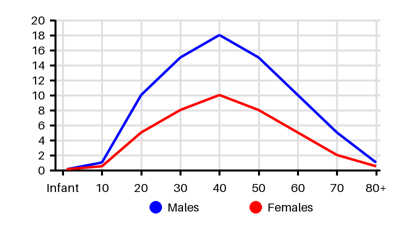
Incidence per 100.000 [ovt][de5][inr][3sw][6og][taw][y8z]
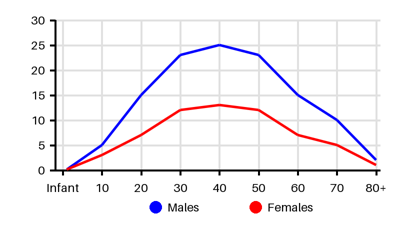
Prevalence per 100.000 [ovt][de5][inr][3sw][6og][taw][y8z]
Symptoms & findings
Symptoms
Dyschezia, Fecal incontinence, Fever, Hematochezia, Pruritus
Clinical findings
None listed.
Anamneses
None listed.
Localized findings
Approach
Blood test
Culture
Biopsy
Rectal exam
Anoscopy
Rectoscopy
Sigmoideoscopy
Colonoscopy
Andoanal ultrasound
CT fistuloigram
MRI
Treatment
The goal is to eradicate the fistula while preserving fecal continence [bg1]
The surgical approach depends upon correct classification of the fistula
Surgery:
Seton: keep the fistula tract open (drainage) --> prevents recurrent abscess
Fistulotomy
Fistulectomy
Ligation of the intersphincteric fistula tract (LIFT)
Other: endoanal advancement flaps, fibrin glue, fistula plugs, marsupialization, the modified Hanley procedure, Diversion
Differential diagnoses
Anal cancer, Anal fissure, Anorectal abscess, Chlamydia, Colorectal cancer, Condyloma acuminatum, Crohn disease, Hemorrhoids, Herpes simplex, Hidradenitis suppurativa, Immunodeficiency, Kaposi sarcoma, Lymphogranuloma venereum, Lymphoma, Syphilis
References
[1] Jimenez M, Mandava N. Anorectal Fistula. [Updated 2023 Feb 2]. In: StatPearls [Internet]. Treasure Island (FL): StatPearls Publishing; 2025 Jan-. Available from: https://www.ncbi.nlm.nih.gov/books/NBK560657/
[2] Sainio P. Fistula-in-ano in a defined population. Incidence and epidemiological aspects. Ann Chir Gynaecol. 1984;73(4):219-24.
[3] Ramanujam et al. Perianal abscesses and fistulas. A study of 1023 patients. Dis Colon Rectum. 1984 Sep;27(9):593-7.
[4] Hämäläinen KP, Sainio AP. Incidence of fistulas after drainage of acute anorectal abscesses. Dis Colon Rectum. 1998 Nov;41(11):1357-61; discussion 1361-2.
[5] Hamadani et al. Who is at risk for developing chronic anal fistula or recurrent anal sepsis after initial perianal abscess? Dis Colon Rectum. 2009 Feb;52(2):217-21.
[6] Sahnan et al. Natural history of anorectal sepsis. Br J Surg. 2017 Dec;104(13):1857-1865.
[7] Sahnan et al. Persistent Fistula After Anorectal Abscess Drainage: Local Experience of 11 Years. Dis Colon Rectum. 2019 Mar;62(3):327-332.
[8] García-Olmo et al. Prevalence of Anal Fistulas in Europe: Systematic Literature Reviews and Population-Based Database Analysis. Adv Ther 36, 3503–3518 (2019).