Diagnosis
Acute febrile neutrophilic dermatosis
A reactive process characterized by the abrupt onset of tender, red/purple papules, nodules and plaques usually occuring on the upper extremities, face, or neck. Also termed Sweet syndrome.
Also known as: Gomm-Button disease, Sweet syndrome
Etiology
Etiology
Unknown (50%)
Leukemia (20%)
Other malignancies
Infection (Streptococcal pneumonia)
Inflammation
Vaccination
Drug exposure (GM-CSF)
Pregnancy
Becets disease
Pathophysiology [ssf]
A neutrophil mediated immunological response (hypersensitivity reaction) to bacterial, viral, neoplastic, or other antigens (vaccine, drug, malignancy):
Cutaneus disease (most common): Erythematous, tender, nonpruritic papules, nodules, and plaques with predominantly head, neck, and upper trunk distribution patterns
Oral: Oral ulcers
Eye: Ocular inflammation (conjunctivitis, episcleritis, scleritis, ulcerative keratitis, iritis, glaucoma, dacryoadenitis, and choroiditis)
Musculoskeletal: Arthralgia, arthritis, and myalgia
CNS: Encephalitis, menigitis
Pulmonary system: Alveolitis, pleural effusion, airway obstruction
Cardiovascular system: Myocarditis, aortitis, coronary artery occlusion
Liver: Hepatitis, hepatomegaly
Intestines: Enteritis
Spleen: Splenomegaly
Kidneys: Glomerulonephritis, hematuria, proteinuria
Bone: Sterile osteomyelitis
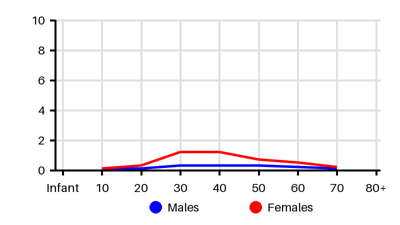
Epidemiology
Incidence per 100.000 [wtr][m4d][ssf]
Symptoms & findings
Symptoms
Arthralgia, Blurred vision, Confusion, Cough, Dyspnea, Fever, Headache, Malaise, Myalgia, Red eye
Clinical findings
Elevated CRP, Elevated Sedimentation Rate, Leukocytosis, Pleural effusion, Pulmonary infiltrate
Anamneses
None listed.
Localized findings
Approach
Diagnostic criteria [ssf]
Major criteria
Rapid onset of tender erythematous plaques and nodules
Typical histopathology: dense neutrophil infiltration without leukocytoclastic vasculitis
Minor criteria
Fever (>38 ̊C)
Association with an underlying hematologic or visceral malignancy, inflammatory disease, or pregnancy, or preceded by an upper respiratory or gastrointestinal infection or vaccination
Excellent response to treatment with systemic corticosteroids or potassium iodide
Abnormal laboratory values at presentation (three of four):
a) Erythrocyte sedimentation rate >20 mm/h
b) High C-reactive protein
c) WBC >8x10⁹/l
d) Neutrophil count >70% of total WBC count
The diagnosis relies on the presence of at least 3 of these factors. The presence of both major criteria (1 and 2) and two of the four minor criteria confirms the diagnosis of classical Sweet's syndrome
Treatment
Treatment of underlying cancer, infection, or inflammation [ssf]
Withdrawal of relevant drug
Systemic corticosteroid therapy
Other treatments: Colchicine, Dapsone, Potassium iodide, Indomethacin
Differential diagnoses
Behcet's disease, Bullous pemphigoid, Cellulitis, Crohn disease, Drug eruptions, Ecthyma, Eczema, Epidermolysis bullosa, Erysipelas, Erythema multiforme, Erythema nodosum, Fungal infection, Herpes simplex, Leukemia, Leukemia cutis, Linear IgA dermatosis, Lymphoma, Polyarteritis nodosa, Pyoderma gangrenosum, Sarcoidosis, Systemic lupus erythematosus, Urticaria, Urticarial vasculitis
References
[1] Majmundar VD, Saleh HM, Baxi K. Acute Febrile Neutrophilic Dermatosis. [Updated 2024 Feb 1]. https://www.ncbi.nlm.nih.gov/books/NBK559142/
[2] Hommel L, Harms M, Saurat JH. The incidence of Sweet's syndrome in Geneva. A retrospective study of 29 cases. Dermatology. 1993;187(4):303-5.
[3] Kemmett D, Hunter JA. Sweet's syndrome: a clinicopathologic review of twenty-nine cases. J Am Acad Dermatol. 1990 Sep;23(3 Pt 1):503-7.
[4] http://emedicine.medscape.com/article/1122152; [Medscape]
[5] [Clinical Dermatology 4.th Edition by Weller, Hunter, Savin and Dahl]