Diagnosis
Epilepsy
At least two unprovoked seizures (uncontrolled, abnormal electrical activity in the brain) that occur in more than 24 hours apart.
Etiology
Causes of seizures [khg]
Unknown
Electrolyte disturbances: hypoglycemia, hyponatremia, hypernatremia, hypocalcemia
Acute toxic effects: antidepressants, sympathomimetics
Withdrawal syndromes: ethanol, benzodiazepines
Reduced compliance to antiepileptic medications
Sepsis
CNS infections
Hypoxic brain injury
Traumatic brain injury
Stroke ischemic or hemorrhagic
Neoplasm
Inflammatory (lupus cerebritis, anti-NMDA receptor encephalitis, others)
Fever
Sleep deprivation
Genetic predisposition
Congenital brain malformations
Brain tumors
Degenerative conditions (Alzheimer disease)
Epilepsy: Recurrent unprovoked seizures
Genetic susceptibility
Chronic pathologic process
Pathophysiology [khg]
All individuals have a seizure threshold
A sudden imbalance between the excitatory (Glutamate, NMDA) and inhibitory (GABA) forces within the network of cortical neurons --> epileptic seizure
The type of seizure depend on the location of the epileptic discharges
Classification
Simple focal/partial seizures: seizure with preserved consciousness.
Symptoms: deja vu, paresthesia, visual disturbances, illusions, hallucinations, fear, anger, sadness, happiness, nausea, unusual feelings/sensations, aphasia, dysarthria, confusion.
Complex focal/partial seizures: excessive and synchronous electrical brain activity in a larger part of the hemisphere that may affect consciousness.
Symptoms: aura, deja vu, fear, euphoria, visual disturbances, automatisms, amnesia, asthenia, weakness and fatigue.
Generalized seizures: pathologic electrical activity of the whole or a larger portion of the brain and affecting consciousness. Focal/partial seizures may spread from one hemisphere to the other side of the brain and result in a secondarily generalised seizure.
Symptoms: generalized tonic-clonic seizure, absence seizure, myoclonic seizure, tonic/clonic/atonic seizure.
Complications [khg]
Respiratory failure --> Hypoxia
Brain injury
Trauma: tongue lacerations or scalp lacerations
Epidemiology
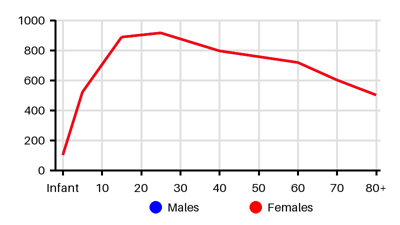
Prevalence per 100.000 [fif][cez]
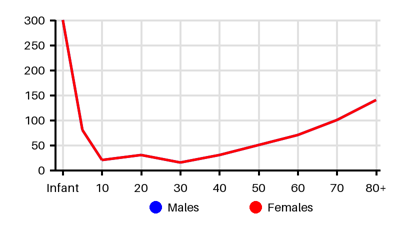
Incidence per 100.000 [fif][cez]
Symptoms & findings
Symptoms
Agitation, Amnesia, Aphasia, Asthenia, Ataxia, Confusion, Decreased consciousness, Dysarthria, Fatigue, Hallucinations, Muscle cramps, Muscle hypertonia, Myokymia, Paralysis, Paresis, Paresthesia, Seizure, Unconsciousness, Visual disturbances, Weakness
Clinical findings
None listed.
Anamneses
None listed.
Approach
Blood test (prolactin, levels of anticonvulsant agents)
Blood gas
Lumbar puncure
CT caput
MR caput
EEG
Video-EEG
Diagnostic criteria
The occurrence of at least 2 unprovoked seizures
Treatment
The goal of treatment in patients with epileptic seizures is to achieve a seizure-free status without adverse effects. Monotherapy is desirable.
Activity Modification and Restrictions:
Driving
Ascending heights
Working with fire or cooking
Using power tools or other dangerous equipment
Taking unsupervised baths
Swimming
Nonpharmacologic Management:
Diet
Vagal nerve stimulation
Implantable neurostimulator
Lobectomy and Lesionectomy
Anticonvulsant Therapy and their mechanisms: [34r]
Blockers of repetitive activation of the sodium channel: Phenytoin, carbamazepine, oxcarbazepine, eslicarbazepine, lamotrigine, topiramate, cenobamate
Enhancers of slow inactivation of the sodium channel: Lacosamide, rufinamide
Gamma-aminobutyric acid (GABA)–A receptor enhancers: Phenobarbital, benzodiazepines, clobazam, ganaxolone
N-methyl-D-aspartic acid (NMDA) receptor blockers: Felbamate
Alpha-amino-3-hydroxy-5-methyl-4-isoxazole propionic acid (AMPA) receptor blockers: Perampanel, topiramate
T-calcium channel blockers: Ethosuximide, valproate
N- and L-calcium channel blockers: Lamotrigine, topiramate, zonisamide, valproate
H-current modulators: Gabapentin, lamotrigine
Blockers of unique binding sites: Gabapentin, levetiracetam, perampanel
Carbonic anhydrase inhibitors: Topiramate, zonisamide
Other anticonvulsants: Cannabidiol, stiripentol, fenfluramine
Treatment of generalized convulsive status epilepticus:
Airway, breathing, and circulation
1st line:
Lorazepam 4 mg IV; repeat once in 5 to 10 minutes if seizures continue
Midazolam 10 mg IM or IV; repeat once in 5 to 10 minutes if seizures continue
Diazepam 10 mg IV; repeat once in 10 minutes if seizures continue
2nd line:
Fosphenytoin 20PE/kg (up to 1500 phenytoin equivalents)
Valproate 40mg/kg (up to 300 mg)
Levetiracetam 60/mg (up to 4500 mg)
Long term prognosis:
Seizure free for 2-5 years --> discontinuing medication
Many patients outgrow many epileptic syndromes of childhood
The relapse rate for seizures in adults is about 40-50%; for children, it is about 25%
Differential diagnoses
Arrhythmia, Cataplexy, Delirium tremens, Encephalitis, Febrile seizure, Hypoglycemia, Hyponatremia, Meningitis, Migraine, Narcolepsy, Orthostatic hypotension, Panic attack, Paroxysmal dyskinesia, Preeclampsia, Somnambulism, Stroke, Syncope, Transient global amnesia, Transient ischemic attack, Vasovagal syncope
References
[1] Lovik K, Murr NI. Seizure. [Updated 2023 Feb 7]. In: StatPearls [Internet]. Treasure Island (FL): StatPearls Publishing; 2025 Jan-. Available from: https://www.ncbi.nlm.nih.gov/books/NBK430765/
[2] Fiest KM, Sauro KM, Wiebe S, Patten SB, Kwon CS, Dykeman J, Pringsheim T, Lorenzetti DL, Jetté N. Prevalence and incidence of epilepsy: A systematic review and meta-analysis of international studies. Neurology. 2017 Jan 17;88(3):296-303.
[3] Annegers JF, Hauser WA, Lee JR, Rocca WA. Incidence of acute symptomatic seizures in Rochester, Minnesota, 1935-1984. Epilepsia. 1995 Apr;36(4):327-33.
[4] http://emedicine.medscape.com/article/1184846 (2014-02-07); [Medscape]
[5] Beghi E. The Epidemiology of Epilepsy. Neuroepidemiology. 2020;54(2):185-191.
[6] Hauser WA, Beghi E. First seizure definitions and worldwide incidence and mortality. Epilepsia. 2008;49 Suppl 1:8-12.
[7] Loiseau J, Loiseau P, Duché B, Guyot M, Dartigues JF, Aublet B. A survey of epileptic disorders in southwest France: seizures in elderly patients. Ann Neurol. 1990 Mar;27(3):232-7.
[8] Tchalla AE, Marin B, Mignard C, Bhalla D, Tabailloux E, Mignard D, Jallon P, Preux PM. Newly diagnosed epileptic seizures: focus on an elderly population on the French island of Réunion in the Southern Indian Ocean. Epilepsia. 2011 Dec;52(12):2203-8.
[9] https://www.uptodate.com/contents/seizures-and-epilepsy-in-older-adults-etiology-clinical-presentation-and-diagnosis
[10] Liman MNP, Al Sawaf A. Epilepsy EEG. [Updated 2023 May 1]. In: StatPearls [Internet]. Treasure Island (FL): StatPearls Publishing; 2025 Jan-. Available from: https://www.ncbi.nlm.nih.gov/books/NBK558912/