Diagnosis
Hyponatremia
Serum-Na < 135 mEq/L:
Mild: Na 130 - 135 mmol/L
Moderate: Na 125 - 130 mmol/L
Severe: Na < 125 mmol/L
Etiology
Cause [cgu][7zn]
Comorbidities: kidney failure, pneumonia, heart failure, liver cirrhosis, malignant tumors, stroke, fracture, infections, malignancies, endocrinopathies (hypothyroidism, hypopituitarism, primary adrenal insufficiency (Addison’s disease), diabetes mellitus/hyperglycemia (movement of water out of cells and reduction of serum sodium levels by dilution)
Drug side-effects: Diuretics, dehydrants, PPI, ACEI/ARB, SSRI, carbamazepine, NSAIDs
Drugs associated with SIADH: Chlorpropamide, Cyclophosphamide, Vincristine, Vinblastine, Amitriptyline, Haloperidol, SSRI, Monoamine oxidase inhibitor, NSAIDs
Low-salt diet
Pathophysiology [u2u]
Thirst --> ADH --> renal concentration --> serum sodium and osmolality 275 to 290 mOsm/kg
Imbalance of water intake and excretion causes hyponatremia or hypernatremia
Determine plasma osmolality:
Hypertonic hyponatremia: High due to active molecules (hyperglycemia/mannitol)
Isotonic hyponatremia: Normal due to elevated lipid profile/hyperproteinemia
Hypotonic hyponatremia: Excess of free water --> true hyponatremia
Urine Osmolality
Urine osmolality < 100 mOsm/kg: primary polydipsia or reset osmostat
Urine osmolality > 100 mOsm/kg: ADH state
Urine Sodium Concentration
Urine sodium < 10 mmol/L: extrarenal loss of fluid (diuretic use and vomiting).
Urine sodium > 20 mmol/L: renal loss of urine (diuretics, vomiting, cortisol deficiency, and salt-wasting nephropathies)
Asses volume status:
Hypervolemia: Increase in sodium with greater increase in total body water
Heart failure
Liver cirrhosis
Renal failure/nephrotic syndrome
Euvolemia: Normal body sodium with increase in total body water
SIADH: CNS disorder, ectopic ADH, carbamazepine, HIV, pneumonia, tuberculosis
Addison's disease
Hypothyroidism
High fluid intake
Drugs: Vasopressin, SSRI, antidepressants, opioids, thiazide diuretics, carbamazepine, vincristine, nicotine, antipsychotics, chlorpropamide, cyclophosphamide, NSAIDs, MDMA, ecstasy
Hypovolemia: Decrease in total body water with greater decrease in sodium
Gastrointestinal fluid loss: diarrhea or vomiting
Renal failure: salt-wasting nephropathies
The third spacing: pancreatitis, hypoalbuminemia, ileus, burns
Diuretics
Osmotic diuresis: glucose, mannitol
Cerebral salt-wasting syndrome (urinary salt wasting)
Mineralocorticoid deficiency
Complications [u2u]
Rhabdomyolysis
Seizures
Coma
Osmotic demyelination syndrome (if rapid correction of chronic hyponatremia)
Epidemiology
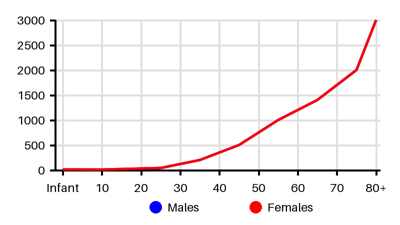
Prevalence per 100.000 [hn9][cgu][cqa][vpa][a5s][ri6]
Symptoms & findings
Symptoms
Anorexia, Bradycardia, Coma, Confusion, Diarrhea, Fatigue, Headache, Hyperreflexia, Hypertension, Hyporeflexia, Lacrimation, Lethargy, Muscle cramps, Nausea, Oliguria, Respiratory failure, Salivation, Seizure, Stupor, Thirst, Vomiting, Weakness
Clinical findings
Decreased Albumin, Elevated Amylase, Elevated BNP, Elevated Creatinine, Elevated Intracranial Pressure, Elevated Lipase, Elevated PT-INR, Hyperglycemia, Hyponatremia, Proteinuria
Anamneses
None listed.
Localized findings
Approach
Blood test: serum osmolality, plasma osmolality, glucose, serum uric acid (reduced in SIADH), hypothalamic–pituitary–adrenal axis, TSH, ACTH, liver function tests
Urine: stix, urine osmolality, urinary sodium concentration
Urine Na: Differentiate between hyponatremia due to hypovolemia and SIADH
>20 mEq/L indicates a renal cause
<20 mmol/L indicates hypovolemia (or SIADH with low-salt diet)
>30 mmol/L suggest SIADH
CT/MRI caput
Chest radiography
The diagnostic criteria for SIADH:
Normal liver, kidney, and heart function
Clinical euvolemia
Normal thyroid and adrenal function
Hypotonic hyponatremia
Urine osmolality greater than 100 mOsm/kg, generally greater than 400-500 mOsm/kg with normal kidney function
Treatment
The treatment of hyponatremia depends on the cause, severity and symptoms. Correct serum sodium levels at the appropriate rate in order to avoid the osmotic demyelination syndrome (elevation of serum sodium concentration by 4–6 mEq/L within the first 4–6 h). Acute hyponatremia (duration < 48 hours) can be safely corrected more quickly than chronic hyponatremia.
Acute symptomatic hyponatremia < 24-48 hours: [vpa][fet]
Severe symtoms: Bolus 150 mL of 3% NaCl over 20 minutes, 2- 3 times as needed, control Na every 20 minutes
Moderate symptoms: Continuous infusion of 3% NaCl at 0.5-2 mL/kg/h
Chronic hyponatremia > 48 hours: correction rate 4-6 mmol/L/d
Treat underlying cause [vpa][fet]
SIADH (chronic euvolemic hyponatremia): Discontinuation of drugs, water restriction, furosemide, careful administration of hypertonic fluids, vasopressin-2 antagonists
Hypovolemic hyponatremia: Isotonic saline 0.5-1.0 mL/kg/h
Euvolemic and hypervolemic hyponatremia: fluid restriction 500 mL/d, loop diuretics, oral NaCl, vasopressin-2 antagonists
Hypotonic hyponatremia: fluid restriction
Differential diagnoses
Acute liver failure, Acute pancreatitis, Adrenal crisis, Adrenal insufficiency, Alcoholism, Cancer origo incerta, Cirrhosis, Clostridium tetani, Cortisol deficiency, Diabetes mellitus, Drug side effects, Gastroenteritis, Heart failure, Hyperkalemia, Hyperphosphatemia, Hyperventilation, Hypocalcemia, Hypocapnia, Hypokalemia, Hypomagnesemia, Hypoparathyroidism, Hypothyroidism, Hypovolemia, Milk-alkali syndrome, Nephrotic syndrome, Primary polydipsia, Pulmonary edema, Renal failure, Syndrome of inappropriate antidiuretic hormone secretion, Trauma
References
[1] Zhang X, Li XY. Prevalence of hyponatremia among older inpatients in a general hospital. Eur Geriatr Med. 2020 Aug;11(4):685-692.
[2] Mannesse CK, Vondeling AM, van Marum RJ, van Solinge WW, Egberts TC, Jansen PA. Prevalence of hyponatremia on geriatric wards compared to other settings over four decades: a systematic review. Ageing Res Rev. 2013 Jan;12(1):165-73.
[3] Rondon H, Badireddy M. Hyponatremia. [Updated 2023 Jun 14]. In: StatPearls [Internet]. Treasure Island (FL): StatPearls Publishing; 2025 Jan-. Available from: https://www.ncbi.nlm.nih.gov/books/NBK470386/
[4] Hao J, Li Y, Zhang X, Pang C, Wang Y, Nigwekar SU, Qiu L, Chen L. The prevalence and mortality of hyponatremia is seriously underestimated in Chinese general medical patients: an observational retrospective study. BMC Nephrol. 2017 Oct 31;18(1):328.
[5] Singh, Abhishek1; Ahuja, Ramesh2; Sethi, Rishi3; Pradhan, Akshyaya4,; Srivastava, Vinod1,2,3,4. Prevalence and incidence of hyponatremia and their association with diuretic therapy: Results from North India. Journal of Family Medicine and Primary Care 8(12):p 3925-3930, December 2019.
[6] Filippatos TD, Makri A, Elisaf MS, Liamis G. Hyponatremia in the elderly: challenges and solutions. Clin Interv Aging. 2017 Nov 14;12:1957-1965.
[7] Imai, N., Osako, K., Kaneshiro, N. et al. Seasonal prevalence of hyponatremia in the emergency department: impact of age. BMC Emerg Med 18, 41 (2018).
[8] Huwyler T, Stirnemann J, Vuilleumier N, Marti C, Dugas S, Poletti PA, Sarasin FP, Rutschmann OT. Profound hyponatraemia in the emergency department: seasonality and risk factors. Swiss Med Wkly. 2016 Dec 19;146:w14385.
[9] https://emedicine.medscape.com/article/242166