Diagnosis
Preeclampsia
Gestational (usually ≥20 weeks) hypertension (systolic BP ≥140 mm Hg or a diastolic BP ≥90 mm Hg) and significant proteinuria (>0.3 g/24 h or Pr:Cr ratio≥30 mg/mmol) [16t]
Also known as: Eclampsia, HELLP syndrome
Etiology
Cause
Unknown factors resulting in uteroplacental ischemia
Endothelial dysfunction (failure of physiologic transformation of the spiral arteries)
Endothelial injury
Comprimised placental perfusion
Decreased glomerular filtration
Genetics
Pathophysiology [16t][pbz]
During pregnancy, trophoblast normally invade the uterus and dilate spiral arteries
Shallow implantation of placenta result in placental hypoperfusion:
Increased circulatory resistance -> placental dysfunction (fetus: ischemia) -> inflammatory mediators -> activation of coagulation (maternal symtoms)
Early-onset (placental) preeclampsia: placental infarcts --> defective placenta --> preeclampsia
Late-onset (maternal) preeclampsia: interaction between a healthy placenta and maternal factors (maternal endothelial dysfunction) --> microvascular damage
Risk factors [16t][hub]
Old age
Previous preeclampsia
Diabetes
Antiphospholipid antibodies
Genetics
Hypertension
Overweight
Kidney disease
Multiple pregnancy
Nullipara
Fetal trisomy
Complication [qyu][pbz]
Eclampsia (seizures)
Stroke, cortical blindness, retinal blindness
Kidney failure
Pulmonary edema
Acute respiratory distress syndrome
Myocardial infarction
HELLP syndrome (Hemolysis, Elevated liver enzymes, Low Platelets)
Jaundice
Disseminated intravascular coagulation
Microangiopathic hemolysis
Placental infarction
Placental abruption
Preterm birth
Intrauterine growth retardation
Fetal or maternal death
Epidemiology
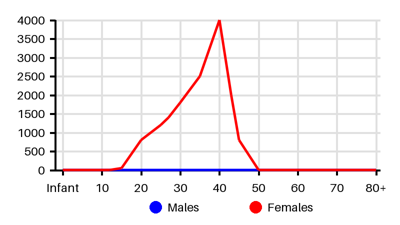
Incidence per 100.000 [1wm][ps8][16t][qyu][vzs][fih][n9u]
Symptoms & findings
Symptoms
Agitation, Blindness, Clonus, Decreased consciousness, Dyspnea, Edema, Headache, Hypertension, Malaise, Nausea, Oliguria, Photopsia, Restlessness, Scotoma, Seizure, Small for gestational age, Visual disturbances, Vomiting, Weakness
Clinical findings
Anemia, Cerebral edema, Cerebral infarction, Cerebral ischemia, Decreased Albumin, Elevated ALAT, Elevated ASAT, Elevated Bilirubin, Elevated Creatinine, Elevated hCG, Elevated Lactic Dehydrogenase, Elevated PT-INR, Hypoxemia, Oligohydramnios, Proteinuria, Pulmonary edema, Thrombocytopenia
Anamneses
Localized findings
Approach
Blood pressure
Blood test: platelet count, liver enzymes, creatinine
Blood gas
Urine stix: proteinuria
24-hour urine collection
Urine protein to creatinine ratio significant ≥ 0.3
Ultrasound abdomen
CT caput
Peripheral blood smear
Umbilical artery doppler ultrasonography
Treatment
Surveillance: [16t][hub]
Maternal blood: hemoglobin, platelet count, creatinine, uric acid, ASAT or ALAT
Clinical monitoring: urinary output, respiratory rate, and tendon reflexes
Fetal: CTG, ultrasound, AFI, umbilical artery Doppler
Antihypertensive therapy: Severe hypertension (systolic BP ≥160 mm Hg or diastolic BP ≥110 mm Hg)
Nifedipine 5-10 mg orally every 30 min
Labetalol 20 mg IV, repeat 20–80 mg IV every 30 min, or 1–2 mg/min (max 300 mg)
Labetalol 100 mg orally every 45 min, maximum 1200 mg/day
Hydralazine (5–10 mg IV) every 30 min, maximum 20 mg
Eclampsia with seizure [pbz]
MgSO4 4 g IV loading dose over 15–20 min, followed by an infusion of 1 g/h
Recurrent seizure(s) treated with additional 2–4 g IV loading dose(s)
Recurrent seizure despite MgSO4:
Lorazepam: 2-4 mg IV x 1, may repeat x 1 after 10-15 min
Diazepam: 5-10 mg IV every 5-10 min to max dose 30 mg
Phenytoin: 15-20 mg/kg IV x 1, may repeat 10 mg/kg IV after 20 min
Levetiracetam: 500 mg IV or orally, may repeat in 12 hours
The definitive treatment of preeclampsia is the delivery of the fetus
Differential diagnoses
Acute pancreatitis, Antiphospholipid syndrome, Aortic coarctation, Brain tumor, Cardiomyopathy, Cholangitis, Cholecystitis, Chronic renal failure, Cushings disease, Epilepsy, Essential hypertension, Gastritis, Gastroesophageal reflux disease, Glomerulonephritis, Hemolytic uremic syndrome, Hyperaldosteronism, Immune thrombocytopenic purpura, Myocardial infarction, Nonalcoholic fatty liver disease, Pheochromocytoma, Pneumonia, Pulmonary embolism, Pyelonephritis, Renal failure, Retinal artery occlusion, Retinal detachment, Sepsis, Shock, Stroke, Systemic lupus erythematosus, Thrombotic thrombocytopenic purpura, Thyrotoxicosis, Ulcer disease, Viral hepatitis
References
[1] Steegers EA, von Dadelszen P, Duvekot JJ, Pijnenborg R. Pre-eclampsia. Lancet. 2010 Aug 21;376(9741):631-44.
[2] Karrar SA, Martingano DJ, Hong PL. Preeclampsia. [Updated 2024 Feb 25]. In: StatPearls [Internet]. Treasure Island (FL): StatPearls Publishing; 2025 Jan-. Available from: https://www.ncbi.nlm.nih.gov/books/NBK570611/
[3] http://emedicine.medscape.com/article/1476919 (2014-01-02); [Medscape]
[4] Duley L. The global impact of pre-eclampsia and eclampsia. Semin Perinatol. 2009 Jun;33(3):130-7.
[5] Maeda N, Koyama M, Takatsuka S, Oyatani K, Himuro N, Mariya T, Kuno Y, Hinotsu S, Saito T, Ohnishi H. Maternal age and the rising incidence of hypertensive disorders of pregnancy: A comprehensive analysis of national claims data from Japan. PLoS One. 2025 Feb 20;20(2):e0319177.
[6] Wu CT, Kuo CF, Lin CP, Huang YT, Chen SW, Wu HM, Chu PH. Association of family history with incidence and gestational hypertension outcomes of preeclampsia. Int J Cardiol Hypertens. 2021 Apr 23;9:100084.
[7] Sun, S., Li, W., Zhang, X. et al. Trends in global and regional incidence and prevalence of hypertensive disordersin pregnancy (1990–2021): an age-period-cohort analysis. Sci Rep 15, 1513 (2025).
[8] Wang W, Xie X, Yuan T, Wang Y, Zhao F, Zhou Z, Zhang H. Epidemiological trends of maternal hypertensive disorders of pregnancy at the global, regional, and national levels: a population-based study. BMC Pregnancy Childbirth. 2021 May 8;21(1):364.
[9] Andersgaard AB, Herbst A, Johansen M, Ivarsson A, Ingemarsson I, Langhoff-Roos J, Henriksen T, Straume B, Oian P. Eclampsia in Scandinavia: incidence, substandard care, and potentially preventable cases. Acta Obstet Gynecol Scand. 2006;85(8):929-36.