Diagnosis
Testicular cancer
Cancer originating from sperm producing germ cells (seminoma and non-seminoma) or stromal cells (Leydig cell tumor and Sertoli cell tumor).
Etiology
Cause [wfe]
Unknown
Genetic factor: isochromosome on chromosome 12
Pathophysiology [wfe]
Seminomas: transformed germ cells that are blocked in their differentiation
Intratubular germ-cell neoplasia: gonocytes fail to differentiate into spermatogonia
Hormonal changes during puberty --> cancer attain invasive potential
Classification:
Germ Cell Tumors: Germ cell neoplasia in situ
Derived from Germ Cell Neoplasia In Situ
Seminoma, Embryonal carcinoma, Yolk sac tumor, post-pubertal type, Trophoblastic tumor, Teratoma, Mixed germ cell tumors
Germ Cell Tumors Unrelated to GCNIS
Spermatocytic tumor, Yolk sac tumor, Mixed germ cell tumor
Sex Cord/Stromal Cell Tumors
Leydig cell tumor, Sertoli cell tumor, Granulosa cell tumor, Thecoma/fibroma, Other sex cord/gonadal stromal tumors, Gonadoblastoma
Miscellaneous Non-specific Stromal Cell Tumors
Ovarian epithelial tumors, Tumors of paratesticular structures, Cystadenoma of the epididymis, Papillary cystadenoma, Adenocarcinoma of the epididymis, Mesenchymal tumors of the spermatic cord and the testicular adnexa
Risk factors [wfe]
Cryptorchid (undescended) testes
Intraabdominal testes
First-degree relatives
Infections (HPV, EBV, CMV, HIV, Parvovirus B-19)
Testicular trauma
Complications [wfe]
Metastatic complications
Venous thromboembolism
Complications secondary to the treatment
Hypogonadism
Peripheral neuropathy (cisplatin)
Hearing loss (cisplatin)
Tinnitus (cisplatin)
Raynaud phenomenon (cisplatin)
Secondary malignancies
Cardiovascular disease
Infertility
Infections
Surgical complications(antegrade ejaculation failure, small bowel obstruction)
Epidemiology
Incidence per 100.000 [vwu][ify][vbf][ios][ns2][554]
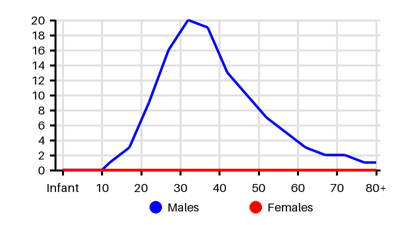
Symptoms & findings
Symptoms
Anorexia, Cough, Dyspnea, Lymphadenopathy, Malaise, Nausea, Vomiting, Weight loss
Clinical findings
Elevated Alpha-fetoprotein, Elevated hCG, Elevated Lactic Dehydrogenase, Gynecomastia, Hydrocele
Anamneses
None listed.
Localized findings
Approach
Blood test: AFP, β-hCG, and LDH
Ultrasound testis
CT abdomen/pelvis
Treatment
According to the IGCCCG risk classification [wfe]
Stage 0: GCNIS
Surveillance with ultrasonography
Radical inguinal orchiectomy
Radiotherapy + testosterone replacement therapy
Stage I: Orchiectomy
Seminoma:
15% to 18% will relapse after orchiectomy without adjuvant treatment
Surveillance (CT scans and tumor markers) or carboplatin chemotherapy for high-risk patients (rete-testis invasion and tumor size >4cm)
Alternative: radiotherapy to the retroperitoneum
Non-seminoma: more aggressive than seminoma
14% to 22% risk of relapse without adjuvant treatment in tumors without lymphovascular invasion
Active surveillance (CT scans) without adjuvant therapy
Alternative: adjuvant chemotherapy (bleomycin, etoposide, and cisplatin)
Stage IIA and IIB: Orchiectomy
Seminoma:
Chemotherapy with three cycles of BEP
Alternative: Radiotherapy
Non-seminoma:
Chemotherapy with three cycles of BEP --> if residual retroperitoneal disease of >1cm --> salvage resection
Alternative: Retroperitoneal lymph node dissection + surveillance (N1) or chemotherapy with two cycles of BEP (N2-N3)
Stage IIC and III: Chemotherapy and surveillance with CT scans and tumor markers
BEP: bleomycin, etoposide, and cisplatin
EP: etoposide, and cisplatin
Cisplatin-based chemotherapy:
VIP (etoposide, ifosfamide, cisplatin)
VeIP (vinblastine, ifosfamide, cisplatin)
Residual Lesions:
Seminoma: 95% responds well to chemotherapy
If residual tumor masses > 3cm --> PET CT --> Retroperitoneal lymph node dissection
Non-seminoma:
Residual tumor masses < 1cm --> surveillance with CT scans
Residual tumor masses > 1cm --> Retroperitoneal lymph node dissection
Differential diagnoses
Cancer origo incerta, Epididymitis, Hematoma, Hydrocele, Inguinal hernia, Leiomyosarcoma, Lipoma, Lung cancer, Lymphoma, Malignant melanoma, Orchitis, Prostate cancer, Rhabdomyosarcoma, Sarcoma, Spermatocele, Syphilis, Testicular torsion, Testicular tumor, Torsion of the appendix testis, Trauma, Tuberculosis, Varicocele
References
[1] Gaddam SJ, Bicer F, Chesnut GT. Testicular Cancer. [Updated 2023 May 27]. In: StatPearls [Internet]. Treasure Island (FL): StatPearls Publishing; 2025 Jan-. Available from: https://www.ncbi.nlm.nih.gov/books/NBK563159/
[2] Gurney JK, Florio AA, Znaor A, Ferlay J, Laversanne M, Sarfati D, Bray F, McGlynn KA. International Trends in the Incidence of Testicular Cancer: Lessons from 35 Years and 41 Countries. Eur Urol. 2019 Nov;76(5):615-623.
[3] Giona S. The Epidemiology of Testicular Cancer. Chapter 9. Available from: https://www.ncbi.nlm.nih.gov/books/NBK585983/ doi: 10.36255/exon-publications-urologic-cancers-epidemiology-testicular-cancer
[4] Magrath I, Epelman S. Cancer in adolescents and young adults in countries with limited resources. Curr Oncol Rep. 2013 Aug;15(4):332-46.
[5] Huyghe E, Plante P, Thonneau PF. Testicular cancer variations in time and space in Europe. Eur Urol. 2007 Mar;51(3):621-8.
[6] https://www.cancerresearchuk.org/health-professional/cancer-statistics/statistics-by-cancer-type/testicular-cancer/incidence#heading-One
[7] Testicular cancer 1993-2021. Northern Ireland Cancer Registry, 2024.
[8] http://emedicine.medscape.com/article/279007 (2014-01-02); [Medscape]