Diagnosis
Erythema infectiosum
A benign childhood infection characterized by erythematous cheeks (slapped-cheek) and lacy exanthem. Also known as 5th disease.
Etiology
Cause [esi]
Human parvovirus B19
Pathophysiology [esi]
Mode of transmission: droplets from respiratory secretions or hematogenous spread
Acute infection --> Th1–mediated cellular immune response
Production of specific IgM antibodies and subsequent formation of immune complexes
Deposition of the immune complexes in the skin and joints --> signs and symptoms
Phase 1: First 2-4 days starts with an exanthem on the cheeks (slapped-cheek)
Phase 2: Next 1-4 days --> erythematous maculopapular rash on proximal limbs
Phase 3: Frequent clearing and recurrences for weeks or months
Complications [esi]
Arthritis
Aplastic anemia
Fetal infection --> miscarriage, intrauterine fetal demise, and hydrops fetalis
Epidemiology
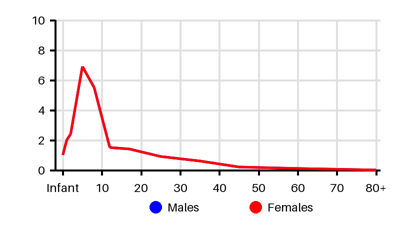
Incidence per 100.000 [o2g]
Symptoms & findings
Symptoms
Arthralgia, Arthritis, Coryza, Diarrhea, Fever, Headache, Lethargy, Malaise, Myalgia, Pruritus, Sore throat, Vomiting
Clinical findings
Anemia, Neutropenia, Thrombocytopenia
Anamneses
None listed.
Localized findings
Approach
ELISA (serologic testing for immunoglobulin M and immunoglobulin G antibodies) [esi]
PCR
Treatment
No specific antiviral therapy is available
A benign and self-limited disease: Symptomatic treatment
Fever, arthralgia, headache --> Acetaminophen or NSAIDs
Pruritus --> antihistamines or topical antipruritic lotions
Sun protection or avoidance
Aplastic crisis --> blood transfusion
Pregnant patient --> follow-up with an obstetrician
Differential diagnoses
Acute rheumatic fever, Anaphylaxis, Drug eruptions, Erythema infectiosum, Hand-Foot-and-Mouth disease, Influenza, Lyme disease, Measles, Mononucleosis, Mumps, Reactive arthritis, Rheumatoid arthritis, Roseola infantum, Rubella, Scarlet fever, Systemic lupus erythematosus, Viral hepatitis
References
[1] Syed HA, Waymack JR. Erythema Infectiosum. [Updated 2025 May 3]. In: StatPearls [Internet]. Treasure Island (FL): StatPearls Publishing; 2025 Jan-. Available from: https://www.ncbi.nlm.nih.gov/books/NBK513309/
[2] Yermalovich MA, Dronina AM, Semeiko GV, Samoilovich EO, Khrustalev VV, Sausy A, Hübschen JM. Comprehensive surveillance data suggest a prominent role of parvovirus B19 infection in Belarus and the presence of a third subtype within subgenotype 1a. Sci Rep. 2021 Jan 13;11(1):1225.
[3] http://emedicine.medscape.com/article/1132078; [Medscape]