Diagnosis
Gastroesophageal reflux disease
Chronic symptoms or mucosal damage incurred by the abnormal reflux of gastric contents into the esophagus and beyond.
Also known as: Acid reflux, GERD
Etiology
Cause/Pathophysiology [iir]
Esophagus: Poor esophageal motility, impaired protective saliva or mucosa
Lower esophageal sphincter: The high resting tone prevents regurgitation
Drugs: nitrates, calcium channel blocker agents, and anticholinergics reduces the lower esophageal sphincter pressure --> allows reflux
Diaphragm: Provides extrinsic reinforcement to the lower esophageal sphincter
Diaphragmatic hiatus hernia --> lack of reinforcement and compression of stomach
Stomach:
Delayed gastric emptying can increase volume and pressure
Intra-abdominal pressure due to obesity, pregnancy, ascites --> GERD
Risk factors [iir]
Esophageal hiatal hernia
Age > 50
Male
Body mass index >30
Smoking
Alcohol use
Drugs: Aspirin, NSAIDs, nitrates, calcium channel blocker agents, anticholinergics, α-adrenergic agonists, theophylline, and morphine
Dietary factors: fatty, spicy, and acidic foods
Decreased physical activity
Complications [iir]
Esophagitis
Upper GI bleeding, anemia
Sricture
Barrett esophagus
Esophageal cancer
Laryngeal cancer
Extra-gastrointestinal complications: dental erosions, laryngitis, cough, asthma, sinusitis, and idiopathic pulmonary fibrosis
Epidemiology
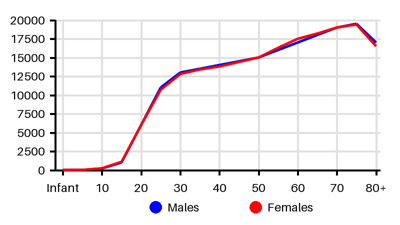
Prevalence per 100.000 [udq][mpa][4t2][g7z]
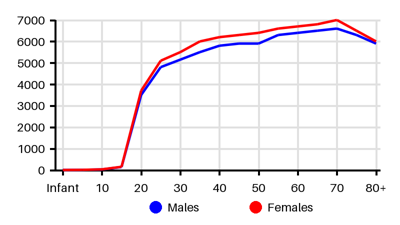
Incidence per 100.000 [udq][mpa][4t2][g7z]
Symptoms & findings
Symptoms
Choking, Cough, Dysphagia, Dysphonia, Globus sensation, Heartburn, Hematemesis, Hoarseness, Melena, Nausea, Odynophagia, Postprandial fullness, Regurgitation, Vomiting, Wheezing
Clinical findings
None listed.
Anamneses
None listed.
Localized findings
Approach
Chest x-ray
Abdominal x-ray
Barium enema
Gastroscopy
Esophageal pH monitoring
Esophageal manometry
Classification [iir]
Grade A: ≥1 esophageal mucosal breaks <5 mm long
Grade B: ≥1 mucosal breaks >5 mm but with continuity across mucosal folds
Grade C: Mucosal breaks of ≥2 mucosal folds involving <75% of the circumference
Grade D: Mucosal breaks involving >75% of the esophageal sphincter
Treatment
Goals: [s6a]
Control symptoms
Heal and prevent recurrent esophagitis
Lifestyle modifications: [s6a][iir]
Weight loss (if overweight)
Avoiding alcohol, chocolate, citrus juice, peppermint, coffee, tomato products
Avoiding peppermint, coffee, and possibly the onion family
Avoid large meals
Waiting 3 hours after a meal to lie down
Refraining from ingesting food (except liquids) within 3 hours of bedtime
Elevating the head of the bed by 8 inches
Avoiding bending or stooping positions
Control of gastric acid secretion:
Pharmacotherapy
H2 receptor antagonists (eg, cimetidine, famotidine, nizatidine)
Proton pump inhibitors (eg, omeprazole, lansoprazole, rabeprazole, esomeprazole, pantoprazole)
Potassium-competitive acid blockers (eg, vonoprazan)
Prokinetic agents (eg, metoclopramide)
Antacids (eg, aluminum hydroxide, magnesium hydroxide)
Surgical treatment: antireflux fundoplication
If symptoms that are not completely controlled by PPI
Patients who desire definitive, one-time treatment
The presence of Barrett esophagus
The presence of extraesophageal manifestations
Young patients
Poor patient compliance with medications
Postmenopausal women with osteoporosis
Patients with cardiac conduction defects
Cost of medical therapy
Differential diagnoses
Achalasia, Acute laryngitis, Asthma, Cholelithiasis, Diabetic gastroparesis, Eosinophilic esophagitis, Esophageal cancer, Esophageal diverticula, Esophageal hiatal hernia, Esophageal perforation, Esophageal spasm, Esophageal stricture, Esophagitis, Gastric cancer, Gastritis, Intestinal malrotation, Irritable bowel syndrome, Lung cancer, Myocardial infarction, Pneumonia, Ulcer disease
References
[1] Azer SA, Goosenberg E. Gastroesophageal Reflux Disease (GERD) [Updated 2025 Jul 6]. In: StatPearls [Internet]. Treasure Island (FL): StatPearls Publishing; 2025 Jan-. Available from: https://www.ncbi.nlm.nih.gov/books/NBK554462/
[2] Li N, Yang WL, Cai MH, Chen X, Zhao R, Li MT, Yan XL, Xue LW, Hong L, Tang MY. Burden of gastroesophageal reflux disease in 204 countries and territories, 1990-2019: a systematic analysis for the Global Burden of disease study 2019. BMC Public Health. 2023 Mar 29;23(1):582.
[3] Zhang D, Liu S, Li Z, Wang R. Global, regional and national burden of gastroesophageal reflux disease, 1990-2019: update from the GBD 2019 study. Ann Med. 2022 Dec;54(1):1372-1384.
[4] GBD 2017 Gastro-oesophageal Reflux Disease Collaborators. The global, regional, and national burden of gastro-oesophageal reflux disease in 195 countries and territories, 1990-2017: a systematic analysis for the Global Burden of Disease Study 2017. Lancet Gastroenterol Hepatol. 2020 Jun;5(6):561-581.
[5] Wang, Kun; Zhang, Li; He, Zhong-Hu; Liu, Zuo-Jing; Zhang, Lu; Hu, Nan; Jin, Zhu; Ke, Yang; Duan, Li-Ping. A population-based survey of gastroesophageal reflux disease in a region with high prevalence of esophageal cancer in China. Chinese Medical Journal 132(13):p 1516-1523, July 5, 2019.
[6] http://emedicine.medscape.com/article/176595 (2014-01-02); [Medscape]