Diagnosis
Polycystic ovary syndrome
A variable disorder that is marked by amenorrhea, hirsutism, obesity and infertility in association with cystic ovarian enlargement.
Etiology
Cause [eht]
Genetic factors
Obesity (visceral adiposity)
Insulin resistance
Pathofysiology [eht]
Elevated LH -> ovarian theca cells increase production of androgens -> elevated LH/FSH-ratio -> failure to aromatize the androgens to estrogens -> decreased estrogen levels and anovulation -> arrest in maturation -> ovarian cysts
Insulin resistance --> hyperinsulinemia
Dysfunction of the hypothalamic-pituitary-ovarian axis
Increased Antimullerian hormone and Luteinizing hormone (LH)
Ovarian steroidogenesis --> androgen excess
Increased risk for:
Infertility
Metabolic syndrome
Obesity
Diabetes type 2
Cardiovascular risk
Depression
Obstructive sleep apnea
Endometrial cancer
Metabolic dysfunction-associated steatotic liver disease (MASLD)
Risk factors [eht]
Family history of PCOS
Fetal androgen exposure
Family history of metabolic syndrome
Overweight or obese
Complications [eht]
Infertility
Miscarriage
Endometrial cancer
Metabolic Disease: BMI, hypertension, diabetes, hyperlipidemia
Cardiovascular Disease
Metabolic dysfunction-associated steatotic liver disease (MASLD)
Depression
Epidemiology
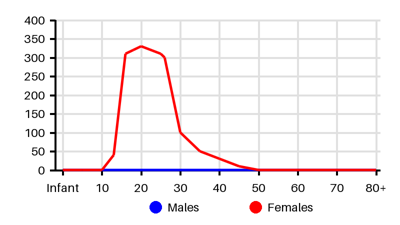
Incidence per 100.000 [qnw][osw][oh6][ipi]
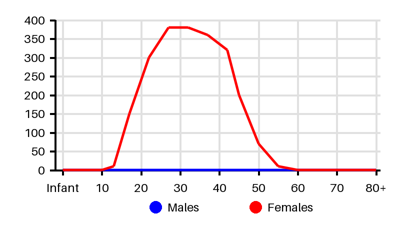
Prevalence per 100.000 [qnw][osw][oh6][ipi]
Symptoms & findings
Symptoms
Acne, Amenorrhea, Diabetes, Hirsutism, Infertility, Obesity, Oligomenorrhea
Clinical findings
Decreased HDL, Elevated LDL, Elevated LH, Elevated LH/FSH-ratio, Hyperglycemia, Hyperinsulinemia, Polycystic ovaries
Anamneses
None listed.
Approach
Blood test: glucose tolerance, thyroid-levels, SHBG, androgens, prolactin levels, hCG,
Pelvic exam
Ultrasound pelvis
Diagnostic laparoscopy
Rotterdam diagnostic criteria - presence of 2 of the following [ixu]
Androgen excess
Ovulatory dysfunction
Polycystic ovaries
Treatment
Lifestyle modifications: [ixu]
Weight loss
Increased exercise
Change in diet
Menstrual abnormalities and hirsutism/acne --> hormonal contraceptives [ixu]
Metabolic/glycemic abnormalities --> Metformin and GLP-1 agonists [eht]
Infertility --> Clomiphene
Adrenal hyperandrogenism --> Prednisone, dexamethasone, spironolactone
Treat cardiovascular risk, diabetes, endometrial cancer, mood disorders, and obstructive sleep apnea
Bariatric surgery [eht]
Differential diagnoses
Acromegaly, Adrenal cortical adenoma, Adrenal cortical carcinoma, Anabolic steroids, Congenital adrenal hyperplasia, Cushings disease, Cushing syndrome, Diabetes mellitus, Drug side effects, Early menopause, Eating disorder, Familial hirsutism, Gigantism, Hyperprolactinemia, Hyperthyroidism, Hypothyroidism, Idiopathic hirsutism, Obesity, Ovarian cancer, Ovarian hyperthecosis, Pituitary adenoma
References
[1] Shukla A, Rasquin LI, Anastasopoulou C. Polycystic Ovarian Syndrome. [Updated 2025 Jul 7]. In: StatPearls [Internet]. Treasure Island (FL): StatPearls Publishing; 2025 Jan-. Available from: https://www.ncbi.nlm.nih.gov/books/NBK459251/
[2] Jiang B. The Global Burden of Polycystic Ovary Syndrome in Women of Reproductive Age: Findings from the GBD 2019 Study. Int J Womens Health. 2025 Jan 25;17:153-165.
[3] Gao Y, Liu H, Qiao L, Liang J, Yao H, Lin X, Gao Y. Study of Burden in Polycystic Ovary Syndrome at Global, Regional, and National Levels from 1990 to 2019. Healthcare (Basel). 2023 Feb 14;11(4):562.
[4] Lin L, Li, W, Xu B, Li Y, Li J, Kong X, Du X. Global Trends in Polycystic Ovarian Syndrome Over 30 Years: An Age-Period-Cohort Study of 204 Countries and Territories (1990- 2021).
[5] Yu O, Christ JP, Schulze-Rath R, Covey J, Kelley A, Grafton J, Cronkite D, Holden E, Hilpert J, Sacher F, Micks E, Reed SD. Incidence, prevalence, and trends in polycystic ovary syndrome diagnosis: a United States population-based study from 2006 to 2019. Am J Obstet Gynecol. 2023 Jul;229(1):39.e1-39.e12.
[6] http://emedicine.medscape.com/article/256806 (2014-01-02); [Medscape]
[7] Huo, M., Wang, Y., Yuan, X. et al. Changing trends in the global burden of polycystic ovarian syndrome-related infertility over the past 30 years: retrospective data analysis of the global burden of disease study 2019. BMC Women's Health 25, 35 (2025).