Diagnosis
Acute respiratory distress syndrome
Acute, diffuse, inflammatory lung injury and life-threatening condition characterized by bilateral pulmonary infiltrates and hypoxemia [oz8][7k8]
Acute lung injury: PaO2:FiO2 ratio ≤ 300 mmHg
ARDS is a subtype of acute lung injury: PaO2:FiO2 ratio ≤ 200 mmHg [whg]
Also known as: Acute lung injury, Adult respiratory distress syndrome, ARDS, Increased-permeability pulmonary edema, Noncardiogenic pulmonary edema
Etiology
Causes [oz8]
Pneumonia (40%)
Sepsis (32%)
Aspiration (9%)
Severe trauma (10%): lung contusion, fat embolism, multiple fractures, burns, drowning
Acute pancreatitis
Massive transfusion (>15 RBC)
Thoracic surgery: Lung transplantation, coronary artery bypass surgery, cardiopulmonary bypass
Pulmonary embolism
Hematopoietic stem cell transplantation
Drugs: Alcohol, aspirin, cocaine, opioids, phenothiazines, tricyclic antidepressants, protamine, nitrofurantoin, chemotherapeutic agents, radiologic contrast
Pathophysiology [oz8]
Alveolar lung injury --> pro-inflammatory cytokines --> excess fluid in the interstitium / alveoli
Impaired gas exchange
Decreased compliance
Increased pulmonary arterial pressure
Complications [7k8]
Prolonged mechanical ventilation
Barotrauma --> pneumomediastinum, pneumothorax
Tracheostomy, laryngeal edema and subglottic stenosis
Laryngeal edema and subglottic stenosis
Infection:
Ventilator-associated pneumonia, line sepsis, UTI, Clostridium difficile colitis
Deep venous thrombosis
Critical illness neuropathy
Renal failure
Stress ulcer
Anemia
Post-traumatic stress disorder
Risk factors for ARDS [7k8]
Advanced age
Female gender
Smoking
Alcohol use
Aortic vascular surgery
Cardiovascular surgery
Traumatic brain injury
Pancreatitis
Pulmonary contusion
Infectious pneumonia
Drugs (radiation, chemotherapeutic agents, amiodarone)
Epidemiology
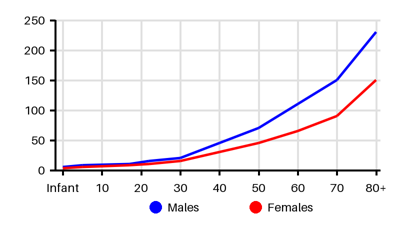
Incidence per 100.000 [whg][v5r]
Symptoms & findings
Symptoms
Cyanosis, Dyspnea, Fever, Hypotension, Tachycardia, Tachypnea
Clinical findings
Elevated Lactate, Hypoxemia, Leukocytosis
Anamneses
Approach
Blood test: WBC, BNP, creatinine, liver function, blood culture, serelogic tests (ENA, ANA, ANCA, Myositis blot, aCCP, RF, aGBM)
Sputum: culture, PCR, antigen tests
Blood gas: PaO2:FiO2 ratio
Chest x-ray
CT thorax
Bronchoscopy
Echocardiography
Biopsy [zr7]
Treatment
Treatment of the underlying condition is essential [zr7]
Treatment of infection:
Early administration of broad antimicrobial therapy
Removal of intravascular lines
Drainage of infected fluid collections
Surgical debridement or resection of an infected site
Supportive care: reduce shunt fraction, increase oxygen delivery, decrease oxygen consumption, avoid further injury [7k8]
Noninvasive ventilation or mechanical ventilation using low tidal volumes (6 mL/kg based upon ideal body weight)
Conservative fluid management and diuretics against fluid overload
Nutritional support
Thrombosis prophylaxis
Differential diagnoses
Acute eosinophilic pneumonia, Acute interstitial pneumonia, Acute pancreatitis, COVID-19, Diffuse alveolar hemorrhage, Drug side effects, Eosinophilic pneumonia, Fat embolism syndrome, Goodpasture syndrome, Heart failure, Hypervolemia, Inhalation injury, Interstitial lung disease, Myocardial infarction, Pneumocystis jiroveci pneumonia, Pneumomediastinum, Pneumonia, Pneumonitis, Pneumothorax, Pulmonary contusion, Pulmonary edema, Pulmonary embolism, Pulmonary hemorrhage, Respiratory failure, Salicylate intoxication, Sepsis, Shock, Toxic shock syndrome, Tumor lysis syndrome
References
[1] https://www.uptodate.com/contents/acute-respiratory-distress-syndrome-epidemiology-pathophysiology-pathology-and-etiology-in-adults
[2] Diamond M, Peniston HL, Sanghavi DK, et al. Acute Respiratory Distress Syndrome. [Updated 2024 Jan 31]. In: StatPearls [Internet]. Treasure Island (FL): StatPearls Publishing; 2025 Jan-. Available from: https://www.ncbi.nlm.nih.gov/books/NBK436002/
[3] Rubenfeld GD, Caldwell E, Peabody E, Weaver J, Martin DP, Neff M, Stern EJ, Hudson LD. Incidence and outcomes of acute lung injury. N Engl J Med. 2005 Oct 20;353(16):1685-93.
[4] Chen W, Chen YY, Tsai CF, Chen SC, Lin MS, Ware LB, Chen CM. Incidence and Outcomes of Acute Respiratory Distress Syndrome: A Nationwide Registry-Based Study in Taiwan, 1997 to 2011. Medicine (Baltimore). 2015 Oct;94(43):e1849.
[5] https://emedicine.medscape.com/article/165139
[6] Thomsen, GE, Morris, AH. Incidence of the adult respiratory distress syndrome in the state of Utah. Am J Respir Crit Care Med 1995;152:965-971