Diagnosis
COVID-19
Respiratory failure cased by a recently (2019) emerged coronavirus disease (COVID-19). COVID-19 remains a public health concern due to the ongoing evolution of SARS-CoV-2 and its prevalence in particular countries.
Also known as: COVID, SARS, SARS-CoV-2, Severe acute respiratory syndrome
Etiology
Cause
ß-coronavirus (SARS-CoV-2)
Pathophysiology [avt][okt]
SARS-CoV 2 replicates mainly in the respiratory tract and the GI tract
Viral RNA can be present in peripheral blood in severely ill patients
Transmission occurs mainly through respiratory droplets and aerosols
May also be spread by touching a surface with the virus on it and then touching one’s mouth, nose, or eyes, but this is less common
Can be transmitted by asymptomatic infected individuals
Incubation period: Median 5.7 d, 99% of infections within 2–14 d
~90% of infections are uncomplicated, oligosymptomatic or with moderate symptoms not leading to hospitalization
Early phase of the infection: viral replication results in direct virus-mediated tissue damage (pulmonary endotheliitis, perivascular inflammation, thrombi)
May also affect GI (diarrhea, nausea, vomiting, abdominal pain), liver injury, myocarditis, renal failure, and CNS
Late phase: the infected host cells trigger an immune response by recruiting T lymphocytes, monocytes, and neutrophils. Cytokines (TNF α, GM-CSF, IL-1, IL-6, IL-1β, IL-8, IL-12 and IFN-γ) are released
Severe COVID-19: cytokine storm is seen (over-activation of the immune system) --> Systemic inflammatory response.
Risk factors for severe disease [okt]
Higher age ≥60, hypertension, obesity, diabetes, cardiovascular disease, cerebrovascular disease, chronic kidney disease, diabetes, chronic lung disease (asthma, COPD, interstitial lung disease, pulmonary embolism, pulmonary hypertension), cirrhosis, smoking, cancer, immunosuppression, pregnancy
Complications [avt][okt]
Rates of hospitalization: 4-7%
25% of hospitalized patients require intensive care with a high rate of organ replacement therapy (75% invasive ventilation, 25% renal replacement therapy)
COVID-19 was the 3rd leading cause of death in the USA in 2020 with ~375,000 deaths
Long COVID [vee]
unable to fully recover and suffer persistent symptoms
Epidemiology
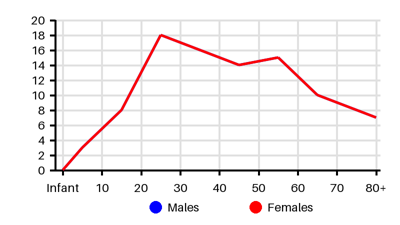
Incidence per 100.000 [avt]
Symptoms & findings
Symptoms
Anorexia, Anosmia, Chills, Cough, Diarrhea, Dysgeusia, Dyspnea, Fever, Headache, Malaise, Myalgia, Nausea, Rhinorrhea, Sore throat, Vomiting
Clinical findings
Elevated CRP, Elevated D-dimer, Elevated Sedimentation Rate, Elevated Troponin, Leukocytosis, Leukopenia, Thrombocytopenia
Anamneses
None listed.
Localized findings
Approach
Nasopharyngeal swab for SARS-CoV-2 nucleic acid using a real-time PCR assay [okt]
specificity nearly 100%
SARS-CoV-2 antigen tests: less sensitive but have a faster turnaround time than PCR
limitations in specificity and sensitivity
diagnosing SARS-CoV-2 infection with serologic testing is not recommended
Blood test: complete blood count, renal and liver function testing, coagulation panel, SR, CRP, ferritin, lactate dehydrogenase, D-dimer, and procalcitonin
Chest x-ray: bilateral multifocal alveolar opacities
Lung ultrasound: pleural effusion
CT: multifocal bilateral ground glass opacities with consolidation changes
Treatment
Supportive treatment: [okt][vee]
Oxygen: high-flow nasal cannula, noninvasive mechanical ventilation, mechanical ventilation, or extracorporeal membrane oxygenation (ECMO)
Anticoagulation
Early phase: replication of the virus --> virus-mediated tissue damage
Antiviral medications to halt viral replication: Remdesivir, Ritonavir-boosted nirmatrelvir, molnupiravir, Tixagevimab 300 mg plus cilgavimab 300 mg
Late phase: dysregulated immune response --> systemic tissue damage
Immunomodulators in the later phase
Dexamethasone 6 mg IV or oral once daily for up to 10 days
Baricitinib (JAK Inhibitor) or tocilizumab (IL-6 Inhibitor)
Tofacitinib (po) and sarilumab (IV)
T Cell Therapy
Mesenchymal Stem Cell Therapy
Prophylaxis:
Tixagevimab 300 mg + cilgavimab 300 mg (anti-spike neutralizing antibodies)
Vaccination: mRNA vaccine (Pfizer-BioNTech, Moderna), Recombinant spike protein with matrix-M1 adjuvant vaccine NVX-CoV2373 (Novavax)
Long COVID: [vee]
symptomatic treatment, psychological support, occupational therapy, and physiotherapy
Differential diagnoses
Acute respiratory distress syndrome, Influenza, Myocardial infarction, Myocarditis, Pneumocystis jiroveci pneumonia, Pneumonia, Pulmonary embolism, Tuberculosis
References
[1] Salzberger B, Buder F, Lampl B, Ehrenstein B, Hitzenbichler F, Holzmann T, Schmidt B, Hanses F. Epidemiology of SARS-CoV-2. Infection. 2021 Apr;49(2):233-239.
[2] Cascella M, Rajnik M, Aleem A, et al. Features, Evaluation, and Treatment of Coronavirus (COVID-19) [Updated 2023 Aug 18]: https://www.ncbi.nlm.nih.gov/books/NBK554776/
[3] Chung YS, Lam CY, Tan PH, Tsang HF, Wong SC. Comprehensive Review of COVID-19: Epidemiology, Pathogenesis, Advancement in Diagnostic and Detection Techniques, and Post-Pandemic Treatment Strategies. Int J Mol Sci. 2024 Jul 26;25(15):8155.