Diagnosis
Benign prostatic hyperplasia
Swelling of the prostate due to hyperplasia of glandular epithelium, stroma, and smooth muscle.
Also known as: Benign prostatic hypertrophy, BPH
Etiology
Cause
Hyperplasia in older men
Additional factors may trigger symptoms: infection, anticholinergic drugs, alpha-agonists, or alcohol
Pathophysiology
Enlarged prostata --> increasing obstruction --> urinary retention
Complications
Urinary retention
Recurrent urinary tract infection
Urosepsis
Renal failure
Bladder diverticula
Epidemiology
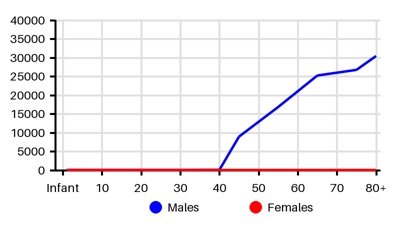
Incidence per 100.000 [b5r][fgc][dwn][ipn]
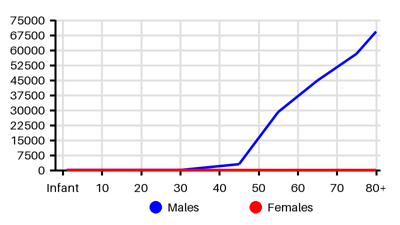
Prevalence per 100.000 [b5r][fgc][dwn][ipn]
Symptoms & findings
Symptoms
Hematuria, Incomplete voiding, Nocturia, Polyuria, Postvoid dribbling, Urinary incontinence, Urinary urgency, Weak urine stream
Clinical findings
Elevated Creatinine, Elevated PSA, Urinary retention
Anamneses
None listed.
Localized findings
Approach
Digital Rectal Examination
Blood test: prostate specific antigen (PSA)
Urine stix
Bladder scan
Catheterisation
Cystoscopy
Uroflow
Transrectal ultrasound
Transrectal biopsy
MR pelvis
Treatment
Mild symptoms --> Watchful waiting: PSA, size evaluation, biopsy
Moderate symptoms --> Medication: [qy4]
Alpha blockers --> relax prostate/bladder-muscles --> reduce symptoms
5-alpha-reductase inhibitor --> decrease testosterone --> slow the prostate growth
Phosphodiesterase-5 Enzyme Inhibitor --> smooth muscle relaxation
Anticholinergic (risk for urinary retention)
Severe symptoms --> Surgery: [qy4]
Prostatic urethral lift
Transurethral resection of the prostate (TURP)
Transurethral incision of the prostate (TUIP)
Transurethral electrovaporization of the prostate (electrode)
Transurethral photovaporization of the prostate (laser)
Transurethral aquablation of the prostate (high-pressure water-jet)
Open prostatectomy
Prostatic arterial embolization
Differential diagnoses
Bladder cancer, Prostate cancer, Prostatitis, Renal cell carcinoma, Urinary tract infection, Urolithiasis
References
[1] Berry et al. The development of human benign prostatic hyperplasia with age. J Urol. 1984; 132: 474-479.
[2] Kok et al. Risk factors for lower urinary tract symptoms suggestive of benign prostatic hyperplasia in a community based population of healthy aging men: the Krimpen Study. J Urol. 2009 Feb;181(2):710-6.
[3] Wang et al. The prevalence of benign prostatic hyperplasia in mainland China: evidence from epidemiological surveys. Sci Rep. 2015 Aug 26;5:13546.
[4] Tae-Hwa Go et al (2018). The Benign Prostatic Hyperplasia Incidence Rate in Korea: Using National Health Insurance Service Data. Journal of Health Informatics and Statistics. 43. 217-222.
[5] http://emedicine.medscape.com/article/437359 (2014-01-02); [Medscape]
[6] Ojewola et al. (2017). Prevalence of clinical benign prostatic hyperplasia amongst community-dwelling men in a South-Western Nigerian rural setting: A cross-sectional study. African Journal of Urology.