Diagnosis
Hypermagnesemia
Serum Mg > 2,1 mg/dL / 0,9 mmol / 1,8 mEq/L.
Etiology
Cause [28d]
Decreased renal excretion:
Renal failure is the most common cause
Addisons disease
Hypothyroidism
Hyperparathyroidism (calcium-induced magnesium absorption in the tubule)
Familial hypocalciuric hypercalcemia
Drugs: lithium, antacids, ACE-inhibitors, NSAIDs
Increased intake:
Drugs: cathartics, laxatives, rectal enema, theophylline, anticholinergics
Bowel conditions (enhanced absorption)
Milk-alkali syndrome
Magnesium therapy (eclampsia): both mother and the newborn
Compartment shift or leak: Magnesium is mainly in the intracellular compartment
Acidosis (diabetic ketoacidosis)
Cellular destruction:
Shock
Burns
Leukemia
Hemolysis
Tumor lysis syndrome
Rhabdomyolysis
Pathophysiology [p6s]
Magnesium is a physiologic calcium blocker, cofactor in hundreds of enzymatic reactions, critical to diverse molecular and catalytic processes, including energy transfer and maintenance of the genome [p6s][28d]
Hypomagnesemia: associated with atherosclerosis and coronary artery disease [n8e]
Hypermagnesemia inhibit the secretion of PTH --> hypocalcemia [sem]
Distribution of magnesium: [pnf]
Bone: 60%
Extracellular: 1% (does not reflect total body stores.)
Intracellular: 39% (the second most common intracellular cation)
Muscle: 25-30%
Soft tissue: 10-15%
Magnesium balance is determined by:
Dietary ingestion
Intestinal absorption
Bone and soft tissue deposition and efflux
Renal excretion and absorption
No hormone regulating (unlike calcium (PTH))
Complications [28d]
Cardiovascular: hypotension and arrhythmia
Neurological: confusion and lethargy
Cardiorespiratory arrest
Coma
Epidemiology
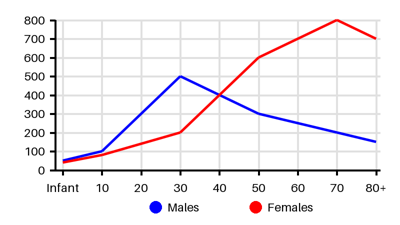
Incidence per 100.000 [b91][p6s][n8e][nwi][nts][oow]
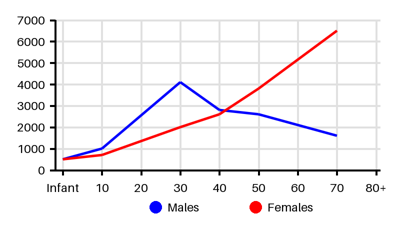
Prevalence per 100.000 [b91][p6s][n8e][nwi][nts][oow]
Symptoms & findings
Symptoms
Blurred vision, Bradycardia, Bradypnea, Cardiac arrest, Coma, Confusion, Dizziness, Drowsiness, Flushing, Headache, Hyporeflexia, Hypotension, Ileus, Lethargy, Muscle weakness, Nausea, Paralysis, Paresthesia, Vomiting, Weakness
Clinical findings
AV block, Decreased PTH, Hypocalcemia, Prolonged QRS complex, Urinary retention
Anamneses
None listed.
Approach
Blood test: Magnesium level, blood urea nitrogen, creatinine, glucose, potassium, phosphate, calcium levels [28d]
Urine specific gravity
Arterial blood gas
ECG
Treatment
Preserved renal function and mild asymptomatic hypermagnesemia (<7 mg/dL): [28d]
No treatment other than removal of exogenous magnesium
Severe cases (>12 mg/dL): monitor ECG, blood pressure, and neuromuscular function
Saline IV (150 ml/hour)
Loop diuretics IV (Furosemide 1 mg/kg)
Calcium gluconate or chloride IV: 1 g in 5 min (repeatable over 5 minutes), counteracts neurologic/muscular manifestations
If renal failure: Hemodialysis
Differential diagnoses
Acute renal failure, Adrenal insufficiency, Diabetic ketoacidosis, Drug side effects, Familial hypocalciuric hypercalcemia, Hemolysis, Hypercalcemia, Hyperkalemia, Hyperparathyroidism, Hypoparathyroidism, Hypothyroidism, Leukemia, Milk-alkali syndrome, Renal failure, Rhabdomyolysis
References
[1] Cascella M, Vaqar S. Hypermagnesemia. StatPearls Publishing; 2024 Jan-. Available from: https://www.ncbi.nlm.nih.gov/books/NBK549811/
[2] Adomako EA, Yu ASL. Magnesium Disorders: Core Curriculum 2024. Am J Kidney Dis. 2024 Jun;83(6):803-815.
[3] Syedmoradi L, Ghasemi A, Zahediasl S, Azizi F. Prevalence of hypo- and hypermagnesemia in an Iranian urban population. Ann Hum Biol. 2011 Mar;38(2):150-5.
[4] https://www.uptodate.com/contents/hypermagnesemia-causes-symptoms-and-treatment
[5] Felsenfeld AJ, Levine BS, Rodriguez M. Pathophysiology of Calcium, Phosphorus, and Magnesium Dysregulation in Chronic Kidney Disease. Semin Dial. 2015 Nov-Dec;28(6):564-77.
[6] Aal-Hamad AH, Al-Alawi AM, Kashoub MS, Falhammar H. Hypermagnesemia in Clinical Practice. Medicina (Kaunas). 2023 Jun 24;59(7):1190.
[7] Haider DG, Lindner G, Ahmad SS, Sauter T, Wolzt M, Leichtle AB, Fiedler GM, Exadaktylos AK, Fuhrmann V. Hypermagnesemia is a strong independent risk factor for mortality in critically ill patients: results from a cross-sectional study. Eur J Intern Med. 2015 Sep;26(7):504-7.
[8] Singhi SC, Singh J, Prasad R. Hypo- and hypermagnesemia in an Indian Pediatric Intensive Care Unit. J Trop Pediatr. 2003 Apr;49(2):99-103.
[9] Escuela MP, Guerra M, Añón JM, Martínez-Vizcaíno V, Zapatero MD, García-Jalón A, Celaya S. Total and ionized serum magnesium in critically ill patients. Intensive Care Med. 2005 Jan;31(1):151-6.
[10] http://emedicine.medscape.com/article/246489 (2014-01-02); [Medscape]