Diagnosis
Hyperparathyroidism
Overproduction of parathyroid hormone, leading to hypercalcemia and renal and skeletal complications.
Etiology
Cause [wyr][vht]
Primary hyperparathyroidism:
Solitary adenoma: 80%
Ectopic: thymus, thyroid, pericardium, retro-esophageal space, mediastinum
Four-gland hyperplasia: 15%
Cancer: < 1%
Parathyromatosis: multiple small functional nests of parathyroid tissue, usually after parathyroidectomy (seeding)
Normocalcemic primary hyperparathyroidism: elevated PTH despite normal serum calcium and no vitamin D deficiency
Lithium cause parathyroid calcium-sensing receptors resistance, requiring higher serum calcium levels to suppress PTH secretion
Other malignancy-related hypercalcemia: PTH-prodction in squamous cell carcinoma of the lung and renal cancers
Genetic Conditions Associated with Primary Hyperparathyroidism
Multiple endocrine neoplasia
Tumor-jaw syndrome
Familial hypocalciuric hypercalcemia
Severe neonatal hyperparathyroidism
Familial isolated hyperparathyroidism
Secondary hyperparathyroidism (Four-gland hyperplasia):
Initial hypocalcemia due to:
Chronic renal failure
GI malabsorption
Osteomalacia
Rickets
Lithium-related hyperparathyroidism
Hypocalcemia --> Secondary PTH production:
Characterized by elevated PTH and normal or low serum calcium concentration
Tertiary hyperparathyroidism:
Develops from long-standing secondary hyperparathyroidism
Parathyroid glands become autonomously overactive after prolonged stimulation, leading to both high PTH and, eventually, high blood calcium
Pathophysiology [wyr]
Corrected calcium = Measured calcium + 0.8 x (4.0 - albumin)
Hypocalcemia and hyperphosphatemia stimulate PTH release
Hypercalcemia, vitamin D and hypermagnesemia inhibit PTH release
PTH increase calcium and reduce phosphorus by:
Increases bone resorption --> releases calcium and phosphorus into the serum
Increased absorption of calcium from intestines
Increased vitamin D3 production
Decreased renal calcium excretion
Complications [wyr]
Nephrolithiasis caused by hypercalciuria
Constipation and abdominal pain
Hungry bone syndrome: Bone pain, osteoporosis, and fractures
Neuropsychiatric symptoms: depression, anxiety, fatigue, cognitive dysfunction, memory loss
Epidemiology
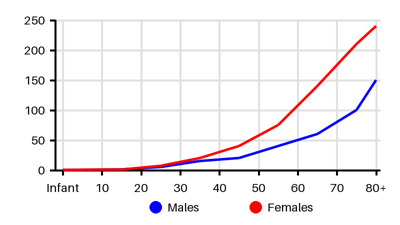
Incidence per 100.000 [opm][zh4]
Symptoms & findings
Symptoms
Anorexia, Arthralgia, Bradycardia, Confusion, Constipation, Depression, Fatigue, Headache, Hypertension, Impaired memory, Insomnia, Lethargy, Loss of appetite, Muscle weakness, Myalgia, Nausea, Paranoia, Polyuria, Pruritus, Vomiting
Clinical findings
Elevated PTH, Gastric ulcer, Hypercalcemia, Osteoporosis, Pathologic fracture, Shortened QT interval, Subperiosteal resorption
Anamneses
Localized findings
Approach
Blood test: PTH, calcium (total, ionized), albumin, phosphorus, 25-hydroxyvitamin D, creatinine
Urine: 24-hour urine calcium
Ultrasound collum
Sestamibi scan: parathyroid nuclear medicine
CT collum
MR collum
Operative exploration
Bone mineral density
Genetic testing
Treatment
Primary hyperparathyroidism: [wyr]
Treat hypercalcemia:
Intravenous saline
Diuretics (furosemide, not thiazides)
Calcitonin
Bisphosphonates: antiresorptive agents
Denosumab: antiresorptive agents
Cinacalcet: activate the calcium-sensing receptor
Oral phosphates can reduce serum calcium levels up to 1 mg/dL
Dialysis
Parathyroidectomy is a permanent and curative treatment for symptomatic disease
Nonoperative surveillance: elderly with mild hypercalcemia and no complications
Secondary hyperparathyroidism:
Medical management is the mainstay of treatment.
Secondary hyperparathyroidism in chronic kidney disease:
Dietary phosphorus restriction
Phosphate binders
Vitamin D and its analogs
Calcimimetics
Parathyroidectomy only if unsuccessful medical therapy, calciphylaxis, refractory pruritus, severe hypercalcemia or hyperphosphatemia
Tertiary hyperparathyroidism:
Total parathyroidectomy with autotransplantation or subtotal parathyroidectomy
Differential diagnoses
Acute pancreatitis, Cancer, Cancer origo incerta, Chronic renal failure, Drug side effects, Familial hypocalciuric hypercalcemia, Hypercalcemia, Hyperthyroidism, MEN syndrome, Milk-alkali syndrome, Parathyroid adenoma, Sarcoidosis, Urolithiasis
References
[1] Helbing A, Leslie SW, Levine SN. Primary Hyperparathyroidism. [Updated 2024 Mar 1]. In: StatPearls [Internet]. Treasure Island (FL): StatPearls Publishing; 2025 Jan-. Available from: https://www.ncbi.nlm.nih.gov/books/NBK441895/
[2] Muppidi V, Meegada SR, Rehman A. Secondary Hyperparathyroidism. [Updated 2023 Aug 28]. In: StatPearls [Internet]. Treasure Island (FL): StatPearls Publishing; 2025 Jan-. Available from: https://www.ncbi.nlm.nih.gov/books/NBK557822/
[3] Minisola S, Arnold A, Belaya Z, Brandi ML, Clarke BL, Hannan FM, Hofbauer LC, Insogna KL, Lacroix A, Liberman U, Palermo A, Pepe J, Rizzoli R, Wermers R, Thakker RV. Epidemiology, Pathophysiology, and Genetics of Primary Hyperparathyroidism. J Bone Miner Res. 2022 Nov;37(11):2315-2329.
[4] Yeh MW, Ituarte PH, Zhou HC, Nishimoto S, Liu IL, Harari A, Haigh PI, Adams AL. Incidence and prevalence of primary hyperparathyroidism in a racially mixed population. J Clin Endocrinol Metab. 2013 Mar;98(3):1122-9.
[5] Darba J, Marsa A. Epidemiology and management of parathyroid gland disorders in Spain over 15 years: a retrospective multicentre analysis. PLoS One. 2020;15(3):e0230130.
[6] https://emedicine.medscape.com/article/127351