Diagnosis
Urinary retention
The inability to completely or partially empty the bladder.
Also known as: Lower urinary tract dysfunction, Lower urinary tract symptoms
Etiology
Cause [cae][uid][muu]
Obstructive retention:
Men: BPH (53% of all causes), prostate cancer, prostatitis, urolithiasis, constipation, bladder neck stricture, urethral stricture, phimosis, paraphimosis, circumcision, meatal stenosis
Women: cystocele, rectocele, gynecologic malignancy/pelvic mass, uterine fibroid, ovarian cyst, cervical cancer, Fowler's syndrome, sling procedures, failure of pelvic floor relaxation, poorly fitted pessary, vaginal lichen planus
Both: Bladder calculi, bladder neck stenosis, bladder neoplasm, bladder radiation, fecal impaction, constipation, gastrointestinal or retroperitoneal malignancy/mass, urethral strictures/diverticula, urethral cancer, foreign bodies, stones
Infectious and inflammatory:
Men: Balanitis, prostattic abscess, prostatitis, posthitis
Women: Acute vulvovaginitis, Behçet's syndrome, vaginal lichen planus, vaginal pemphigus
Both: Urinary tract infection, aneurysm, schistosomiasis, Gullian-Barrè syndrome, herpes simplex virus (genital herpes), Lyme disease, periurethral abscess, transverse myelitis, tubercular cystitis, urethritis, varicella-zoster virus
Non-obstructive retention:
Trauma: childbirth, penis fracture, pelvic trauma, iatrogenic nerve injury (surgery)
Neurologic: stroke, CNS-patology (multiple sclerosis, brain tumor, hydrocephalus, Parkinson disease, cerebral palsy), meningomyelocele, detrusor sphincter dyssynergia, neurogenic bladder, diabetes mellitus, Gullian-Barrè syndrome, cauda equina syndrome, heavy metal poisoning, Parkinson disease
Drug side effects: Post-operative due to anesthesia, NSAIDs, anticholinergic, antiarrhytmics, antidepressants, antihistamines, antihypertensives, antiparkinsonian, antipsychotics, hormonal agents, muscle relaxants, α-adrenergic, β-adrenergic, amphetamine, carbamazepinem opioids, vincristine
Pathophysiology [muu]
Voluntary urination requires close coordination between muscles of the pelvic floor, bladder, and urethra
Any disruption along the pathway can cause urinary retention
Mechanical obstruction: urinary channel narrowing, extrinsic compression, increased sphincter muscle tone
Neurological impairment: inadequate urinary driving force such as incomplete relaxation of the urinary sphincter, inefficient detrusor muscle contraction
Clinical manifestation:
The inability to empty the bladder after urination
Frequent urination in small amounts
Hesitancy or difficulty in starting the flow of urine
Slow or weak urinary stream
The urgent need to urinate, but with little success
The feeling of the need to void again shortly after urinating
Complications [uid]
Electrolyte imbalance
UTI
Pyelonephritis
Urosepsis
Hydroureter and hydronephrosis
Renal failure
Bladder rupture
Epidemiology
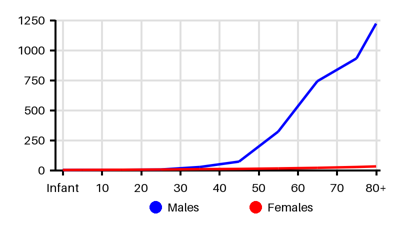
Incidence per 100.000 [qtf][zbs][yos]
Symptoms & findings
Symptoms
Anuria, Anxiety, Diaphoresis, Hypertension, Incomplete voiding, Nocturia, Polyuria, Urinary hesitancy, Urinary incontinence, Weak urine stream
Clinical findings
None listed.
Anamneses
None listed.
Localized findings
Approach
Blood test: PSA, blood glucose, creatinine, BUN, electrolytes
Urine stix
Urine culture
Digital rectal examination
Bladder scan
Ultrasound abdomen
Cystoscopy
Urodynamic studies
CT abdomen
MRI
Treatment
Bladder decompression: [cae][uid]
Urethral catheter (permanent or clean intermittent self-catheterization)
Suprapubic catheter
Cystoscopy
Medical treatment (prophylaxis): start after catheter placement
α1-Blocker (tamsulosin)
5α-Reductase Inhibitor
If postvoid residual urine volume > 300 mL or lower urinary tract symptoms --> referral to urologic department for diagnostics and treatment
BPH --> transurethral resection of the prostate (TURP)
Urethral stricture --> dilation
Gynecologic treatment: pessary or surgery
Sacral neuromodulation or tibial nerve stimulation
Differential diagnoses
Ascites, Bladder cancer, Constipation, Gastrointestinal obstruction, Hypovolemia, Periurethral abscess, Phimosis, Prostate cancer, Renal failure, Stroke, Urolithiasis
References
[1] Serlin DC, Heidelbaugh JJ, Stoffel JT. Urinary Retention in Adults: Evaluation and Initial Management. Am Fam Physician. 2018 Oct 15;98(8):496-503.
[2] Leslie SW, Rout P. Male Urinary Retention: Acute and Chronic. [Updated 2024 Apr 20]. In: StatPearls [Internet]. Treasure Island (FL): StatPearls Publishing; 2025 Jan-. Available from: https://www.ncbi.nlm.nih.gov/books/NBK538499/
[3] Leslie SW, Rawla P, Dougherty JM. Female Urinary Retention. [Updated 2023 May 30]. In: StatPearls [Internet]. Treasure Island (FL): StatPearls Publishing; 2025 Jan-. Available from: https://www.ncbi.nlm.nih.gov/books/NBK538497/
[4] Meigs JB, Barry MJ, Giovannucci E, Rimm EB, Stampfer MJ, Kawachi I. Incidence rates and risk factors for acute urinary retention: the health professionals followup study. J Urol. 1999;162(2):376-382.
[5] Jacobsen SJ, Jacobson DJ, Girman CJ, et al. Natural history of prostatism: risk factors for acute urinary retention. J Urol. 1997;158(2):481-487.
[6] Klarskov P, Andersen JT, Asmussen CF, et al. Acute urinary retention in women: a prospective study of 18 consecutive cases. Scand J Urol Nephrol. 1987;21(1):29-31.
[7] Logie J, Clifford GM, Farmer RD. Incidence, prevalence and management of lower urinary tract symptoms in men in the UK. BJU Int. 2005 Mar;95(4):557-62.
[8] http://emedicine.medscape.com/article/778456 (2014-01-02); [Medscape]
[9] http://www.uptodate.com/contents/acute-urinary-retention (2014-01-02); [Uptodate]
[10] Selius BA, Subedi R. Urinary retention in adults: diagnosis and initial management. Am Fam Physician. 2008;77(5):644.