Diagnosis
Gastritis
Acute or chronic non-ulcerative inflammation of the stomach lining.
Etiology
Cause [9zh]
Infection:
Bacteria: H.pylori, H heilmannii, tuberculosis, syphilis
Viral: CMV, herpes simplex virus
Parasitic gastritis (Anisakis, Cryptosporidium, Ascaris lumbricoides, Giardia, Toxoplasma, and Schistosoma)
Fungal gastritis (Candida, Aspergillus, Mucor, Coccidioides, Histoplasma, Cryptococcus neoformans, Pneumocystis carinii, and Torulopsis glabrata)
Autoimmune gastritis
Gastritis due to other diseases
Crohn disease
Sarcoidosis
Vasculitis
Gastritis due to external causes
Alcoholism
NSAIDs
Nicotine
Alcohol
Radiation/Chemotherapy
Chemicals
Special gastritis
Allergic (eosinophilic) gastritis
Gastritis due to biliary reflux
Lymphocytic gastritis
Ménétrier disease
Eosinophilic gastritis
Other:
Ischemia
Iron-induced gastritis
Glucocortocoids
Chemotherapy
Radiation
Acute gastritis:
Uremia, ischemia, shock, corrosive agents, medications, radiation, trauma, severe burns, sepsis, or alkaline-bile reflux
Chronic gastritis:
Atrophic: autoimmune gastritis
Non-atrophic (may progress to atrophic): Helicobacter pylori
Reactive gastritis or gastropathy:
Medications, alcohol, radiation exposure, and duodenal (bile) reflux
Pathophysiology [9zh]
H pylori --> bacterial virulence factors (cell adhesion, cell damage, disrupt tight junctions, and evade the host immune response)
Disrupts the gastric mucosal barrier --> chronic inflammation
Autoimmune gastritis: T-cell–mediated destruction of the mucosa and the production of autoantibodies targeting parietal cells and the intrinsic factor
Associated with pernicious anemia
Gastritis may progress to premalignant atrophy --> dysplasia --> gastric cancer
Complications [9zh]
Peptic ulcer disease
Immune thrombocytopenic purpura
Iron-deficiency anemia (autoimmune and H pylori–induced gastritis)
Vitamin B12 deficiency
Atrophic gastritis
Gastric cancer (complication of atrophic gastritis)
Gastric neuroendocrine tumor (complication of atrophic gastritis)
Gastric lymphoma (associated with H pylori–induced gastritis)
Epidemiology
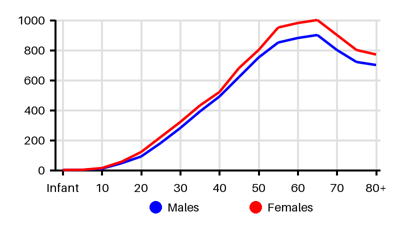
Incidence per 100.000 [kaf][wm1]
Symptoms & findings
Symptoms
Belching, Bloating, Diaphoresis, Dyspepsia, Dyspnea, Hematemesis, Melena, Nausea, Pallor, Tachycardia, Vomiting
Clinical findings
Anamneses
None listed.
Localized findings
Approach
Blood test: Liver, gallbladder, kidney and pancreatic function tests
Pregnancy test
H pylori: stool antigen test, Urea breath test, Serum antibodies test
Stool for blood
ECG
Gastroscopy: Rapid urease test, Bacterial culture, 5 separate biopsies
Diagnostic criteria [9zh]
Evidence of atrophic gastritis (gastroscopy)
Autoantibodies against the intrinsic factor and parietal cells
Serum pepsinogen I levels
The ratio of pepsinogen I to pepsinogen II
Treatment
Medical treatment: Treatment of the underlying cause
Avoid NSAIDs, caffeine, smoking
H Pylori eradication:
Bismuth + nitroimidazole + tetracycline + PPI for 10-14 days or
Clarithromycin + amoxicillin/amitronidazole + PPI for 14 days or
Clarithromycin + amoxicillin + nitroimidazole for 14 days
Surgery:
Phlegmonous gastritis or acute necrotizing gastritis
Differential diagnoses
Celiac disease, Cholecystitis, Cholelithiasis, Chronic pancreatitis, Crohn disease, Eosinophilic esophagitis, Eosinophilic gastroenteritis, Gastric cancer, Gastric lymphoma, Gastroenteritis, Gastroesophageal reflux disease, Myocardial infarction, Pernicious anemia, Ulcer disease, Zollinger-Ellison syndrome
References
[1] Azer SA, Awosika AO, Akhondi H. Gastritis. [Updated 2024 Jun 22]. In: StatPearls [Internet]. Treasure Island (FL): StatPearls Publishing; 2025 Jan-. Available from: https://www.ncbi.nlm.nih.gov/books/NBK544250/
[2] https://emedicine.medscape.com/article/176156
[3] Liu, Y., Zhang, J., Guo, Y. et al. Global burden and risk factors of gastritis and duodenitis: an observational trend study from 1990 to 2019. Sci Rep 14, 2697 (2024).