Diagnosis
Labyrinthitis
An inflammation of the labyrinth (a maze of fluid-filled channels in the inner ear). Present as vertigo lasting for days.
Etiology
Cause [wdi]
Usually unknown cause
Infections of the ear:
Virus: Rubella, CMV, mumps, measles, herpes zoster oticus
Bacterial labyrinthitis: arising from menigitis or otitis media
Autoimmune: Polyarteritis nodosa and granulomatosis with polyangiitis
Head injury
Extreme stress
Allergy
Systemic disease: Syphilis, HIV
Reaction to medication:
Aminoglycosides and other ototoxic medications
Antihypertensives: amlodipine.
Antidepressants (abrupt discontinuation)
Tranquilisers: benzodiazepines
Anti-epileptics
Carbon monoxide
Pathophysiology
The bony labyrinth situated within the temporal bone comprisse of three main parts:
The vestibule
The cochlea
The 3 semicircular canals
All three structures contain perilymph (sodium as the primary cation)
The membranous labyrinth is situated within the bony labyrinth and contains Endolymph (potassium as the primary cation)
The gradient across Reissner's membrane, created by the opposing concentrations of endolymph and perilymph, is responsible for generating the electrical impulses of the hair cells, known as the endocochlear potential
Labyrinthitis cause an imbalance of neuronal input between the left and right inner ears --> Nausea, vomiting, and severe spinning vertigo
Complications [wdi]
Persistent hearing loss
Complete deafness
Persistent tinnitus
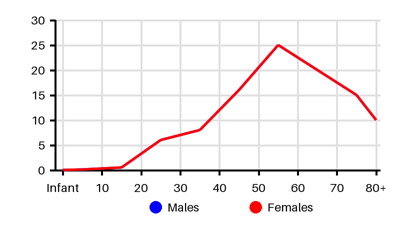
Epidemiology
Incidence per 100.000
Symptoms & findings
Symptoms
Anxiety, Ataxia, Dizziness, Headache, Hearing loss, Nausea, Nystagmus, Tinnitus, Vertigo, Vomiting
Clinical findings
None listed.
Anamneses
None listed.
Localized findings
Approach
Otoscopy
Neurologic exam: Cranial nerve, cerebellum, gait, balance
Examination for nystagmus, electronystagmography, caloric testing
Audiometry
CT caput
MR caput
Treatment
A self-limiting disease. Treatment with drugs is neither necessary nor possible. [wdi]
Supportive: hydration and bed rest
Treatment of underlying condition:
Bacterial infection: Antibiotics
Autoimmun condition: Corticosteroids, azathioprine, etanercept, or cyclophosphamide
Symptomatic treatment: Antihistamin, antiemetic, prochlorperazine
Vestibular rehabilitation exercises: neural adaptation and compensation
Gaze stability exercises: keeping eyes fixated on a target while moving the head
Habituation: provoke symptoms and then reduce response upon repetition
Functional retraining – including postural control, relaxation, and balance training
Surgical treatment:
Myringotomy and evacuation of effusion secondary to otitis media
Mastoidectomy for mastoiditis or cholesteatoma
Differential diagnoses
Acoustic neuroma, Benign paroxysmal positional vertigo, Brain tumor, Cholesteatoma, Herpes zoster, Intracranial hemorrhage, Meniere disease, Meningitis, Migraine, Multiple sclerosis, Otitis media, Spondylolysis, Stroke, Subarachnoid hemorrhage, Temporal bone fracture, Transient ischemic attack, Vestibular neuronitis, Wernicke encephalopathy
References
[1] Barkwill D, Winters R, Arora R. Labyrinthitis. [Updated 2025 Jul 23]. In: StatPearls [Internet]. Treasure Island (FL): StatPearls Publishing; 2025 Jan-. Available from: https://www.ncbi.nlm.nih.gov/books/NBK560506/