Diagnosis
Mitral regurgitation
The incomplete closure of the mitral valve, leading to the backflow of blood from the left ventricle into the left atrium during systole.
Etiology
Cause [shs]
Primary mitral regurgitation:
Degenerative
Structural deformity/damage to the leaflets, chordae, or papillary muscles
Insufficiently closure during systole
Causes: Papillary muscle rupture, mitral valve prolapse, or leaflet perforation
Infectious/rheumatic
Congenital valvular anomaly (extremely rare)
Secondary mitral regurgitation
Functional or ischemic
Left ventricular wall motion abnormalities
Causes: ischemic cardiomyopathy, remodeling (dilated cardiomyopathy, hypertrophic cardiomyopathy), Atrial fibrillation
Pathophysiology [ysq][8oc]
Acute due to spontaneous rupture of the chordae tendineae or papillary muscle: elevated left atrial pressure, acute pulmonary edema, dyspnea, cardiogenic shock (operative mortality 80%)
Myxomatous degeneration: Mitral valve prolapse, Ehlers-Danlos, Marfan
Myocardial infarction
Endocarditis: Abscess, Vegetations, Rupture of chordae, Leaflet perforation
Trauma
Osteogenesis imperfecta
Systemic lupus erythematosus
Chronic decompensated: left ventricular hypertrophy, increased end-diastolic volumes, left ventricular muscle dysfunction, impaired end-systolic ventricle emptying, increased left atrial pressure, pulmonary congestion, left atrial enlargement --> atrial fibrillation, chest pain, arrhythmias, heart failure, pulmonary edema, cardiogenic shock
Myxomatous degeneration: Mitral valve prolapse, Ehlers-Danlos, Marfan
Mitral annular calcification
Annular dilatation and poor valve closure due to left ventricular dilatation
Rheumatic heart disease
Endocarditis
Cardiomyopathy
Systemic lupus erythematosus
Scleroderma
Hypertrophic cardiomyopathy
Prosthetic leak
Congenital: mitral valve clefts, mitral valve fenestrations, parachute abnormality
Drugs: ergotamine, methysergide, pergolide, anorexiant medications
Chronic compensated: Left atrium and ventricle have sufficient time to dilate and accommodate the regurgitant volume
Complications [shs]
Heart failure and related symptoms (ie, shortness of breath)
Atrial fibrillation
Stroke due to arrhythmias
Pulmonary artery hypertension
Dilation of the heart and cardiomegaly
Complications of mitral valve surgery:
Infections, bleeding, clotting/stenosis, valve dysfunction, arrhythmia, stroke, death
Epidemiology
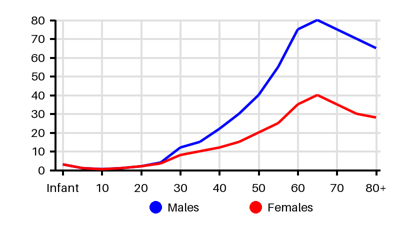
Incidence per 100.000 [p9b][vik]
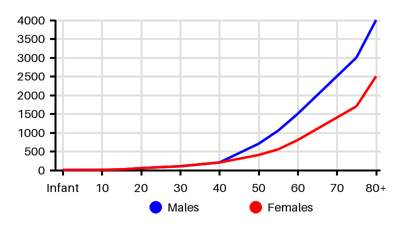
Prevalence per 100.000 [p9b][vik]
Symptoms & findings
Symptoms
Arrhythmia, Cough, Diaphoresis, Dyspnea, Fatigue, Heart murmur, Hepatomegaly, Hypotension, Jugular vein distention, Nail clubbing, Nausea, Orthopnea, Palpitations, Syncope, Systolic murmur, Tachycardia, Weakness
Clinical findings
Ascites, Atrial fibrillation, Elevated BNP, Emboli, Left atrial dilation, Pericardial effusion, Pleural effusion, Pulmonary congestion, Shock
Anamneses
None listed.
Localized findings
Approach
Blood test: Troponin T, CK-MB, proBNP [ysq]
ECG: Atrial fibrillation, Q wave, ST- and T-wave changes
Chest X-ray: LV and LA enlargement
Echocardiography: Regurgitation
Cardiac angiography: assessment of the regurgitant volume (severity)
Cardiac MRI
Treatment
Medication: [ysq][shs]
Delay the progression in asymptomatic patients:
Angiotensin-converting enzyme inhibitors
Angiotensin II receptor blockers
After load reduction decreases the regurgitant volume
Loop diuretics
Vasodilator (nitroprusside)
Aortic balloon counterpulsation
Pulmonary edema: Oxygen, diuretics, nitrates, intubation
Frequency: Moderate tachycardia is beneficial --> less time for regurgitation
Rapid atrial fibrillation: Diltiazem, digoxin, cardioversion
Heart failure: Diltiazem
Percutaneous mitral valve repair
Surgical mitral valve repair: if treated early
Surgical valve replacement
Differential diagnoses
Aortic regurgitation, Aortic stenosis, Arrhythmia, Cardiac tamponade, Endocarditis, Heart failure, Mitral stenosis, Myocardial infarction, Myocarditis, Pneumothorax, Pulmonary embolism, Shock, Thyrotoxicosis, Tricuspid stenosis
References
[1] Douedi S, Douedi H. Mitral Regurgitation. [Updated 2024 Apr 30]. In: StatPearls [Internet]. Treasure Island (FL): StatPearls Publishing; 2025 Jan-. Available from: https://www.ncbi.nlm.nih.gov/books/NBK553135/
[2] https://emedicine.medscape.com/article/758816
[3] https://emedicine.medscape.com/article/155618
[4] Grave, C.; Tribouilloy, C.; Tuppin, P.; Weill, A.; Gabet, A.; Juillière, Y.; Cinaud, A.; Olié, V. Fourteen-Year Temporal Trends in Patients Hospitalized for Mitral Regurgitation: The Increasing Burden of Mitral Valve Prolapse in Men. J. Clin. Med. 2022, 11, 3289.
[5] Wang C, Song M, Chen H, Liang P, Luo G, Ren W, Yang S. Global Epidemiologic Trends and Projections to 2030 in Non-Rheumatic Degenerative Mitral Valve Disease from 1990 to 2019: An Analysis of the Global Burden of Disease Study 2019. Rev Cardiovasc Med. 2024 Jul 22;25(7):269.
[6] Aluru JS, Barsouk A, Saginala K, Rawla P, Barsouk A. Valvular Heart Disease Epidemiology. Med Sci (Basel). 2022 Jun 15;10(2):32.
[7] Liu Z, Wei P, Jiang H, Zhang F, Ouyang W, Wang S, Fang F, Pan X. Alerting trends in epidemiology for non-rheumatic degenerative mitral valve disease, 1990-2019: An age-period-cohort analysis for the Global Burden of Disease Study 2019. Int J Cardiol. 2024 Jan 15;395:131561.