Diagnosis
VIPoma
An extremely rare neuroendocrine islet cell tumor characterized by the overproduction of vasoactive intestinal peptide (VIP).
Also known as: Pancreatic cholera, Verner-Morrison syndrome, WDHA syndrome
Etiology
Cause [w89]
Neuroendocrine Islet cell tumors associated with multiple endocrine neoplasia type 1
Insulinoma
Gastrinoma
ACTHoma
VIPoma
Anatomic localisation [bag][qbr]
Pancreas: 95%
Non-pancreatic tissue: colon, liver and neural crest-derived tissues
Metastases: liver, lymph nodes, bones, and kidney
Pathophysiology [qbr]
VIP is a neurohormone produced by the neurons in the CNS, GI, respiratory, and urogenital tracts
VIP effects:
Vasodilator
Decreased smooth muscle activity --> decreases GI motility
Stimulate water and electrolyte secretion from the intestinal tract
Inhibit gastric acid secretion
Increase blood flow mainly in the GI tract
Promote glycogenolysis, lipolysis, and bone resorption
VIPoma are usually malignant and can metastasize to the liver and lymph nodes
Clinical manifestations:
WDHA syndrome: Watery Diarrhea, Hypokalemia, Achlorhydia/hypochhlorhydia
Dehydration
Muscle weakness (electrolyte imbalance)
Metabolic acidosis
Complications [qbr]
Excessive VIP: Dehydration, hypokalemia, metabolic acidosis, renal failure, malnutrition
Thromboembolic events
Metastasis
Treatment: surgical and medical complications
Epidemiology
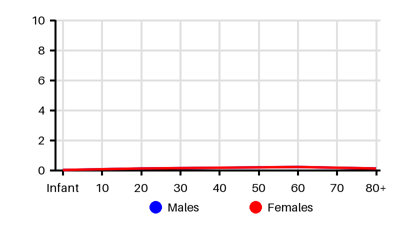
Incidence per 100.000 [e4b][7g2][soe][bag][qbr]
Symptoms & findings
Symptoms
Arrhythmia, Dehydration, Diarrhea, Fasciculations, Fatigue, Flushing, Hypotension, Muscle cramps, Palpitations, Paresthesia, Tachycardia
Clinical findings
Achlorhydria, Elevated VIP, Hypercalcemia, Hyperglycemia, Hypochlorhydria, Hypokalemia, Hypomagnesemia, Metabolic acidosis
Anamneses
None listed.
Approach
Clinical suspicion: large volume secretory diarrhea (usually >3 L per day, no osmolar gap in the stool fluid) [rk2]
(WDHA syndrome: Watery Diarrhea, Hypokalemia, Achlorhydria)
Blood test: elevated VIP levels >250 pg/mL, hypokalemia, hyperglycemia, hypercalcemia and non-anion gap metabolic acidosis [bag][qbr]
CT abdomen
MRI abdomen
Somatostatin receptor scintigraphy (Octreoscan)
Endoscopic ultrasound
Biopsy with immunohistochemical stains
Treatment
Initial treatment: [bag][qbr][rk2]
Replace the massive loss of fluids: intravenous fluid
Restore electrolyte levels: potassium replacement
Reverse acidosis
Control diarrhea:
Octreotide (a somatostatin analogue) to reduce VIP hormone levels: 50 - 100 ug subcutaneously every 8 hours and titrated for symptom control
Long-acting somatostatin analogues
Glucocorticoids are used in patients refractory to somatostatin analogs
Interferon-alpha if treatment resistent disease
Loperamide
Surgical resection if primary cancer and/or limited liver metastases
Liver transplantation is a potential treatment for highly selected patients
If unresectable metastatic disease:
Radiofrequency ablation and cryoablation if diameter <3 cm
Hepatic artery embolization - a palliative treatment if unresectable liver metastases
Chemotherapy (docorubicin/streptozocin)
Differential diagnoses
Amyotrophic lateral sclerosis, Bile acid malabsorption, Carcinoid syndrome, Celiac disease, Cholera, Clostridium tetani, Crohn disease, Gastroenteritis, HIV, Hyperkalemia, Hyperphosphatemia, Hyperventilation, Hypocalcemia, Hypocapnia, Hypokalemia, Hypomagnesemia, Hypoparathyroidism, Infectious colitis, Milk-alkali syndrome, Short bowel syndrome, Tropical sprue, Ulcerative colitis, Zollinger-Ellison syndrome
References
[1] PDQ Pediatric Treatment Editorial Board. Unusual Cancers of Childhood Treatment (PDQ®): Health Professional Version. 2019 Aug 16. In: PDQ Cancer Information Summaries [Internet]. Bethesda (MD): National Cancer Institute (US); 2002-. Available from: https://www.ncbi.nlm.nih.gov/books/NBK65876.29/
[2] https://www.orpha.net/en/disease/detail/97282
[3] Helbing A, Menon G, Sandhu S, et al. VIPoma. [Updated 2025 Feb 23]. In: StatPearls [Internet]. Treasure Island (FL): StatPearls Publishing; 2025 Jan-. Available from: https://www.ncbi.nlm.nih.gov/books/NBK507698/
[4] Mangone L, Bisceglia I, Sacchettini C, Mancuso P, Carlinfante G, Rossi PG, AIRTUM Working Group. Neuroendocrine neoplasms in Italy. Annals of Oncology Research Vol. 1(2), 117-127, 2021.
[5] Yao JC, Hassan M, Phan A, Dagohoy C, Leary C, Mares JE, Abdalla EK, Fleming JB, Vauthey JN, Rashid A, Evans DB. One hundred years after "carcinoid": epidemiology of and prognostic factors for neuroendocrine tumors in 35,825 cases in the United States. J Clin Oncol. 2008 Jun 20;26(18):3063-72.
[6] Lee MR, Harris C, Baeg KJ, Aronson A, Wisnivesky JP, Kim MK. Incidence Trends of Gastroenteropancreatic Neuroendocrine Tumors in the United States. Clin Gastroenterol Hepatol. 2019 Oct;17(11):2212-2217.e1.
[7] Ito T, Igarashi H, Jensen RT. Pancreatic neuroendocrine tumors: clinical features, diagnosis and medical treatment: advances. Best Pract Res Clin Gastroenterol. 2012 Dec;26(6):737-53.