Diagnosis
Amniotic fluid embolism
A rare unpredictable and unpreventable obstetric emergency in which it is postulated that amniotic fluid, fetal cells, hair, or other debris enter the maternal circulation, causing cardiorespiratory collapse.
Also known as: AFE, Amnioembolism, Anaphylactoid syndrome of pregnancy, Pulmonary amnioembolism
Etiology
Cause [uty]
Labor
Abortion
Amniocentesis
Trauma
Pathophysiology [tea]
Disruption in the placental-amniotic interface, leading to the entry of amniotic fluid and fetal elements (hair, meconium, skin cells, and gut mucin) into the maternal circulation
This may trigger a massive anaphylactic reaction
Phase I:
Pulmonary artery vasospasm with pulmonary hypertension and elevated right ventricular pressure cause hypoxia
Hypoxia causes myocardial capillary damage and pulmonary capillary damage, left heart failure, and acute respiratory distress syndrome.
Phase II:
Massive hemorrhage with uterine atony and DIC
Risk [tea]
Maternal age > 35 years, grand multiparity, male fetuses, early gestational age, cervical ripening, polyhydramnios, multiple gestation, gestational diabetes, operative delivery, manual placental extraction, placenta-related issues (accreta, abruption, previa), preeclampsia
Complications [tea]
Renal failure
Cardiac failure
Respiratory failure leading to ARDS
Myocardial infarction
Arrhythmias
Cardiomyopathy
Congestive heart failure
Prolonged coagulopathy
Prolonged bronchospasm
Liver failure
Cardiogenic pulmonary edema
Seizures
Anoxic encephalopathy
Epidemiology
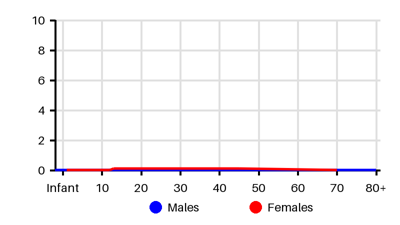
Incidence per 100.000 [v94][b2h][ofr][7a1][ss5]
Symptoms & findings
Symptoms
Agitation, Bradycardia, Cardiac arrest, Chills, Confusion, Cough, Crepitations, Cyanosis, Decreased consciousness, Dyspnea, Hypotension, Nausea, Respiratory failure, Seizure, Tachycardia, Tachypnea, Vomiting
Clinical findings
Acidosis, Coagulopathy, Disseminated Intravascular Coagulation, Elevated Base Excess, Elevated hCG, Elevated PT-INR, Hypercapnia, Hypoxemia, Pulmonary edema, Shock, Thrombocytopenia, Uterine atony
Anamneses
Approach
Blood test
Blood gas
Chest x-ray
ECG
Pulmonary artery catheter
Autopsy
Treatment
Maintain saturation: Administer oxygen or intubate if necessary [uty][tea]
Mean arterial pressure (MAP) >65 mmHg
IV or interosseous line: crystalloids, blood products, and vasopressors
Avoid excessive fluid administration to reduce the burden on the right ventricule (excess fluid increase the risk of a right sided myocardial infarction)
Pulmonary artery catheterization in patients who are hemodynamically unstable
Continuously monitor the fetus
Evaluate the clotting status:
Treat coagulopathy with FFP for a prolonged aPTT
cryoprecipitate for a fibrinogen level less than 100 mg/dL
transfuse platelets for platelet counts less than 20,000/µL
1:1:1 ratio of packed red blood cells, platelets, and fresh frozen plasma to maintain fibrinogen levels above 150 mg/dL
Cardiac arrest: Initiate cardiopulmonary resuscitation (CPR) and consider ECMO
If no respond to resuscitation, consider a perimortem cesarean delivery dependant on the quality and length of CPR and gestational age
Hemodialysis with plasmapheresis and extracorporeal membrane oxygenation (ECMO) with intra-aortic balloon counterpulsation have been described in case reports with successful outcomes in treating AFE patients with cardiovascular collapse
Differential diagnoses
Air embolism, Anaphylaxis, Aortic dissection, Cardiomyopathy, Cholesterol embolism, Hypermagnesemia, Myocardial infarction, Placental abruption, Post partum hemorrhage, Preeclampsia, Pulmonary embolism, Sepsis, Shock, Transfusion reaction, Uterine atony, Uterine rupture
References
[1] http://emedicine.medscape.com/article/253068 (2014-01-31); [Medscape]
[2] Haftel A, Carlson K. Amniotic Fluid Embolism. [Updated 2024 Jan 10]. In: StatPearls [Internet]. Treasure Island (FL): StatPearls Publishing; 2025 Jan-. Available from: https://www.ncbi.nlm.nih.gov/books/NBK559107/
[3] Abenhaim et al. Incidence and risk factors of amniotic fluid embolisms: a population-based study on 3 million births in the United States. Am J Obstet Gynecol. 2008 Jul;199(1):49.e1-8.
[4] Fitzpatrick et al. Incidence, risk factors, management and outcomes of amniotic-fluid embolism: a population-based cohort and nested case-control study. BJOG. 2016 Jan;123(1):100-9.
[5] Knight et al. UK Obstetric Surveillance System. Incidence and risk factors for amniotic-fluid embolism. Obstet Gynecol. 2010 May;115(5):910-917.
[6] Mazza et al. Association of Pregnancy Characteristics and Maternal Mortality With Amniotic Fluid Embolism. JAMA Netw Open. 2022;5(11):e2242842.
[7] Fong et al. Amniotic fluid embolism: antepartum, intrapartum and demographic factors. J Matern Fetal Neonatal Med. 2015 May;28(7):793-8.
[8] http://www.uptodate.com/contents/amniotic-fluid-embolism-syndrome (2014-01-31); [Uptodate]