Diagnosis
Cardiomyopathy
Progressive disease of heart muscle.
Etiology
Dilated Cardiomyopathy [3by]
Etiology:
Genetics
Cardiovascular disease: ischemia, hypertension, valvular disease, tachycardia
Infectious: viral, rickettsial, bacterial, fungal, metazoal, protozoal, Whipple disease, Lyme disease
Metabolic: hyperthyroidism, hypothyroidism, acromegaly, myxedema, hypoparathyroidism, hyperparathyroidism, diabetes mellitus, electrolyte imbalance (potassium, phosphate, magnesium)
Nutritional: thiamine deficiency (beriberi), protein deficiency, starvation, carnitine deficiency
Toxic: drugs (cocaine), poisons, foods, anesthetic gases, heavy metals, ethanol
Systemic diseases with cardiac involvement: Rheumatoid arthritis, Systemic lupus erythematosus, Systemic sclerosis, Polymyositis, hemochromatosis, Sarcoidosis, amyloidosis, Loffler endocarditis, endomyocardial fibroelastosis, glycogen storage disease, malignancy with chemotherapy (doxorubicin)
Physical agents: extreme temperatures, ionizing radiation, electric shock, nonpenetrating thoracic injury
Neuromuscular disorders: muscular dystrophy (limb-girdle, Duchenne, fascioscapulohumeral), Friedreich disease, myotonic dystrophy
Primary cardiac tumor (myxoma)
Senile
Peripartum
Immunologic: postvaccination, serum sickness, transplant rejection
Stress-induced cardiomyopathy (Takotsubo cardiomyopathy)
Pathophysiology:
Continuing ventricular enlargement and normal left ventricular wall thickness
Primary systolic but also diastolic dysfunction
Progressive dilation --> significant mitral and tricuspid regurgitation
Clinical presentation: heart failure, ventricular and supraventricular arrhythmias, conduction system abnormalities, thromboembolism, and death.
Hypertrophic Cardiomyopathy [ttd][icf]
Etiology:
Genetic disorder (autosomal dominant) --> risk of sudden death
Pathophysiology:
Inappropiate asymmetrical myocardial hypertrophy in the absence of hypertrophic stimulus (Possible cause: Increased number of calcium channels -> abnormal calcium fluxes -> increases intracellular calcium concentration -> hypertrophy and cellular disarray)
Abnormal diastolic function impairs ventricular filling (increased filling pressure)
Malfunction of the myocardium and reduced cardiac output
Shortsighted physiologic compensation (increased stroke volume, heart rate, vascular tone and water retention through adrenaline, renin, angiotensin, aldosterone)
Eventually symptoms of chronic heart failure
Complications:
Ventricular arrhythmias
Congestive heart failure
Infective endocarditis of the mitral valve
Atrial fibrillation
Embolic phenomenon
Sudden death
Restrictive Cardiomyopathy [skd]
Etiology:
Usually caused by systemic diseases (Hemochromatosis, Amyloidosis, Sarcoidosis, Systemic sclerosis, Radiation, malignancy)
Pathophysiology:
Increased stiffness of the myocardium (reduced compliance)
Diastolic dysfunction and restricted ventricular filling
Epidemiology
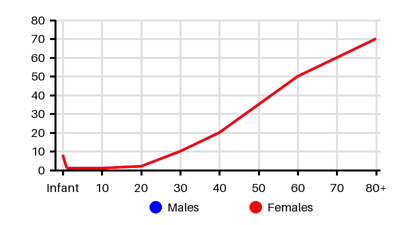
Incidence per 100.000 [owa][g41]
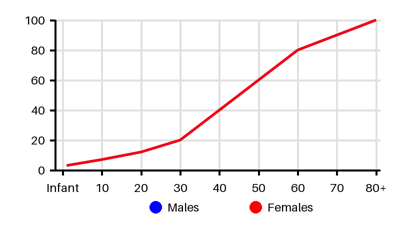
Prevalence per 100.000 [owa][g41]
Symptoms & findings
Symptoms
Arrhythmia, Crepitations, Cyanosis, Diastolic murmur, Dizziness, Dyspnea, Edema, Fatigue, Heart murmur, Hepatomegaly, Hypertension, Jugular vein distention, Nail clubbing, Orthopnea, Palpitations, Syncope, Systolic murmur, Tachycardia, Tachypnea, Third heart sound, Weakness, Weight gain
Clinical findings
Anemia, Atrial fibrillation, Cardiomegaly, Decreased Ejection Fraction, Elevated Central Venous Pressure, Elevated Jugular Venous Pressure, Hypoxemia, Pulsus paradoxus
Anamneses
Localized findings
Approach
Blood test
Thyroid function test
BNP
Chest x-ray
ECG
Echocardiography
MR cor
Biopsy
Cardiac Catheterization
Treatment
Treatment goal: Control heart failure symptoms and manage arrhythmias [3by]
Medications:
Angiotensin-converting enzyme (ACE) inhibitors
Angiotensin II receptor blockers (ARBs)
Beta-blockers
Aldosterone antagonists
Cardiac glycosides
Diuretics
Nitrates
Vasodilators
Anticoagulation
Left ventricular assist device (LVAD)
Cardiac resynchronization therapy (biventricular pacing)
Automatic implantable cardioverter-defibrillators (ICD)
Ventricular restoration surgery
Heart transplantation
Differential diagnoses
Amphetamine toxicity, Aortic stenosis, Beriberi, Cardiac tamponade, Cocaine toxicity, Fabry disease, Glycogen storage disease, Heart failure, Hyperthyroidism, Lead toxicity, Myocardial infarction, Myocarditis, Pericarditis, Pulmonary edema
References
[1] http://emedicine.medscape.com/article/152696 (2014-01-23); [Medscape]
[2] http://emedicine.medscape.com/article/152913 (2014-01-23); [Medscape]
[3] Basit H, Alahmadi MH, Rout P, et al. Hypertrophic Cardiomyopathy. [Updated 2024 Jun 7]. In: StatPearls [Internet]. Treasure Island (FL): StatPearls Publishing; 2025 Jan-. Available from: https://www.ncbi.nlm.nih.gov/books/NBK430788/
[4] http://emedicine.medscape.com/article/153062 (2014-01-23); [Medscape]
[5] Andersson et al. Incidence rates of dilated cardiomyopathy in adult first-degree relatives versus matched controls. Int J Cardiol Heart Vasc. 2022 May 30;41:101065.
[6] Lipshultz et al. The incidence of pediatric cardiomyopathy in two regions of the United States. N Engl J Med. 2003 Apr 24;348(17):1647-55.
[7] Butzner et al. (2022). Stable Rates of Obstructive Hypertrophic Cardiomyopathy in a Contemporary Era. Frontiers in Cardiovascular Medicine.
[8] Christiansen et al. Age-Specific Trends in Incidence, Mortality, and Comorbidities of Heart Failure in Denmark, 1995 to 2012. Circulation. 2017 Mar 28;135(13):1214-1223.
[9] Ba et al. Global burden of myocarditis and cardiomyopathy in children and prediction for 2035 based on the global burden of disease study 2019. Front Cardiovasc Med. 2023 May 2;10:1173015.